

This joint resolution nullifies the rule finalized by the Social Security Administration on November 16, 2020, that outlines when its administrative appeals judges may hold hearings and issue decisions on individual cases. Currently, these judges serve an appellate function where they review, at the request of Social Security claimants, the decisions of the administrative law judges who issue decisions in individual cases.
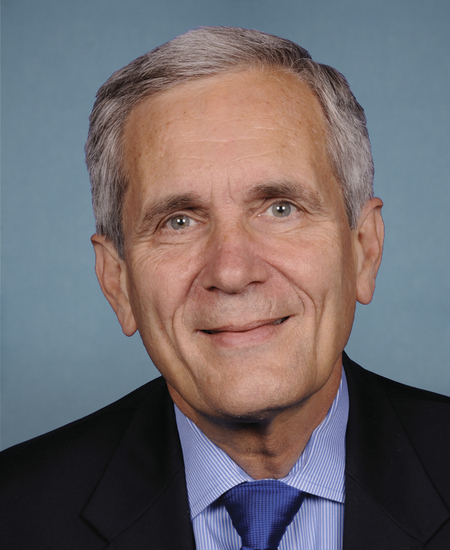
Rep. Lloyd Doggett
Sponsored bills
Public Servants Protection and Fairness Act of 2021 This bill establishes an alternative formula to calculate Social Security retirement benefits for those who receive pensions for certain non-covered employment. (The existing formula is known as the windfall elimination provision.) The alternative formula adjusts an individual's total lifetime earnings based on the proportion of covered earnings (i.e., earnings subject to Social Security payroll taxes). It applies to individuals who (1) first become eligible for benefits after 2022, (2) have earnings from non-covered service performed after 1977, and (3) have less than 30 years of coverage (i.e., years in which a beneficiary is considered to have contributed a substantial amount into the Social Security trust funds). Beneficiaries receive the higher benefit amount as calculated under the alternative method or the existing formula. In addition, the bill provides rebates for certain beneficiaries currently impacted by the existing formula. The Social Security Administration must include non-covered earnings in Social Security account statements, and the Government Accountability Office must study the availability of certain information related to retirement plans maintained by state and local governments.
Historic Tax Credit Growth and Opportunity Act of 2021 This bill increases the rehabilitation tax credit and modifies certain requirements for the credit. The bill increases the rate of the credit for qualified rehabilitation expenditures in taxable years beginning after December 31, 2019, and before January 1, 2027, after which the rate reverts to 20%. The bill increases the rate of the credit to 30% for certain small projects whose qualified rehabilitation expenditures do not exceed $2.5 million. The bill also expands the types of buildings eligible for rehabilitation by decreasing the rehabilitation threshold from 100% to 50% of project expenses. It also eliminates the basis adjustment requirement for the credit and modifies rules relating to tax-exempt use property eligible for the credit.
Resident Physician Shortage Reduction Act of 2021 This bill increases the number of residency positions eligible for graduate medical education payments under Medicare for qualifying hospitals, including hospitals in rural areas and health professional shortage areas. Current law provides for an increase of up to 200 positions per fiscal year beginning in FY2023, with a total increase of 1,000 positions; each hospital may receive up to 25 additional positions. The bill provides for an additional increase of 2,000 positions per fiscal year from FY2023-FY2029; during this period, each hospital may receive up to 75 additional positions in total under the bill and current law. Additionally, one-third of the positions that are made available under the bill must be allocated to hospitals that are already operating above applicable resident limits. The bill also requires the Government Accountability Office to report on strategies to increase the diversity of the health professional workforce, including with respect to representation from rural, low-income, and minority communities.
Willie O'Ree Congressional Gold Medal Act This bill provides for the award of a Congressional Gold Medal to Willie O'Ree or, if unavailable, to a member of his family, in recognition of his contributions and commitment to hockey, inclusion, and recreational opportunity.
Emmett Till and Mamie Till-Mobley Congressional Gold Medal Act of 2021 This bill provides for the posthumous presentation of a Congressional Gold Medal in commemoration of Emmett Till and Mamie Till-Mobley. After the award the medal shall be given to the National Museum of African American History and Culture.
Affordable and Safe Prescription Drug Importation Act This bill allows expanded importation of eligible prescription drugs and addresses related issues. Current law allows the Department of Health and Human Services (HHS) to authorize the importation of certain eligible prescription drugs from Canada if HHS certifies to Congress that doing so would pose no additional risk to public health and safety and would result in significant cost savings for consumers. The bill removes this certification requirement and requires HHS to issue regulations that permit the importation of qualifying prescription drugs from Canada. After a certain amount of time, HHS may authorize importation from certain other countries if it determines that importation from Canada has resulted in cost savings for consumers and increased access to safe medication. The bill also expands the types of prescription drugs eligible for importation to include, for example, biologics such as insulin. Furthermore, the bill allows individuals to use an eligible licensed foreign pharmacy to fill a U.S.-issued prescription for a qualifying drug for personal use. Currently, an individual seeking to import a prescription drug generally must acquire a waiver from HHS. The bill imposes various requirements related to certification of foreign sellers, labeling of imported drugs, and supply chain security. The bill also (1) prohibits certain acts that discriminate against foreign sellers, such as charging higher prices to foreign sellers than to other sellers in the same country; and (2) imposes criminal penalties for online websites that sell counterfeit drugs or dispense drugs without a required prescription.
Medicare Drug Price Negotiation Act This bill makes a series of changes relating to the prices of prescription drugs under the Medicare prescription drug benefit and Medicare Advantage (MA) prescription drug plans (PDPs). Under current law, the Centers for Medicare & Medicaid Services (CMS) may neither negotiate the prices of covered drugs nor establish a formulary. The bill repeals these restrictions and instead specifically requires the CMS to (1) negotiate the prices of covered drugs; and (2) either establish a formulary for covered drugs, or require changes to PDP formularies that take into account CMS negotiations. If the CMS is unable to negotiate an appropriate price for a drug in accordance with certain criteria, the price must be the lowest of three specified options (e.g., the median price in other countries). The CMS must identify drugs that are subject to negotiation, with priority given to certain categories of drugs based on usage and cost. Additionally, drug manufacturers must issue rebates to the CMS for drugs dispensed to eligible low-income individuals. Subject to civil monetary penalties, a Medicare or MA PDP sponsor must report, both to drug manufacturers and to the CMS, specified information related to the determination and payment of such rebates.
Children and Media Research Advancement Act or the CAMRA Act This bill requires the National Institutes of Health to fund research regarding the effects of media on infants, children, and adolescents. Such research must examine the impact of media (e.g., social media, television, video games) on cognitive, physical, and social-emotional development.
Ethan's Law This bill establishes a framework to regulate the storage of firearms on residential premises at the federal, state, and tribal levels. At the federal level, the bill establishes statutory requirements for firearms on residential premises to be safely stored if a minor is likely to gain access without permission or if a resident is ineligible to possess a firearm. An individual who violates the requirements is subject to criminal penalties. A firearm stored in violation of the requirements is subject to seizure and forfeiture. At the state and tribal levels, the bill requires the Department of Justice to award grants to implement functionally identical requirements for the safe storage of firearms.