

Maddy summaryThe SHIELD Act would change unemployment benefit eligibility by barring workers from receiving regular unemployment compensation if they are unemployed due to a strike or labor dispute they are participating in, financially supporting, or have a direct interest in (excluding lockouts). This rule would require states to adjust their unemployment programs to deny benefits in such cases. The changes would take effect two years after the bill becomes law, though states could choose to implement them sooner. The bill also repeals a federal tax provision related to unemployment tax rates, but this is a secondary provision.
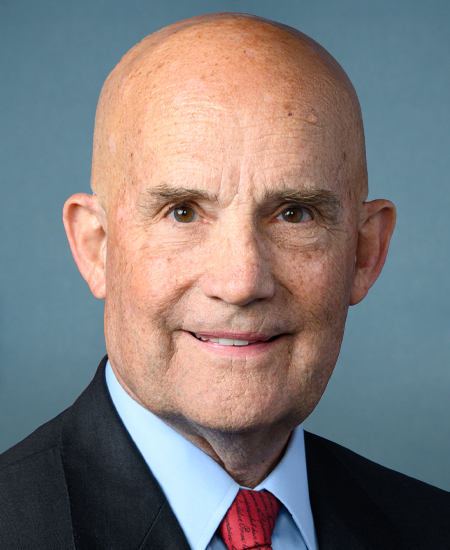
Rep. Keith Self
Sponsored bills
Maddy summaryThis resolution (HRES 583) condemns the July 7, 2025, attack on a U.S. Border Patrol facility in McAllen, Texas, where Ryan Louis Mosqueda injured agents and police. It expresses support for the affected personnel, wishes them a full recovery, and reaffirms the House’s backing of Border Patrol officers in their border security mission. The resolution directly addresses the McAllen community and Border Patrol staff impacted by the violence, serving as a symbolic statement of solidarity without creating new laws or policies.
Maddy summaryThis bill renames a specific segment of U.S. Highway 75 (between President George Bush Turnpike and U.S. Highway 380) to the "U.S. Congressman and Prisoner of War Sam Johnson Memorial Highway." It directly affects the highway's official name and all related government references. The key provision requires that all future legal, regulatory, and official documents, maps, or records referencing this highway segment must use the new name. This is a purely administrative change with no policy or funding impact.
Maddy summaryThis bill requires the Secretary of Defense to create regulations that reimburse ROTC students for educational costs if they are later found medically ineligible for continued participation. It directly affects students enrolled in the Senior Reserve Officers' Training Corps (ROTC) at participating colleges who undergo medical eligibility reviews while still required to attend classes. The regulations must cover tuition, fees, lab expenses, and room and board incurred during the review period, with reimbursement processed within 90 days of a claim submission. This policy change ensures students aren’t financially burdened by medical ineligibility decisions that occur after they’ve already paid for their education.
Maddy summaryHR 4363, the Defend Girls Athletics Act, requires public K-12 schools and colleges to certify annually that they comply with Executive Order 14201, which mandates keeping men out of women's sports. Schools must submit written compliance certifications by August 15 each year (for K-12) or July 1 (for colleges), with states reporting non-compliant agencies to the federal government. Schools or colleges failing to certify or violating the rule risk losing federal education funding, including returning unobligated funds and becoming ineligible for future federal support. The bill directly affects all public schools and colleges receiving federal education funds by tying their eligibility to adherence to this sports participation requirement.
Maddy summaryHR 4370, the SAMS Act of 2025, codifies five existing executive orders into law to strengthen U.S. mineral supply chains. It gives legal force to orders focused on securing critical minerals (like lithium and rare earths) for national security and economic resilience, directly affecting federal agencies implementing these strategies. Key provisions require agencies to follow these established policies - addressing reliance on foreign mineral sources, supporting domestic mining, and prioritizing national security in mineral processing - without creating new regulations. The bill does not alter current mineral policies but formally enshrines them as binding federal requirements.
Maddy summaryHR 3179 proposes renaming the Anahuac National Wildlife Refuge in Texas to the "Jocelyn Nungaray National Wildlife Refuge." The bill directly affects the refuge's official name and all federal references to it, including documents and maps. It cites findings about 12-year-old Jocelyn Nungaray's murder in Houston and states the renaming honors her, given her love of animals and local connection. The key mechanism is a straightforward name change for all federal records, with no new policies or funding impacts.
Maddy summaryThis bill directs the Secretary of State to lead negotiations for at least 20 new nuclear cooperation agreements (commonly called "123 agreements") by 2029, while also seeking to renew or renegotiate expiring agreements. It directly affects U.S. nuclear suppliers, investors, and lenders seeking to compete globally for nuclear projects in foreign countries. Key provisions include creating a cross-agency program to remove regulatory barriers for U.S. nuclear exports, expedite international agreements, and promote adherence to global nuclear liability standards. The law mandates specific actions to enhance U.S. competitiveness in the international nuclear energy market, focusing on concrete policy changes like streamlining export processes.
Maddy summaryHR 875 amends immigration law to make non-citizens with DUI convictions inadmissible (preventing entry) and deportable (requiring removal after entry). It applies to any conviction for driving while intoxicated or impaired under state, tribal, or local law, regardless of whether the offense is classified as a misdemeanor or felony. The bill directly affects non-citizens convicted of driving under the influence of alcohol or drugs, including impairment from other substances. This policy change expands immigration consequences for DUI offenses beyond current standards.
Maddy summaryHR 4172, the OCED Elimination Act, abolishes the Office of Clean Energy Demonstrations (OCED) within the U.S. Department of Energy. It repeals Section 41201 of the Infrastructure Investment and Jobs Act (42 U.S.C. 18861), which previously authorized the OCED's operations. This bill directly affects the Department of Energy by eliminating a specific office and its associated funding mechanisms for clean energy demonstration projects. The change removes a dedicated structure for advancing clean energy demonstrations but does not alter broader clean energy funding programs. As a procedural bill, it focuses solely on the elimination of the office and its related statutory provision.