

Safeguard American Voter Eligibility Act or the SAVE America Act This bill requires individuals to provide documentary proof of U.S. citizenship when registering to vote, and requires photo identification to vote, in federal elections. Specifically, the bill prohibits states from accepting and processing an application to register to vote in a federal election unless the applicant presents documentary proof of U.S. citizenship. The bill specifies what documents are considered acceptable proof of U.S. citizenship, such as identification that complies with the REAL ID Act of 2005 that indicates U.S. citizenship. Further, the bill (1) prohibits states from registering an individual to vote in a federal election unless, at the time the individual applies to register to vote, the individual provides documentary proof of U.S. citizenship; and (2) requires states to establish an alternative process to demonstrate U.S. citizenship. Each state must take affirmative steps on an ongoing basis to ensure that only U.S. citizens are registered to vote, which shall include establishing a program to identify individuals who are not U.S. citizens using information supplied by certain sources. Additionally, states must remove noncitizens from their official lists of eligible voters. The bill (1) provides for a private right of action for certain violations, and (2) establishes criminal penalties for certain offenses. Individuals voting in federal elections must present an eligible photo identification document. An individual who votes by absentee ballot must submit a copy of their identification document with both the request for, and the submission of, the absentee ballot.
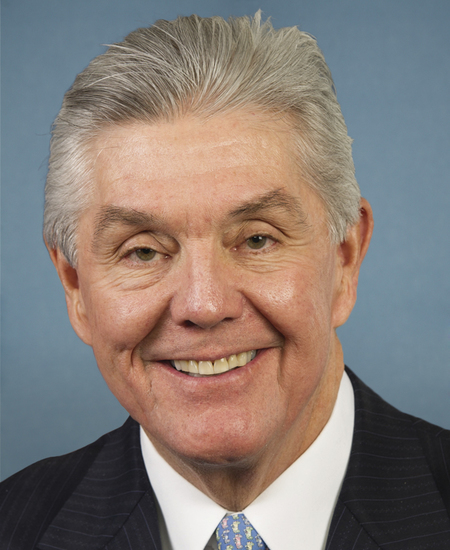
Rep. Roger Williams
Sponsored bills
Maddy summaryThe Main Street Parity Act (HR 5763) adjusts eligibility rules for small businesses seeking SBA loans to acquire, build, convert, or expand facilities. It modifies Section 502(3)(C) of the Small Business Investment Act by removing two specific criteria and reorganizing the remaining requirements. This change directly affects small businesses applying for these particular SBA loans, simplifying the application process by eliminating outdated or redundant conditions. The bill makes technical adjustments to the loan criteria without creating new programs or altering funding levels.
Maddy summaryThis bill creates a tax credit for businesses selling products made with U.S.-grown cotton. The credit equals 24% of the cotton's market value if processed only in the U.S. or in countries with U.S. trade deals, or 18% for other processing locations. To qualify, cotton must be digitally traced from U.S. farms to finished products and certified by the USDA as meeting origin requirements. It directly affects clothing and textile manufacturers selling qualifying products in the U.S. market.
Maddy summaryHR 7156, the SCAM Act, would expand grounds for revoking U.S. citizenship (denaturalization) for naturalized citizens who commit specific offenses within 10 years of becoming citizens. It targets individuals convicted of defrauding federal, state, or local governments (e.g., $10,000+ in public benefit fraud), affiliating with foreign terrorist organizations, or committing aggravated felonies or espionage. If convicted in these categories, the government could automatically revoke citizenship retroactively (as if it never existed) based on evidence that the person lacked good moral character or loyalty to the U.S. at the time of naturalization. This bill directly affects naturalized citizens who commit these offenses within a decade of gaining citizenship, with revocation triggering immediate deportability.
Maddy summaryHR 7034 would remove the current $250,000 (single filers) and $500,000 (married couples) tax exclusion limit for capital gains when selling a primary residence. This change would allow all homeowners to exclude their full profit from federal income tax upon selling their main home, regardless of the sale price. The bill amends Section 121 of the Internal Revenue Code to eliminate the dollar caps and adjusts related provisions to reflect this change. It directly affects homeowners who sell their primary residence, making the tax exclusion fully unlimited for qualifying sales after the bill's enactment.
Maddy summaryHR 909, the Crime Victims Fund Stabilization Act of 2025, modifies how funds from the False Claims Act are deposited into the Crime Victims Fund. It specifies that from 2025 through 2029, certain False Claims Act proceeds (specifically those for qui tam plaintiff payments and government damage reimbursements) cannot be deposited into the fund. This change directly affects the composition of the Crime Victims Fund by excluding these specific revenue streams during the specified period. The bill does not create new benefits or alter victim services; it only adjusts fund allocation rules for existing False Claims Act revenues.
Miracle on Ice Congressional Gold Medal Act This act provides for the award of Congressional Gold Medals to the members of the 1980 U.S. Olympic men's ice hockey team in recognition of the team's achievement at the 1980 Winter Olympic Games.
Maddy summaryThis bill establishes new requirements for pharmacy benefit managers (PBMs) working with Medicare Part D prescription drug plans and Medicaid programs. It mandates that PBMs pay pharmacies a specific reimbursement amount based on drug acquisition costs plus a fixed fee, pass through manufacturer rebates directly to beneficiaries at the point of sale, and prohibits steering practices that direct patients to specific pharmacies. The bill applies to Medicare Part D plans and Medicaid managed care organizations beginning January 1, 2027, affecting how PBMs interact with pharmacies and handle drug rebates. Violations could result in criminal penalties of up to $1 million or 10 years in prison for willful noncompliance. The bill aims to increase transparency and fairness in pharmacy drug pricing for Medicare and Medicaid beneficiaries.
Maddy summaryHR 6659, the Critical Minerals Trade Security Act, creates a new "Chief Critical Minerals Negotiator" within the U.S. Trade Representative's office to address supply chain risks. This position will negotiate trade deals on critical minerals (like rare earth elements vital for defense and energy technologies), enforce relevant trade agreements, and monitor foreign practices that disrupt U.S. supply chains. The bill requires the negotiator to submit annual reports starting in 2026 detailing supply chain risks from specific countries and violations of trade agreements, followed by a 30-day plan for responding to identified threats. These reports and plans will be shared with Congress and made public, focusing on protecting U.S. defense, energy, and infrastructure sectors from foreign supply chain vulnerabilities.
Maddy summaryThe Safer Schools Act of 2025 establishes a 5-year federal pilot program providing grants to public schools for security risk assessments and physical security upgrades. Public schools that have experienced violent incidents involving multiple people are prioritized for both types of grants. Schools receiving assessment grants must first identify vulnerabilities, while improvement grants fund specific security measures like panic alarms linked to local police, with federal funds covering up to 50% of costs. The program allocates $600 million total ($100M-$300M annually), requiring schools to submit financial reports and post-implementation safety surveys, with annual congressional reports tracking outcomes.