

Maddy summaryHR 2146 creates a refund process for businesses that paid tax on certain dyed diesel fuel or kerosene later determined to be exempt from tax under the Internal Revenue Code. Specifically, it allows businesses to receive a refund equal to tax paid under Section 4081 for "eligible indelibly dyed" fuels that are exempt under Section 4082(a). The bill amends tax code provisions to treat these refunds like standard tax credits, requiring the IRS to process them without interest. This applies to fuel removed from terminals 180 days after the bill’s enactment. It directly affects fuel distributors and retailers who previously paid tax on exempt dyed fuels.
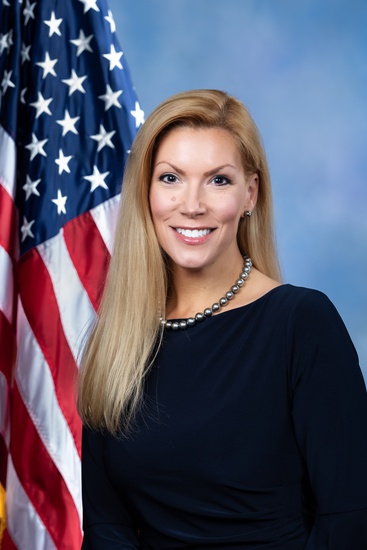
Rep. Beth Van Duyne
Sponsored bills
Maddy summaryHR 1156, the Pandemic Unemployment Fraud Enforcement Act, extends the time limit for prosecuting fraud related to pandemic unemployment programs. It adds a 10-year window for criminal or civil actions against individuals who falsely claimed benefits under Pandemic Unemployment Assistance (PUA), Federal Pandemic Unemployment Compensation (FPUC), or Mixed Earner Unemployment Compensation (MEUC). The law applies only to fraud committed during these specific pandemic-era programs and does not revive cases where the original statute of limitations had already expired before this bill passed. This change gives authorities more time to pursue fraud cases without altering the programs' core eligibility rules.
Metastatic Breast Cancer Access to Care Act This bill expedites payment of Social Security Disability Insurance (SSDI) benefits and eligibility for Medicare coverage for those with metastatic breast cancer (i.e., breast cancer that has spread to other sites in the body). Specifically, the bill eliminates the 5-month waiting period for SSDI benefits and the subsequent 24-month waiting period for Medicare coverage for individuals with metastatic breast cancer. Under current law, individuals generally must wait 5 months after the onset of disability to begin receiving SSDI benefits and an additional 24 months to become eligible for Medicare.
Resident Education Deferred Interest Act or the REDI Act This bill allows borrowers in medical or dental internships or residency programs to defer student loan payments until the completion of their programs.
Maddy summaryThis bill changes how individual investors in mutual funds (regulated investment companies) are taxed on certain dividends. It allows investors to defer paying tax on capital gain dividends that are automatically reinvested in additional fund shares through a dividend reinvestment plan. The deferred tax is recognized later when the investor sells shares or upon their death. It also establishes that shares acquired through this reinvestment are treated as held for over one year from the start, potentially qualifying for long-term capital gains rates. The rule applies only to individual investors (not estates, trusts, or dependents claimed by others).
Maddy summaryHR 1990, the American Innovation and R&D Competitiveness Act of 2025, amends tax rules for businesses to make research and development (R&D) costs more flexible. It allows companies to deduct R&D expenses immediately as business costs (instead of capitalizing them) or to spread these costs over a minimum 60-month period. The bill clarifies which R&D expenses qualify, excludes land improvements and mineral exploration costs, and ensures companies can claim R&D tax credits without conflict with expense treatment. This directly affects businesses that conduct R&D, changing how they account for these costs on tax returns starting for 2022 taxable years.
This bill designates the facility of the United States Postal Service located at 620 East Pecan Boulevard in McAllen, Texas, as the "Agent Raul H. Gonzalez Jr. Memorial Post Office Building".
Maddy summaryHR 1940, the Tanning Tax Repeal Act of 2025, removes a federal excise tax on indoor tanning services. It directly affects tanning salons and businesses providing these services by eliminating the tax they previously paid. The bill repeals Chapter 49 of the Internal Revenue Code, which imposed the tax, and the change takes effect for services provided after the bill becomes law. This is a straightforward tax repeal with no new requirements or funding mechanisms.
Maddy summaryHR 1905, the Protecting American Students Act, modifies how private colleges and universities calculate whether they owe an excise tax on investment income. It specifies that only students meeting specific eligibility requirements under the Higher Education Act (20 U.S.C. 1091(a)(5)) can be counted toward the tax threshold, excluding others from the calculation. The bill also requires these institutions to report both the pre- and post-adjustment student counts on their tax returns. This affects private colleges subject to the investment income tax, changing their tax calculation method and adding reporting obligations starting in 2026. The bill does not directly protect students or alter student aid but adjusts tax compliance for educational institutions.
Maddy summaryHR 1963, the Agency Accountability and Cost Transparency Act of 2025, requires federal agencies to assess costs before issuing major rules. Specifically, agencies must estimate the public cost of a major rule, identify and repeal existing rules to offset that cost, and state in the Federal Register whether the new rule is "budget neutral" (costs equal to savings from repealed rules). This applies to rules with significant economic impact, such as those costing $100 million or more annually or affecting prices, competition, or industry. The bill directly affects how federal agencies develop and publish rules, aiming to ensure new regulations do not increase net costs to the public.