

Maddy summaryThis bill requires cities and counties with "sanctuary" policies to return unobligated federal funds received during periods they maintained such policies. It directly affects local jurisdictions that have laws or practices blocking sharing of immigration status information or refusing to comply with federal detainer requests under immigration law. Key provisions mandate fund repayment for fiscal years starting five years before the bill's effective date (excluding certain crime control funds), with a 15-day grace period for jurisdictions to correct their policies. The law targets specific funding streams, not all federal aid, and focuses on unspent funds rather than future allocations.
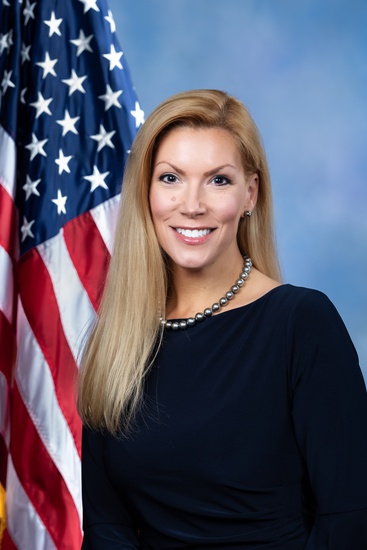
Rep. Beth Van Duyne
Sponsored bills
Maddy summaryThis bill increases penalties for nonimmigrant visa overstays under U.S. immigration law. It directly affects individuals admitted on temporary visas (like students or workers) who remain in the U.S. past their authorized stay, defining a violation as failing to maintain status for 10 cumulative days. Key provisions raise civil fines from $50-$250 to $500-$1,000 per violation, with doubled penalties for repeat offenses, and add criminal penalties of up to 6 months (first violation) or 2 years (repeat offenses). The law also clarifies that these penalties apply in addition to existing civil or criminal penalties.
Maddy summaryThis bill amends the Ysleta del Sur Pueblo and Alabama-Coushatta Indian Tribes of Texas Restoration Act to align their gaming regulations with the standard Indian Gaming Regulatory Act (IGRA). It eliminates redundant language that previously created an exception for these two tribes, ensuring they are regulated identically to all other tribes operating gaming facilities on tribal lands. The key provision adds a "Rule of construction" requiring IGRA to fully apply to their gaming activities and removes two sections (107 and 207) that caused regulatory overlap. This directly affects the Ysleta del Sur Pueblo and Alabama-Coushatta tribes in Texas, removing their unique regulatory status. The change ensures consistent federal oversight for tribal gaming across all 28 states with regulated tribal casinos.
Maddy summaryHR 3598, the Deescalation Drone Pilot Program Act of 2025, establishes a federal pilot program to test nonlethal drones for law enforcement during active shooter events. The program, managed by the FAA, will review nonlethal devices (like sound emitters or cameras) for drones, develop training and safety protocols, and assess effectiveness in indoor scenarios to increase officer safety. It requires drones to be manufactured in the U.S. and mandates a report to Congress within 3 months of the pilot's conclusion, followed by rulemaking to create a formal approval process for law enforcement use. The bill directly affects Federal, State, local, and Tribal law enforcement agencies responding to active shooter events as defined by the legislation.
Maddy summaryHR 3608, "Connor’s Law," requires commercial motor vehicle operators (like truck and bus drivers) to read and speak English well enough to converse with the public, understand English traffic signs, respond to officials, and complete reports. The bill adds this language requirement to existing federal safety rules for commercial drivers. Drivers found noncompliant with this rule would face an "out of service" order, meaning they cannot operate their vehicle until they meet the requirement. This directly affects commercial drivers operating in the U.S. under federal safety regulations.
Maddy summaryHR 3575, the ANTE Act, prevents companies from evading U.S. tariffs on goods from nonmarket economy countries (like China or Russia, as defined under U.S. trade law) by moving production to third countries. It targets entities controlled by such countries or with significant state ownership (25%+ equity held by state-linked entities). The U.S. Trade Representative can investigate these entities and impose duties on goods made in third countries equal to the original tariffs, either for ongoing production or planned future production. This applies to countries listed on the Special 301 Priority Watch List, ensuring tariffs remain effective even if production shifts.
Maddy summaryThe Regulatory Accountability Act (HR 3525) establishes new requirements for federal agencies creating regulations. It requires agencies to consider multiple alternatives for "major rules" (defined as those likely to cause $100 million or more in annual economic effect), conduct detailed cost-benefit analyses, and provide clear explanations of how benefits justify costs. The bill extends public comment periods for major rules (to 90 days), mandates transparency by making rulemaking information accessible to the public, and requires agencies to develop frameworks for assessing the effectiveness of major rules over time. This bill applies to all federal agencies that issue regulations, with specific requirements for rules likely to have significant economic impacts.
Maddy summaryHR 3526, the Uplifting First-Time Homebuyers Act of 2025, increases the maximum amount first-time homebuyers can withdraw penalty-free from retirement accounts. It amends the Internal Revenue Code to raise the limit from $10,000 to $50,000 for qualified first-time homebuyer distributions. This change directly affects individuals using retirement savings to purchase their first home, allowing them to access significantly more funds without incurring the usual 10% early withdrawal penalty. The provision applies to taxable years beginning after December 31, 2024.
Maddy summaryHR 3518 would deny federal funding to graduate medical schools that require certain diversity, equity, and inclusion (DEI) policies. Specifically, schools must certify they do not compel students or staff to affirm specific beliefs about race, gender, or systemic racism; require "diversity statements" for admission or employment; establish DEI offices; or discriminate based on race in programs. This affects graduate medical schools at institutions of higher education seeking federal financial aid, including student loan programs. The bill permits schools to teach about medical conditions related to race or collect demographic data, but prohibits policies mandating DEI-related pledges or offices.
Maddy summaryHR 3523 requires the Treasury Secretary to designate foreign organizations engaged in fraud against U.S. citizens or lawful permanent residents as "Foreign Financial Threat Organizations" (FFTOS). This directly affects foreign entities that deceive U.S. residents into sending money or assets through fraudulent schemes. Key mechanisms include freezing the assets of designated FFTOS, blocking their communication with U.S. residents, and subjecting them to penalties similar to terrorist designations. The bill mandates annual reports to Congress detailing designations, assets seized, and funds returned to victims.