

Maddy summaryThis bill prohibits U.S. courts from enforcing judgments based on Shari'a or any foreign law if they conflict with constitutional rights, particularly in family law cases like divorce, child custody, or inheritance. It requires courts to apply only U.S. law when foreign legal systems would violate fundamental rights such as due process, equal protection, or freedom from coercion. Contracts may still reference foreign law, but enforcement is blocked if it infringes constitutional protections. The law aims to ensure all court decisions comply with U.S. constitutional standards nationwide.
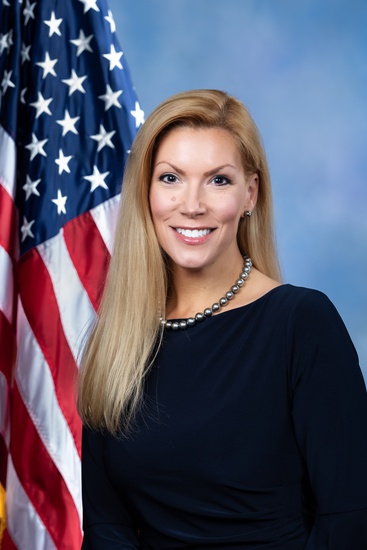
Rep. Beth Van Duyne
Sponsored bills
Maddy summaryThis bill allocates $5 million annually (2026-2030) to states for collecting de-identified stillbirth data through existing health systems, including risk factor analysis. It also provides $1 million yearly to develop standardized guidelines for healthcare providers and public educational materials about stillbirths, requiring consultation with medical professionals, bereavement organizations, and affected families. The bill mandates that all data collection complies with privacy laws and requires the Department of Health and Human Services to publish a public report on stillbirth guidelines within five years. It directly affects state health departments, healthcare providers, and families experiencing stillbirth by improving data quality and access to resources.
Maddy summaryThe Choice Arrangement Act creates a new type of employer-provided health benefit called a "CHOICE arrangement" that allows employees to use employer funds to pay for health care expenses. These arrangements must meet specific requirements including nondiscrimination rules, enrollment verification, and proper notice to employees. Employers offering CHOICE arrangements can claim a tax credit of $100 per month for the first year and $50 per month for the second year for each employee enrolled. Employees in CHOICE arrangements remain eligible to purchase health insurance through the marketplace. The changes apply to plan years beginning after December 31, 2025.
Maddy summaryThis bill requires a GAO study to evaluate early detection methods for pediatric liver disease, including adding bilirubin measurement to newborn screening panels and assessing trends in transplant wait-list mortality. It also mandates a public education program to inform families about early signs of liver disease and the safety of living liver donation, using existing HHS resources without new funding. The law directly affects infants and children with liver conditions like biliary atresia and liver cancer, aiming to improve early intervention. Key provisions include a study on cost-effective screening and a program to educate pediatric providers and families about warning signs.
Maddy summaryHR 5100 extends the Small Business Innovation Research (SBIR) and Small Business Technology Transfer (STTR) programs through fiscal year 2026, instead of ending on September 30, 2025. This bill directly affects small businesses and research institutions that rely on federal funding for research and development through these programs. The key mechanism is updating expiration dates across multiple program provisions in the Small Business Act to maintain funding authority and program operations for one additional year. The extension does not alter program eligibility, funding levels, or core requirements.
Maddy summaryHRES 702 is a symbolic resolution condemning the September 10, 2025, assassination of Charlie Kirk, founder of Turning Point USA and a conservative political activist. It expresses condolences to his family, praises first responders, and reaffirms the right to peaceful assembly. As a non-binding resolution, it does not create new laws or policies but serves as a formal statement of condemnation. The resolution directly addresses the House of Representatives' stance on this event, with no direct impact on constituents or legislation.
Maddy summaryThe RESULTS Act (HR 5269) changes how Medicare calculates payment rates for clinical diagnostic laboratory tests. It requires Medicare to collect data on private payor rates for widely available non-Advanced Diagnostic Laboratory Tests (non-ADLTs) from a qualifying independent claims data entity (a national nonprofit organization meeting specific criteria) rather than relying on data reported directly by laboratories. For tests where data is unavailable, the bill establishes default payment rates based on previous years' rates adjusted for inflation. The law also requires Medicare to publicly explain payment rates with supporting data, affecting Medicare beneficiaries, clinical laboratories, and private payors that provide services covered by Medicare.
Maddy summaryThis bill authorizes the permanent collection of registration fees from organizations in the Organ Procurement and Transplantation Network (OPTN), such as transplant centers and organ procurement organizations, for each transplant candidate they list. The fees must be used exclusively to support OPTN operations and cannot be diverted to other purposes. The bill requires the Secretary to publicly post quarterly fee amounts and how they are spent on the OPTN website, and mandates a GAO review within two years to assess fee usage. It does not change organ allocation or transplant processes, only the funding mechanism for the network itself.
Maddy summaryHR 5156, the COUNT Act, requires federal agencies to share specific immigration and demographic data with the Department of Commerce to improve national citizenship statistics. It mandates agencies like DHS, SSA, and HHS to provide access to records including immigration files, passport applications, and Medicaid data, while directing the Census Bureau to add a citizenship question to the 2030 census and American Community Survey. The bill also directs the Commerce Department to seek state administrative records for citizenship data and requires annual reports to Congress on state cooperation. This directly affects federal and state agencies by altering data-sharing protocols for immigration and citizenship tracking.
Maddy summaryHR 5075, the GRACE Act, requires schools receiving federal education funds to allow religious exemptions from vaccination requirements without requiring documentation. It directly affects K-12 public schools and school agencies that receive federal funding, as they must permit students (or their parents/guardians for minors under 18) to skip vaccinations based on religious belief. The key provision mandates that schools cannot demand proof of a religious belief to grant such exemptions. This changes how schools handle vaccination policies for enrollment, attendance, and school activities when receiving federal education dollars.