

Title X Abortion Provider Prohibition Act This bill prohibits the Department of Health and Human Services (HHS) from awarding family planning grants to entities that perform abortions or provide funding to other entities that perform abortions. To receive a grant, an entity must certify it will refrain from those activities during the grant period. The bill provides exceptions for abortions (1) in cases of rape or incest; or (2) when the life of the woman is in danger due to a physical disorder, injury, or illness. It also exempts hospitals unless they provide funds to non-hospital entities that provide abortions. HHS must report annually on this prohibition.
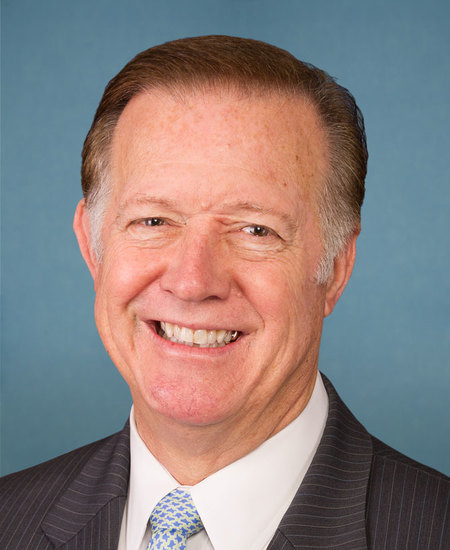
Rep. Randy K. Weber, Sr.
Sponsored bills
Leave Ethanol Volumes at Existing Levels Act or the LEVEL Act This bill revises the renewable fuel program, including the renewable fuel standard (RFS). Under current law, the RFS specifies the minimum volume of renewable fuel, such as ethanol, that must be contained in gasoline sold in the United States. The RFS annually increases until 2022 when a minimum of 36 billion gallons of renewable fuel must be blended into gasoline. The bill decreases the volume of renewable fuel that must be contained in gasoline to 7.5 billion gallons each year. The bill also revises the RFS to eliminate separate volume requirements for the following renewable fuel categories: advanced biofuels, cellulosic biofuel, and biomass-based diesel. In addition, the bill revises requirements concerning waivers from the program. Petitions for waivers from requirements under the renewable fuel program may not be brought by a person who is subject to the requirements of the program, nor by the EPA on its own motion. The EPA may not authorize the sale of gasoline that contains greater than 10% ethanol, unless the gasoline was registered under the program and lawfully sold in the United States before this bill's enactment. The EPA must study the effects of gasoline that contains greater than 10% ethanol, including the effects on consumer products, such as nonroad vehicles.
Women's Public Health and Safety Act This bill allows a state to exclude from participation in the state's Medicaid program a provider that performs an abortion, unless (1) the pregnancy is the result of rape or incest, or (2) the woman suffers from a physical issue that would place her in danger of death unless an abortion is performed. Under current law, a state plan for medical assistance must provide that any individual eligible for medical assistance may obtain required services from any provider qualified to perform them.
Protecting Life in Crisis Act This bill specifies that federal funds allocated for COVID-19 (i.e., coronavirus disease 2019) response efforts may not, in general, be used for abortions. Current law generally prohibits the use of federal funds for abortions through language included in appropriations bills, such as the Hyde Amendment. The bill also restricts the use of federal tax credits or other federal funding for health insurance coverage if the coverage includes abortions.
This resolution expresses the gratitude of the House of Representatives to the members of the National Guard and law enforcement agencies who were deployed to the District of Columbia to ensure a safe and secure environment for the 59th inauguration.
Banning Operations and Leases with the Illegitimate Venezuelan Authoritarian Regime Act or the BOLIVAR Act This bill prohibits an executive agency from entering into a contract for the procurement of goods or services with any person that has business operations with the Maduro regime in Venezuela. The bill lists exceptions, including where vital to U.S. national security or as necessary for purposes of providing humanitarian assistance, disaster relief and other urgent lifesaving measures, or to carry out noncombatant evacuations.
Preserve American History Act This bill provides statutory authority for a November 2, 2020, executive order establishing the President's Advisory 1776 Commission to promote the history and principles of the founding of the United States.
Academic Partnerships Lead Us to Success Act or the A PLUS Act This bill creates a framework under which states may receive federal elementary and secondary education funds on a consolidated basis and use such funds for any educational purpose permitted by state law.
Student Empowerment Act This bill allows tax-exempt distributions from qualified tuition programs (known as 529 plans) to be used for additional educational expenses in connection with enrollment or attendance at an elementary or secondary school. (Under current law, distributions in connection with an elementary or secondary school are limited to tuition for a public, private, or religious school.) The bill allows the distributions to be used for additional educational expenses, including curriculum and curricular materials, books or other instructional materials, online educational materials, tutoring or educational classes outside the home, testing fees, fees for dual enrollment in an institution of higher education, and educational therapies for students with disabilities. Distributions may also be used for tuition and the purposes above in connection with a homeschool (whether treated as a homeschool or a private school under state law).
Protecting Life in Foreign Assistance Act This bill prohibits the use of federal funds for purposes outside the United States related to abortion. Specifically, the bill prohibits funding to certain foreign or domestic organizations that perform or promote abortions, furnish or develop items intended to procure abortions, or provide financial support for an entity that conducts such activities. Current U.S. policy prohibits the provision of federal funds to a foreign nongovernmental organization unless it agrees to not perform or actively promote abortions.