

This bill directs the Federal Aviation Administration to prohibit air carriers and the National Railroad Passenger Corporation (Amtrak) from denying an individual air or passenger rail transportation because such individual has not been vaccinated against COVID-19. Additionally, the bill prohibits the obligation or expenditure of federal funds (1) to create a database of individuals who have been vaccinated against COVID-19; or (2) by any federal agency to develop, implement, or enforce any federal law, rule, regulation, guidance, or policy denying individuals access to transportation or preventing such individual from traveling because they have not been vaccinated against COVID-19.
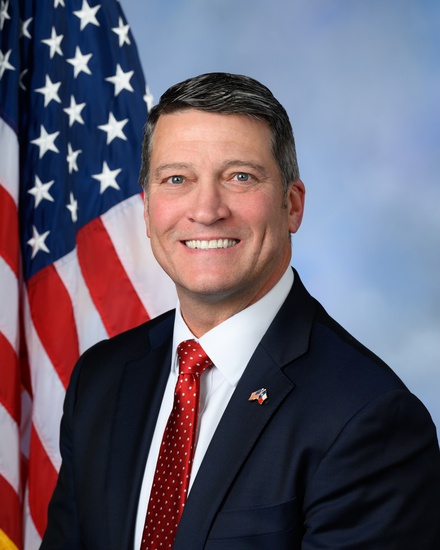
Rep. Ronny Jackson
Sponsored bills
Elaine M. Checketts Military Families Act This bill directs the Department of Defense to amend regulations to ensure that parental leave that has already been approved for a member of the Armed Forces who is a primary or secondary caregiver may not be terminated upon the death of the child for whom the leave was taken.
This resolution commits to the use of competitive free market and free trade policies to combat national security threats caused by China and its attacks on the U.S. pharmaceutical manufacturing base. The resolution urges the United States to (1) remove tax, regulatory, and debt burdens and barriers that have weakened this base; (2) empower the U.S. Trade Representative to take specified actions to counter harmful and unfair trade practices by China; (3) address shortcomings in Food and Drug Administration data collection related to foreign-sourced pharmaceutical ingredients; and (4) identify and streamline regulatory hurdles that have impeded the U.S. pharmaceutical manufacturing base.
Reopening America by Supporting Workers and Businesses Act of 2021 This bill permits states to provide a one-time lump sum payment, through July 1, 2021, to individuals who (1) were eligible for COVID-19 pandemic unemployment compensation during any week after enactment of this bill, and (2) are no longer eligible as a result of becoming thereafter reemployed. Payments of $1,200 shall be paid to individuals who work at least 30 hours and $600 to individuals who work at least 20 hours but less than 30. The payments are available for claimants (1) who are not employed by a government entity, (2) who return to work for at least four consecutive weeks, and (3) whose annual salary does not exceed $75,000. Before receipt of a payment, the individuals' employers must verify their hours and earnings. Additionally, the bill (1) accelerates a scheduled increase in funding for reemployment services and eligibility assessments (RESEA), (2) allows states to use RESEA funds to serve all workers receiving unemployment benefits, and not just those most likely to exhaust their benefits; and (3) allows states to provide reemployment services to individuals receiving pandemic unemployment assistance and pandemic emergency unemployment compensation. Finally, the bill reinstates the requirement that unemployment claimants certify they are able, available, and actively seeking work.
This bill directs the Department of State to include additional information in its annual reports concerning Taiwan's participation at the World Health Organization's World Health Assembly (WHA) as an observer. The report shall describe changes and improvements to the State Department's plan to support Taiwan's observer status at the WHA, following any meetings at which Taiwan did not participate under such status. (China has opposed Taiwan's participation in the WHA.)
This resolution recognizes the efforts of the Trump Administration and Operation Warp Speed in the development of the COVID-19 (i.e., coronavirus disease 2019) vaccine. Operation Warp Speed is an interagency partnership that coordinates federal efforts to accelerate the development, acquisition, and distribution of medical countermeasures for COVID-19.
Safe Step Act This bill requires a group health plan to establish an exception to medication step-therapy protocol in specified cases. A medication step-therapy protocol establishes a specific sequence in which prescription drugs are covered by a group health plan or a health insurance issuer. A request for such an exception to the protocol must be granted if (1) an otherwise required treatment has been ineffective, (2) such treatment is expected to be ineffective and delaying effective treatment would lead to irreversible consequences, (3) such treatment will cause or is likely to cause an adverse reaction to the individual, (4) such treatment is expected to prevent the individual from performing daily activities or occupational responsibilities, (5) the individual is stable based on the prescription drugs already selected, or (6) there are other circumstances as determined by the Employee Benefits Security Administration. The bill requires a group health plan to implement and make readily available a clear process for an individual to request an exception to the protocol, including required information and criteria for granting an exception. The bill further specifies timelines under which plans must respond to such requests.
Providing Americans with LNG Safely Act or the PALS Act This bill prohibits the Department of Transportation (DOT) from issuing any regulation or order that (1) prohibits the transportation of liquefied natural gas (LNG) by rail, or (2) restricts the transportation of LNG by rail in DOT-113 tank cars. The bill does not limit the authority of DOT to issue short-term emergency orders related to the transportation of LNG by rail.
Protect Democracy in Burma Act of 2021 This bill requires the Department of State to report to Congress on the military coup in Burma (Myanmar), including a description of U.S. efforts to (1) engage with the Association of Southeast Asian Nations to support a return to Burma's democratic transition and democratic values throughout Southeast Asia, and (2) influence the United Nations to hold accountable those responsible for the coup.
Heartbeat Protection Act of 2021 This bill makes it a crime for a physician to knowingly perform an abortion (1) without determining whether the fetus has a detectable heartbeat, (2) without informing the mother of the results, or (3) after determining that a fetus has a detectable heartbeat. It provides an exception for an abortion that is necessary to save the life of a mother whose life is endangered by a physical (but not psychological or emotional) disorder, illness, or condition. A physician who performs a prohibited abortion is subject to criminal penalties—a fine, up to five years in prison, or both. A woman who undergoes a prohibited abortion may not be prosecuted for violating or conspiring to violate the provisions of this bill.