

Maddy summaryHR 4370, the SAMS Act of 2025, codifies five existing executive orders into law to strengthen U.S. mineral supply chains. It gives legal force to orders focused on securing critical minerals (like lithium and rare earths) for national security and economic resilience, directly affecting federal agencies implementing these strategies. Key provisions require agencies to follow these established policies - addressing reliance on foreign mineral sources, supporting domestic mining, and prioritizing national security in mineral processing - without creating new regulations. The bill does not alter current mineral policies but formally enshrines them as binding federal requirements.
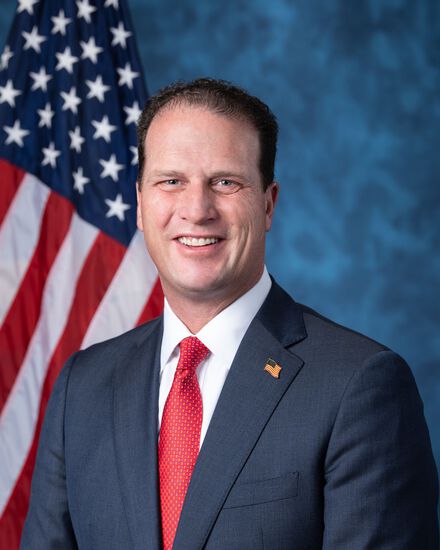
Rep. August Pfluger
Sponsored bills
Maddy summaryHRES 570 is a House resolution commending Petty Officer 3rd Class Scott Ruskan for rescuing 165 people during catastrophic July 2025 flooding in central Texas. The resolution honors Ruskan, a Coast Guard Aviation Survival Technician from Air Station Corpus Christi, for his role as the sole triage coordinator during the disaster. It recognizes his "exceptional courage" and "selflessness" in saving lives during the Guadalupe River flooding that caused extensive damage and loss of life. As a ceremonial resolution, it does not create new laws or policies but formally expresses the House's gratitude for Ruskan's service.
Maddy summaryHRES 571 is a symbolic resolution passed by the U.S. House of Representatives to commemorate the one-year anniversary of the July 13, 2024, attempted assassination of President Donald J. Trump in Butler, Pennsylvania. It condemns two assassination attempts against the President (in Butler and West Palm Beach), honors victims Corey D. Comperatore (who died shielding his family), David Dutch, and James Copenhaver (who were critically injured), and expresses gratitude to first responders. The resolution also condemns incitement of violence against political officials and calls for unity against political violence. As a non-binding resolution, it does not create new laws or policies but formally states the House’s position on these events.
Maddy summaryHR 3179 proposes renaming the Anahuac National Wildlife Refuge in Texas to the "Jocelyn Nungaray National Wildlife Refuge." The bill directly affects the refuge's official name and all federal references to it, including documents and maps. It cites findings about 12-year-old Jocelyn Nungaray's murder in Houston and states the renaming honors her, given her love of animals and local connection. The key mechanism is a straightforward name change for all federal records, with no new policies or funding impacts.
Maddy summaryThis bill requires drug manufacturers to pay rebates to Medicare when their "selected drugs" (cancer and complex therapies subject to negotiated maximum fair prices) are used. Manufacturers must calculate rebates based on the difference between current Medicare payment rates (ASP+6) and new negotiated rates (MFP+6), covering the gap for beneficiaries. This lowers patient coinsurance from the current 20% of ASP+6 to 20% of MFP+6 for these specific drugs during the negotiated price period. The rebates are paid to the Medicare trust fund and apply to Medicare Part B beneficiaries using these drugs, directly affecting drug manufacturers and patients covered under Medicare Part B.
Maddy summaryHR 4254 establishes the "Iranian Campaign Medal" to recognize military personnel who served during specific operations in the Iran-Israel War, including "Operation Midnight Hammer" on June 22, 2025. It authorizes the Secretary of Defense to award the medal to active-duty service members deployed in designated areas of operation or performing prescribed service related to the conflict. The medal may also be issued to the next-of-kin of deceased eligible service members. The bill specifies the medal’s design, limits awards to one per person, and requires uniform regulations for issuance.
Maddy summaryHRES 554 is a non-binding resolution expressing the House of Representatives' support for President Trump's June 2025 airstrike on Iranian nuclear facilities and affirming unwavering backing for Israel's right to self-defense. It describes the strike as a "proportionate and lawful act of national defense" that disrupted Iran's nuclear infrastructure and calls for continued U.S. efforts to prevent Iran from obtaining nuclear weapons. The resolution reaffirms support for Israel's missile defense systems (like Iron Dome), urges European allies to pressure Iran toward negotiations, and states the U.S. seeks to end Iran's nuclear pursuit without targeting the Iranian people. As a symbolic resolution, it has no legal effect but formally endorses the described military action and policy stance.
Maddy summaryHR 275 requires the Department of Homeland Security (DHS) to publish monthly reports on individuals classified as "special interest aliens" who attempt unlawful entry into the U.S. These reports, due by the seventh day of each month, must include the total number, nationalities or countries of origin, geographic regions of encounters, and whether entries occurred at ports, between ports, or inland. The reports must also identify if encounters involve "covered nations" as defined under existing law. This bill directly affects DHS, which must implement the reporting, and Congress, which receives the data for oversight. The law focuses on transparency around national security-related immigration encounters without altering immigration policy.
Maddy summaryHR 4153, the STRONG Act, increases maximum loan limits for two key Small Business Administration (SBA) programs. It raises the cap for standard 7(a) loans from $3.75 million to $7.5 million (and the threshold for higher amounts from $5 million to $10 million), and doubles the cap for development company loans from $5 million to $10 million (for both standard and higher thresholds). These changes directly affect small businesses seeking SBA financing by allowing them to access larger loans for growth, expansion, or recovery. The bill modifies specific provisions in the Small Business Act and Small Business Investment Act to expand access to capital.
Maddy summaryThe LEDGER Act (HR 4091) requires the Treasury Department to create a system tracking every government payment within 180 days of enactment. It mandates that all federal departments, agencies, and branches (executive, legislative, judicial) must report disbursements from every funding source, including how long funds remain available for spending. This system will detail each payment's origin, recipient, and timing across all government accounts. The bill directly affects all federal spending entities by standardizing expenditure tracking previously handled inconsistently.