

Maddy summaryH.Res. 1497 is a House resolution that commemorates the fifth anniversary of the Abbey Gate bombing, in which 13 U.S. servicemembers were killed during the withdrawal from Afghanistan. The bill lists the names of the fallen soldiers and formally condemns the Biden-Harris administration for what it describes as dereliction of duty and the forfeiture of military property to the Taliban. It asserts that the withdrawal was a disastrous failure that ignored security warnings and left Americans at risk, while also criticizing the lack of accountability from officials involved in the decision-making process.
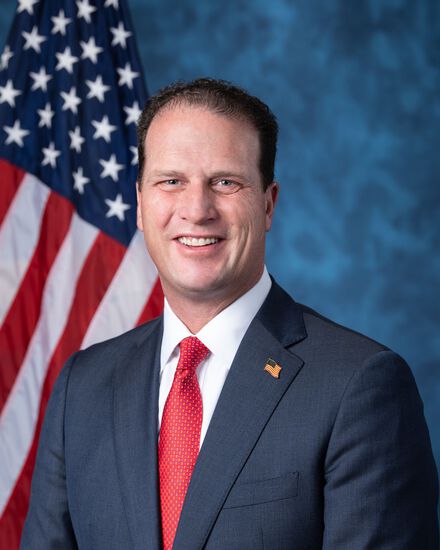
Rep. August Pfluger
Sponsored bills
This bill designates the facility of the United States Postal Service located at 4450 Oak Park Lane in Fort Worth, Texas, as the "United States Representative Kay Granger Post Office Building".
National Law Enforcement Officers Remembrance, Support and Community Outreach Act. [ sic ] This bill temporarily directs the Department of the Interior to award a grant to the National Law Enforcement Officers Memorial Fund for the expenses associated with operating and enhancing the community outreach, public education, and officer safety and wellness programs of the National Law Enforcement Museum.
Maddy summaryThis House resolution formally honors the life and legacy of the late Representative Kay Granger from Texas, recognizing her historic achievements in public service. The bill highlights her roles as the first woman elected mayor of Fort Worth, the first Republican woman to represent Texas in the U.S. House, and the first Republican woman to chair the House Committee on Appropriations. It also acknowledges her contributions to national defense, including her work on the F-35 fighter jet program and the naming of a Navy ship for Fort Worth. The resolution expresses sympathy to Granger's family and directs the Clerk of the House to send an official copy of the document to her loved ones.
Maddy summaryThis joint resolution seeks to overturn a specific rule issued by the Environmental Protection Agency regarding California's Advanced Clean Car Program. If passed, the measure would nullify the EPA's decision to reconsider a previous withdrawal of a waiver that allowed California to set stricter vehicle emission standards than the federal government. The bill directly affects the automotive industry and state regulators by preventing the implementation of these new, state-specific pollution controls. Essentially, it aims to stop the EPA from enforcing a rule that would have expanded California's authority to regulate vehicle emissions.
Maddy summaryThe Increasing Mental Health Options Act of 2026 expands Medicare coverage and oversight rules to include clinical psychologists in rural and underserved areas. Starting in 2026, clinical psychologists working in designated health professional shortage areas will receive an additional 10 percent payment for services provided to Medicare beneficiaries. The bill also removes certain federal restrictions that previously limited the types of care clinical psychologists could provide in outpatient rehabilitation, skilled nursing, partial hospitalization, home health, and inpatient psychiatric settings. These changes allow psychologists to supervise or provide care directly in these facilities as long as state laws permit it, while maintaining existing requirements for consultation with physicians.
Maddy summaryThe RESCUE Act of 2026 updates how the federal government reimburses ground and air ambulance services by changing the payment schedule and data collection rules. Starting in 2028, the Secretary of Health and Human Services will adjust payment rates every three years based on new data regarding costs, labor, and uncompensated care, while years in between will see payments increase only by the standard inflation rate. The bill also requires air ambulance providers to submit cost information to the government at least once every three years, aligning this process with existing rules for ground ambulance services. Additionally, the law mandates a review by 2029 to gather expert recommendations on whether further changes are needed to ensure ambulance providers are paid appropriately. These changes directly affect ambulance companies and the federal programs that fund emergency medical transport.
Maddy summaryThe Stop EU Overreach Act directs the United States Trade Representative to initiate a formal investigation within 30 days of enactment to determine if specific European Union environmental and sustainability regulations unfairly burden American commerce. These targeted measures include rules on corporate sustainability due diligence, reporting, deforestation traceability, and carbon border adjustments that apply to US companies based on their operations or supply chains outside the EU. If the investigation concludes that these foreign practices are unreasonable or discriminatory, the USTR is authorized to take retaliatory actions such as imposing duties on imports from EU member states or suspending trade agreement benefits. The bill includes a sunset provision that terminates its requirements for any specific EU measure once the USTR certifies that the European Union has repealed the rule or entered into a binding agreement to exempt US persons from its extraterritorial obligations.
Maddy summaryThe STRATA Act of 2026 establishes a new program within the Department of State to foster international partnerships focused on advancing critical minerals technologies, aiming to strengthen U.S. supply chains and national security. This initiative allows the Secretary of State to form alliances with allied and partner nations, universities, and private companies while explicitly prohibiting collaborations with designated countries of concern such as China and Russia. Key provisions include the creation of International Centers of Excellence for research and training, the development of a digital platform to connect stakeholders with funding opportunities, and the establishment of clear guidelines for intellectual property and data security within these partnerships. The program authorizes the use of specific funding sources to support joint projects in extraction, recycling, and manufacturing, with a requirement that all activities conclude within ten years of the bill's enactment.
Maddy summaryThe EMRTAI Authorization Act of 2026 directs the Environmental Protection Agency to create a program that investigates methods for finding and recovering critical materials from contaminated sites. This initiative allows the EPA to provide funding to states, local governments, tribes, nonprofits, and private entities to support these recovery efforts and monitor environmental cleanup. The program is limited to a total of $10 million per year, with no single recipient receiving more than $3 million, and grants are evaluated based on their potential to strengthen domestic supply chains and protect human health. The authority to run this program will end ten years after the bill is enacted.