

Maddy summaryHR 1831 would award Billie Jean King a Congressional Gold Medal to honor her lifelong advocacy for equal rights in sports and society. The bill directs the Secretary of the Treasury to strike the medal and have it presented by congressional leaders, recognizing her pivotal role in advancing women's equality through tennis (including founding the Women’s Tennis Association and securing equal prize money) and her broader impact on society through initiatives like Title IX advocacy.
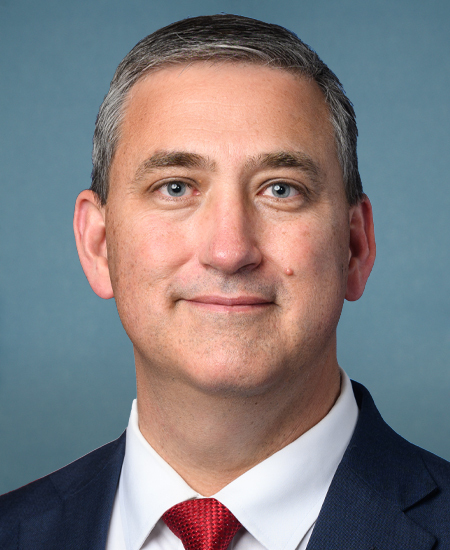
Rep. Nathaniel Moran
Sponsored bills
Maddy summaryThis bill prohibits public colleges receiving federal funds under the Higher Education Act from denying religious student groups equal access to campus facilities and official recognition that is available to other student organizations. It directly affects public institutions of higher education that receive federal funding, requiring them to treat religious groups the same as secular groups regarding access to spaces and official status. The key provision states that schools cannot withhold these rights based on a group's religious beliefs, practices, speech, leadership standards, or conduct. The law aims to ensure religious student organizations have the same opportunities as non-religious groups on campus.
Maddy summaryHR 5, the Parents Bill of Rights Act, would require public schools receiving federal funding to provide parents with greater access to educational information. The bill mandates that schools post curricula online or widely distribute it to parents, include school budgets in report cards, and provide specific information about school activities including violent incidents and plans to eliminate gifted programs. It also guarantees parents the right to meet with teachers twice a year, review library materials, and address school boards. These requirements would apply to all local educational agencies and schools covered by the Elementary and Secondary Education Act. The bill amends existing education laws to strengthen parental transparency and involvement in their children's education.
This bill requires the President to impose visa- and property-blocking sanctions on foreign persons (individuals or entities) that knowingly engage in certain acts of corruption in Mexico. Such corruption includes bribery, extortion, acts of violence against corruption investigators, and involvement in illicit fentanyl production or distribution.
Maddy summaryHR 1777 establishes a $50 million annual fund (2024-2028) for collaborative defense research between the U.S. and Israel in emerging technologies like artificial intelligence, cybersecurity, directed energy, and automation. The bill directly supports U.S. and Israeli military forces by enabling joint development of new warfare capabilities to address current and future defense challenges. Key provisions include authorizing $50 million per year for collaborative projects, building on existing U.S.-Israel defense partnerships like counter-tunnel and counter-drone systems. This funding aims to strengthen bilateral defense innovation without altering existing military aid structures.
Ensuring Lawful Collection of Hidden Assets to Provide Order Act or the EL CHAPO Act This bill requires the forfeited profits of Joaquin Archivaldo Guzman Loera (El Chapo) from his illicit drug trafficking enterprise to be reserved for border security measures between the United States and Mexico, including the completion of a wall. Additionally, it requires the forfeited funds from the felony conviction of a member of a drug cartel to be reserved for border security measures between the United States and Mexico, including the completion of a wall.
Maddy summaryH.J. Res. 30 seeks to block a Department of Labor rule that would have required retirement plan managers (like those handling 401(k)s) to follow strict "prudence and loyalty" standards when selecting investments and voting on company matters. The rule, published in December 2022, aimed to protect retirement savings by ensuring fiduciaries prioritize participants' interests. This resolution, if passed, would prevent the rule from taking effect, avoiding new compliance requirements for retirement plan managers and sponsors. It directly affects retirement plan administrators and the millions of participants in these plans.
Maddy summaryHR 1141, the Natural Gas Tax Repeal Act, repeals a specific provision (Section 136) of the Clean Air Act that established an incentive program for reducing methane emissions and waste in natural gas systems. This bill directly affects natural gas producers and operators who previously participated in or were subject to the methane emissions reduction program. The key mechanism is the removal of this incentive program, eliminating federal requirements and financial incentives related to methane waste reduction for the natural gas industry. The bill also rescinds unobligated funds allocated for this program. This is a policy change removing a regulatory incentive, not a tax repeal.
Saving America’s Vulnerable Endangered Species Act or the SAVES Act This bill limits the protection of endangered and threatened species to species that are native to the United States, thus removing protection given to nonnative species in the United States that are listed as threatened or endangered.
Maddy summaryHR 1560 exempts specific water transfers between public water supplies in Texas, Arkansas, and Louisiana from federal invasive species restrictions under the Lacey Act. It applies only when both water sources contain the same banned invasive species, transfers occur directly between them, and approved mitigation measures (like chemical treatment, filtration, or monitoring) are used. The bill requires water authorities to notify each other about transfers and species presence, with the water seller covering all mitigation costs. This directly affects public water systems managing cross-state water transfers in these three states.