

Maddy summaryThis bill, HR 1282 (Major Richard Star Act), expands benefits for certain military retirees by allowing them to receive both veterans' disability compensation and military retirement pay simultaneously. It specifically affects combat-related disabled retirees under Chapter 61 of the military retirement system who have fewer than 20 years of service. The key change removes the automatic reduction of military retirement pay when these retirees also receive disability compensation, as amended in Section 1413a(b)(3) of Title 10. Technical updates to the law’s structure and effective date (starting after enactment) complete the provisions.
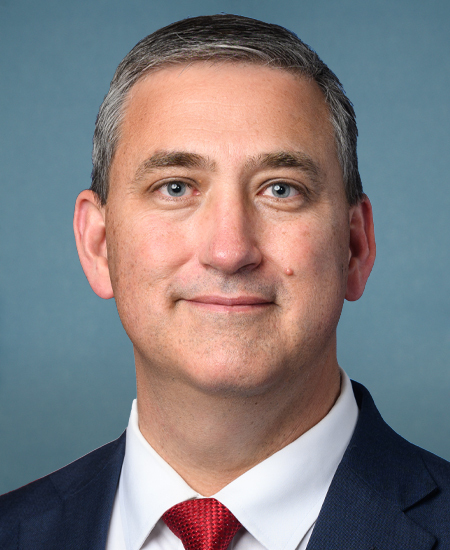
Rep. Nathaniel Moran
Sponsored bills
Rural Weather Monitoring Systems Act This bill requires the Government Accountability Office to report on rural weather monitoring systems, including with respect to availability, capacity, and necessary updates.
Maddy summaryHJRES 80 proposes a constitutional amendment requiring the federal government to balance its budget over time, meaning annual spending must equal revenue (excluding debt payments and borrowing) within ten years of ratification. It directly affects Congress and the executive branch by mandating budgetary balance, with exceptions only for emergencies approved by a two-thirds vote in both the House and Senate. During emergencies, temporary spending above revenue would be allowed but must be repaid quickly. This change would require ratification by 3/4 of state legislatures within seven years to take effect.
Maddy summaryHR 4575, the Weather Radar Coverage Improvement Act, directs the National Weather Service to replace the aging NEXRAD radar system with new digital phased array technology by September 30, 2040. The bill requires developing a plan including coverage improvement estimates, creating a testbed for evaluating commercial radars, and prioritizing third-party contracts to fill coverage gaps using diverse radar technologies. This directly affects the National Weather Service, which must implement the replacement, and communities in areas with current radar coverage gaps. The key provision allows contracting private companies ("Radar-as-a-Service") to supplement radar coverage, particularly in geographically challenging regions.
Maddy summaryThis bill requires the District of Columbia to meet specific security standards for mail-in ballot drop boxes used in DC elections. It mandates that drop boxes must be located inside DC government buildings, equipped with 24-hour electronic surveillance, and have ballots collected daily after 5:00 p.m. during election periods. These rules apply to all DC elections, including federal races and ballot initiatives. The bill amends the Help America Vote Act of 2002 to add these requirements for DC ballot security.
Canadian Snowbird Visa Act This bill authorizes the Department of Homeland Security to admit into the United States qualifying Canadian citizens as long-term nonimmigrant visitors. A qualifying Canadian citizen is an individual who (1) is at least 50 years old, (2) maintains a Canadian residence, (3) owns a U.S. residence or has rented a U.S. accommodation for the duration of the individual's stay, (4) is not inadmissible or deportable, (5) will not engage in employment or labor for hire in the United States other than for a non-U.S.-based person or entity by whom the Canadian citizen was employed in Canada or for whom the Canadian citizen performed services in Canada, and (6) will not seek certain forms of assistance or benefits. A qualified individual may be admitted for up to 240 days during any single 365-day period. The spouse of such an individual may be admitted under the same terms, except that the spouse is not required to separately satisfy the requirement for owning or renting a residence in the United States. An individual admitted into the United States under this bill shall have nonresident alien tax status.
Maddy summaryHR 4398, the "Patriotism Not Pride Act," prohibits federal agencies from using taxpayer funds to support or promote Lesbian, Gay, Bisexual, Transgender, Queer, and Intersex (LGBTQ+) Pride Month activities, including events, communications, or educational programs. It also bans the display of any flag representing sexual orientation or gender identity on federal property or grounds. The bill applies to all federal agencies as defined in U.S. law and directly affects how agencies manage public communications and property. This is a procedural measure restricting specific federal activities, not a substantive policy change.
Maddy summaryThe PREVAIL Act (HR 4370) reforms U.S. patent law to strengthen protections for inventors and prevent strategic abuse of patent review processes. It requires 3-member panels for patent reviews, prohibits members who participated in instituting a review from hearing it, and creates clearer rules for "real parties in interest" to prevent parties from hiding behind others. The bill establishes a "single forum" rule to prevent parallel patent challenges in court and the Patent Trial and Appeal Board, and changes evidentiary standards to require clear and convincing evidence for unpatentability claims. These changes aim to make the patent system more efficient and fair for inventors, particularly small businesses and individual innovators, which the bill states are crucial for U.S. economic competitiveness.
Maddy summaryThe Project Safe Neighborhoods Reauthorization Act of 2023 extends federal funding for the Project Safe Neighborhoods (PSN) program through fiscal years 2024-2028, replacing its previous authorization period. The bill directly affects state, local, tribal, and federal law enforcement agencies, prosecutors, and community groups that receive PSN grants to reduce violent crime. Key provisions allow grantees to use funds for hiring crime analysts, covering overtime for officers and assistants, purchasing technology for crime reduction, and supporting multi-jurisdictional task forces. It also requires annual reports from the Attorney General detailing fund usage, community outreach, and violent crime statistics (including murder, robbery, and assault) in each program area. The program operates across all 94 U.S. federal judicial districts and territories.
Maddy summaryHJRES 44 is a congressional resolution seeking to block a 2021 rule by the Bureau of Alcohol, Tobacco, Firearms, and Explosives (ATF). The rule classified firearms with stabilizing braces as "short-barreled rifles," which would have required additional licensing and regulation. This resolution uses a specific legal process (under Title 5, U.S. Code) to formally disapprove the ATF rule, meaning the rule would no longer be in effect. It directly affects firearm owners, manufacturers, and dealers who would have been subject to the rule’s requirements.