

This bill requires the Internal Revenue Service (IRS) to report to Congress on projections of the estimated tax gap (i.e., the difference between tax liabilities owed to the IRS and those liabilities that the IRS actually collects). The IRS may use artificial intelligence and related data analysis tools to calculate a tax gap projection. The bill also requires the Joint Committee on Taxation to issue periodic reports to the congressional tax committees on the tax gap projection. The bill restricts IRS funding to FY2021 levels for audits and enforcement until it publishes an updated tax gap projection. Funding is also restricted for certain purposes, including (1) targeting U.S. citizens who exercise their First Amendment rights, (2) targeting a group for regulatory scrutiny based on its ideological beliefs, and (3) auditing individual taxpayers with an adjusted gross income of less than $400,000. The bill directs the IRS to establish a fellowship program to recruit private sector tax experts to join the IRS to create and participate in the audit task force. The purposes of the tax force include performing audit case selection, educating IRS employees on emerging issues, auditing selected taxpayers, addressing offshore tax evasion, and identifying, mentoring, and training IRS junior employees with respect to audits.
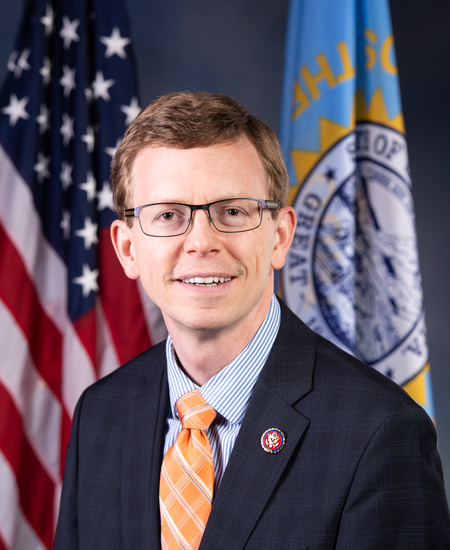
Rep. Dusty Johnson
Sponsored bills
Renter Protection Act of 2021 This bill limits the use and availability of assistance provided under certain emergency rental assistance programs created in response to the COVID-19 pandemic. For example, rental assistance not yet used by grantees to assist eligible households as of July 1, 2021, must only be used for rental arrears after this date, and not for rent, utilities and home energy costs and arrears, or other expenses as allowed under current law. Further, the bill changes the deadline for distribution of these funds from September 30, 2022, to December 31, 2021.
Countering Communist China Act This bill addresses issues related to China, tax incentives, and other topics. The bill imposes visa- and property-blocking sanctions on certain entities and individuals that (1) are involved in acts of malign disinformation on behalf of a foreign government or political party, or (2) have engaged in a pattern of significant infringement of intellectual property belonging to a U.S. entity or individual. It also authorizes sanctions on developers and owners of software that makes unauthorized transmissions of user data to servers that are located in China and are accessible by China's government. The bill also provides tax incentives for relocating pharmaceutical, medical supply, or medical device manufacturing to the United States, including by allowing accelerated depreciation of nonresidential real property acquired in connection with such relocation; eliminates the five-year amortization requirement for research and experimental expenditures scheduled to begin in 2022, thus allowing continued expensing of such expenditures in the taxable years in which they are incurred; prohibits an institution of higher education from receiving certain federal funds if the institution has a contractual partnership with an entity controlled by China's government or organized under China's laws; modifies presumptions and evidentiary standards in administrative patent validity challenges; bars China from asserting sovereign immunity in certain instances; requires U.S. representatives to the International Monetary Fund (IMF) to take certain actions, such as opposing any increase to the weight given to China's currency when determining the value of IMF Special Drawing Rights; and permanently rescinds unobligated funds previously made available for certain economic relief programs related to COVID-19.
American Freedom and Internet Access Act of 2021 This bill requires the Department of the Air Force to develop and implement Operation Starfall to deploy stratospheric balloons, aerostats, or satellite technology capable of rapidly delivering wireless internet anywhere on the planet from the stratosphere or higher.
Harlem Hellfighters Congressional Gold Medal Act This bill provides for the award of a Congressional Gold Medal to the 369th Infantry Regiment, commonly known as the Harlem Hellfighters, in recognition of their bravery and outstanding service during World War I.
This resolution condemns the President's failure to heed military and intelligence advisors about the speed and nature of the Taliban offense in Afghanistan and urges the President to commit to maintaining the evacuation operation as long as necessary to evacuate any U.S. citizen, lawful permanent resident, or Afghan partner who requests evacuation assistance .
CRP Flexibility Act This bill modifies the Conservation Reserve Program (CRP) to permit emergency haying during the primary nesting season to respond to drought or other emergencies. (Under current law, emergency haying is only permitted outside of the primary nesting season.) Under CRP, the Department of Agriculture provides annual payments to agricultural producers to take highly erodible and environmentally sensitive land out of production and install resource-conserving practices.
Resilient Federal Forests Act This bill modifies and sets forth provisions regarding forest management activities on National Forest System, public, and tribal lands. The bill provides for, among other things the Departments of Agriculture (USDA) and Interior to conduct fireshed management projects in fireshed management areas, certain categorical exclusions for various purposes, the balancing of the short- and long-term effects of forest management activities while considering injunctive relief, USDA and Interior to establish their own discretionary arbitration pilot programs as an alternative dispute resolution process for forest management activities, increasing the maximum term for a stewardship end result contract to 20 years, demonstration projects to support the development and commercialization of biochar on Indian forest lands or rangelands and in nearby communities by providing reliable supplies of feedstock from federal lands, the decommissioning of certain Forest Service Roads within designated high fire-prone areas, repealing of the Eastside Screens requirements on National Forest System lands, making the Northwest Forest Plan Survey and Manage Mitigation Measure Standards and Guidelines inapplicable to any National Forest System lands or public lands, development of a protection plan for giant sequoia trees on National Forest System lands and public lands, and permanent rights of access to the Oregon and California Railroad grant lands and the Coos Bay Wagon Road grant lands for private landowners issued reciprocal road rights-of-way.
Protecting and Restoring Our Trees by Enhancing Conservation and Treatments Act or the PROTECT Act This bill categorically excludes forest management activities carried out on specified public lands from requirements to conduct environmental assessments and environmental impact statements. In order to be excluded from environmental review, the primary purposes of such activities must be to address insect or disease infestations, reduce hazardous fuel loads, protect municipal water sources, protect critical habitats from catastrophic disturbances, increase water yield, remove dead or dying trees or trees at high risk of dying, or facilitate native species restoration. The bill limits the categorical exclusion to activities that manage up to 10,000 acres of land. However, activities that manage up to 30,000 acres of land may be categorically excluded from environmental review if the activities are developed through a collaborative process, proposed by certain resource advisory committees, or covered by community wildfire protection plans.
Tribal Labor Sovereignty Act of 2021 This bill excludes Indian tribes and tribal enterprises and institutions on tribal land from requirements for employers under the National Labor Relations Act (NLRA). (Currently under the NLRA, employers may not engage in unfair labor practices and must allow employees to form unions, engage in collective bargaining, and take collective action.)