

Maddy summaryThe Merit Restoration Act prohibits federal research agencies and grant recipients from using specific diversity, equity, and inclusion practices in their work. This law targets requirements that mandate employees or researchers sign statements or complete training asserting that certain races, sexes, or national origins are inherently superior or inferior. If a recipient is found to have violated these rules, the agency must freeze their funding and may require them to repay any money used during the violation. The restrictions apply to grants awarded on or after the bill becomes law, affecting scientific and medical research funded by the federal government.
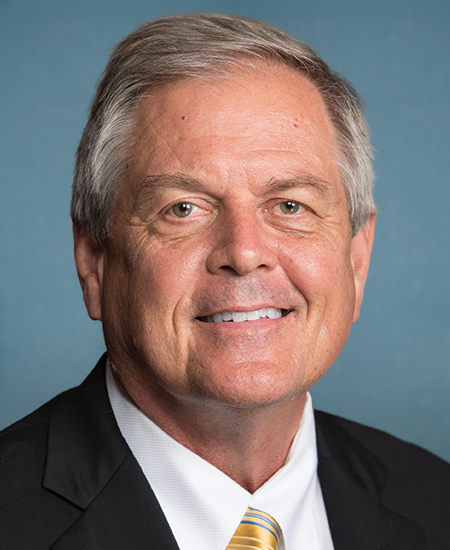
Rep. Ralph Norman
Sponsored bills
Maddy summaryHRES 1314, the America 250 Commemorative Flag Act, designates a special flag featuring the number 250 within the circle of stars as an official United States flag for the 250th anniversary of the Declaration of Independence. This resolution authorizes the America 250 flag to be flown alongside the national flag and POW/MIA flags at all government buildings, embassies, and official U.S. locations worldwide during the commemoration year. The bill serves as a ceremonial measure to honor the nation's history and the sacrifices made by patriots, without altering any existing laws or policies.
Maddy summaryHR 5625, the Cashless Bail Reporting Act, requires the Attorney General to publish and regularly update a public list of all states and local governments that allow cashless bail (release without requiring money bonds). This list must be available within 30 days of the bill's enactment and updated quarterly. The bill does not change existing bail laws but increases transparency by making it easier for the public to see where cashless bail is used. It directly affects individuals seeking information about bail practices in different jurisdictions. The key mechanism is a mandatory, publicly accessible database maintained by the federal government.
Maddy summaryThis bill, known as the ASSIMILATION Act, fundamentally restructures the U.S. immigration system by replacing family-based and lottery-based admissions with a merit-based approach that prioritizes economic self-sufficiency and national interest. It directly affects prospective immigrants, current visa holders, and employers by establishing new requirements for entry, employment, and naturalization. Key provisions eliminate the diversity visa lottery, restrict family-sponsored immigration to spouses and minor children, and mandate that all immigrants demonstrate the ability to support themselves without relying on government benefits. The legislation also introduces stricter enforcement measures, such as making visa overstays a criminal offense, expanding E-Verify to all employers, and requiring higher English proficiency and tax compliance for citizenship. Additionally, it tightens asylum rules by adding a transit bar for those passing through other countries and limits parole to specific humanitarian cases rather than broad programs.
Maddy summaryThe In God We Trust Act requires the Administrator of General Services to display the national motto "In God We Trust" on every public building within the United States. This mandate applies to all federal buildings and must be completed no later than one year after the law is enacted. The bill specifies that the motto must be inscribed or displayed in a prominent location on each structure.
This resolution expresses support for police officers and other law enforcement personnel. The resolution further recognizes law enforcement officers across the United States in the pursuit of preserving safe and secure communities; the need to ensure that such officers have the equipment, training, and resources necessary to protect their health and safety while they are protecting the public; and the law enforcement community for acts of sacrifice and heroism. The resolution expresses condolences and appreciation to the loved ones of each law enforcement officer who has made the ultimate sacrifice in the line of duty.
Maddy summaryThe CRUSADE Act amends immigration law to require applicants for special immigrant visas to explicitly disavow Sharia law. Under this provision, individuals seeking these specific visas must take an additional oath affirming their commitment to uphold the U.S. Constitution. The bill directly affects foreign nationals applying for special immigrant status by adding a new eligibility requirement related to their legal and religious beliefs. This change does not alter the general immigration process but imposes a specific condition on one category of visa applicants.
Maddy summaryThis resolution expresses support for designating the week of May 3 through May 9, 2026, as "National Small Business Week." It aims to honor the contributions of small businesses and entrepreneurs across the United States, acknowledging their role in supporting millions of jobs. The bill does not create new laws or regulations but serves as a formal statement of appreciation from the House of Representatives.
Maddy summaryThis bill proposes a constitutional amendment to clarify how citizenship is determined at birth, directly affecting individuals born in the United States and their parents. It would restrict automatic citizenship to children born to parents who are U.S. citizens, lawful permanent residents, or active-duty military members, while also granting Congress the authority to pass laws enforcing these rules. By modifying the interpretation of the 14th Amendment, the measure aims to establish specific criteria for birthright citizenship that align with current immigration laws.
Maddy summaryLogan's Law directs the Attorney General to create a free, public database listing individuals with qualifying violent convictions, requiring states that receive federal crime grants to submit their records. The database will allow searches by various personal details and conviction specifics, such as the judge and prosecutor involved, and must be updated at least every three months. Additionally, the bill requires the Attorney General to report on current barriers to sharing criminal records between states and the federal government and to propose solutions for improving this data exchange. States that fail to submit the required data could face penalties, including the withholding of federal Byrne JAG grant funds or the direct distribution of those funds to local governments within the state.