

Maddy summaryThis bill establishes a new excise tax on crude oil extracted or imported by large oil companies and uses the revenue to provide rebates to eligible consumers. The tax would be imposed on companies that extract or import over 300,000 barrels of crude oil per day, at a rate of 50% of the difference between the current Brent crude oil price and a 2025 baseline price, adjusted for inflation. All revenue from this tax would be deposited into a new "Protect Consumers from Gas Hikes Fund." This fund would then be used to provide refundable tax credits, or rebates, to eligible individuals, with the rebate amount determined by the Secretary based on fund revenues and the number of eligible individuals. These rebates would be phased out for individuals with adjusted gross incomes exceeding certain thresholds, such as $150,000 for joint filers.
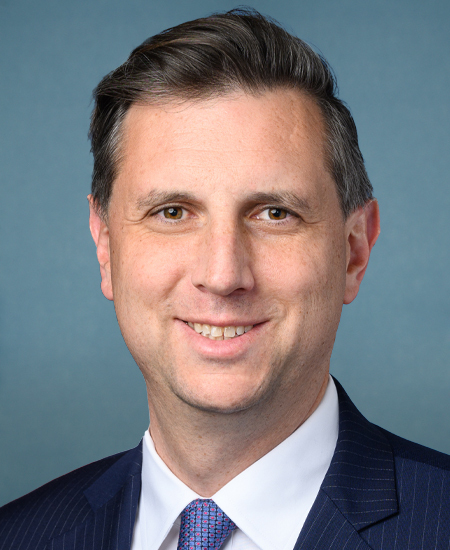
Rep. Seth Magaziner
Sponsored bills
Maddy summaryHR 2294 reauthorizes the Integrated Coastal and Ocean Observation System Act of 2009, extending funding and updating governance for the nation's ocean and coastal observation network. It changes references from "Council" to "Committee" throughout the law and adds requirements for federal agencies to collaborate with regional coastal observing systems on data sharing. The bill specifically directs agencies to conduct operational oceanography measurements and establishes $56 million annually for fiscal years 2026 through 2030 to support this system. This bill directly affects federal agencies managing ocean observation programs and regional coastal data networks.
Maddy summaryThis bill, known as the Fair Wages for Home Care Workers Act, would change federal labor rules to require overtime pay and minimum wage protections for certain babysitters. It specifically targets casual babysitting work that is irregular or intermittent, while excluding trained medical professionals like nurses and home health aides from these changes. The law would also allow babysitters to perform up to 20% of their work time on unrelated household tasks without losing their protected status. These amendments would apply to workers covered by the Fair Labor Standards Act of 1938 who provide custodial care for infants or children in private homes.
Maddy summaryThis bill would require infant formula manufacturers to conduct standardized testing for specific pathogens and microorganisms in both their facilities and finished products. It mandates that companies report positive test results to the FDA within one business day and retain records of these findings for inspections. The legislation also requires the FDA to notify congressional committees within one business day of receiving positive test results or issuing certain inspection classifications. Additionally, the bill establishes clear inspection standards that apply to all infant formula products regardless of where they are made.
This concurrent resolution directs the President to terminate the use of U.S. Armed Forces from hostilities against Iran or any part of the Iranian government or military unless a declaration of war or authorization to use military force for such purpose has been enacted. The resolution specifies that it shall not be construed to prevent the United States from defending itself from imminent attack.
Maddy summaryHRES 1107 is a House resolution urging the President to issue a proclamation flying the U.S. flag at half-staff to honor Rev. Jesse Jackson. The resolution recognizes his civil rights leadership, including founding the Rainbow PUSH Coalition and his presidential campaigns in 1984 and 1988, which advanced racial equality and economic justice. This symbolic gesture directly affects the President (as the one who would issue the proclamation) and the public, who would observe the flag at half-staff.
Maddy summaryThis bill establishes the United States Immigration Courts as an independent judicial system under Article I of the Constitution, separate from the executive branch. It creates three divisions (appellate, trial, and administrative), sets qualifications for judges, and defines jurisdiction for immigration proceedings. The bill transfers functions from the Executive Office for Immigration Review to this new court system, with detailed provisions for appointment, compensation, and retirement of judges. It also requires annual reporting to Congress on court workload and outcomes, including demographic information and case processing times.
Maddy summaryThis bill, the PrEP Access and Coverage Act of 2026, requires most health insurance plans to cover HIV prevention medication without charging patients any out-of-pocket costs. It directly affects people with private insurance, government health programs like Medicare and Medicaid, military health care, and the Indian Health Service. The law mandates that insurance companies cannot require pre-approval for these medications, cannot charge deductibles or copayments for them, and cannot deny or charge higher premiums for life, disability, or long-term care insurance based on someone taking HIV prevention medication. The bill also creates a new public education campaign to increase awareness about HIV prevention options and provides federal funding to states and community organizations to expand access to these services.
Maddy summaryThe INCREASE Housing Affordability Act creates a new tax credit for converting commercial buildings (like offices) into residential housing. Property owners who convert eligible buildings can claim a tax credit equal to 15% of qualified conversion costs, with limits of $200,000 per residential unit or $10 million per building. The bill also provides bonus credits for projects with rent-restricted units for lower-income residents (10-20% more credit) and for paying prevailing wages (15% more credit). To qualify, buildings must have been nonresidential for at least 15 years and undergo substantial conversion (with expenditures exceeding adjusted basis or $15,000).
Maddy summaryThe DISCLOSE Act of 2026 aims to increase transparency in election spending and prevent foreign influence. It expands the ban on foreign money to cover federal, state, and local elections, including ballot initiatives and judicial nominations, and criminalizes using corporations to conceal these funds. The bill mandates that organizations spending over $10,000 on campaign-related activities, such as independent expenditures or judicial nomination advocacy, disclose their beneficial owners and top donors. Additionally, it establishes new "Stand By Every Ad" disclaimers for political communications, requiring the highest-ranking official to approve the message and, for certain ads, list their top funders. These provisions directly affect non-candidate organizations, individuals involved in political and judicial nomination spending, and foreign nationals.