

Maddy summaryThis is a non-binding resolution (HRES 206), not a legislative bill. It expresses the House's support for preserving the "stepped-up basis" tax provision (Section 1014 of the Internal Revenue Code), which allows heirs to reset the tax cost basis of inherited assets like farmland or business equipment to their current market value. The resolution cites that 98% of farms and 19% of businesses are family-owned, noting that eliminating this provision could increase taxes for 66% of midsized farms. It specifically urges opposition to new taxes on family farms and small businesses but does not change any tax law or policy.
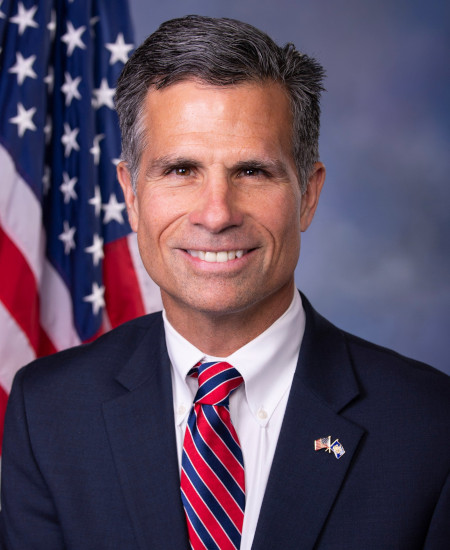
Rep. Daniel Meuser
Sponsored bills
Maddy summaryHR 1990, the American Innovation and R&D Competitiveness Act of 2025, amends tax rules for businesses to make research and development (R&D) costs more flexible. It allows companies to deduct R&D expenses immediately as business costs (instead of capitalizing them) or to spread these costs over a minimum 60-month period. The bill clarifies which R&D expenses qualify, excludes land improvements and mineral exploration costs, and ensures companies can claim R&D tax credits without conflict with expense treatment. This directly affects businesses that conduct R&D, changing how they account for these costs on tax returns starting for 2022 taxable years.
Maddy summaryThis bill extends current Medicare payment rates for durable medical equipment (like wheelchairs and oxygen) in non-rural areas through December 2025. It delays implementing a new payment rule for all areas until January 2026. The law directly affects Medicare beneficiaries needing equipment and the suppliers who provide it by maintaining existing reimbursement rates for an additional year. This avoids immediate payment reductions for non-rural areas while postponing the full transition to new rates.
Maddy summaryH.J.Res. 74 disapproves a rule by the Bureau of Consumer Financial Protection (BCFP) that would have prohibited creditors and consumer reporting agencies from using medical information - such as unpaid medical bills - in credit reports and credit scoring. The rule, published in the Federal Register on January 14, 2025, aimed to prevent medical debt from affecting credit scores. If enacted, this resolution would block the rule from taking effect, maintaining the current practice where medical debt can influence credit decisions. This disapproval follows standard Congressional Review Act procedures for overturning agency rules.
Maddy summaryHR 1940, the Tanning Tax Repeal Act of 2025, removes a federal excise tax on indoor tanning services. It directly affects tanning salons and businesses providing these services by eliminating the tax they previously paid. The bill repeals Chapter 49 of the Internal Revenue Code, which imposed the tax, and the change takes effect for services provided after the bill becomes law. This is a straightforward tax repeal with no new requirements or funding mechanisms.
Maddy summaryHR 1881, the Methane Reduction and Economic Growth Act, creates a new tax credit for businesses that capture methane emissions from mining operations. It directly affects mining facilities (including underground, abandoned, or surface mines) that install methane capture equipment and capture at least 2,500 metric tons of methane annually. The bill provides a tax credit by modifying existing carbon capture tax rules to apply specifically to methane, requiring captured methane to be used for energy (e.g., in pipelines meeting safety standards or for industrial heat) with minimal atmospheric release. The credit applies to methane captured after December 2024, aiming to incentivize reducing methane emissions from mining sources.
Maddy summaryThis bill adds a new tax provision (Section 139J) to the Internal Revenue Code, excluding interest income from certain rural and agricultural loans from taxable income for qualifying lenders. It directly affects banks, insurance companies, and farm credit entities that provide loans secured by rural or agricultural property (including qualifying single-family homes in rural areas), while excluding loans to foreign adversary entities (like those linked to China, Russia, or Iran). The law requires lenders to report on how this tax exclusion impacts loan interest rates, with a Treasury report due to Congress within five years. The policy change aims to reduce lenders' tax burden on these specific loans, potentially lowering costs for borrowers in rural communities.
Maddy summaryHR 1771, the Improper Payments Transparency Act, requires federal agencies to include detailed explanations of improper payments in the President's annual budget. It directly affects executive agencies that already report improper payments under existing law (specifically under Chapter 33, Subchapter IV of the U.S. Code). The bill mandates agencies provide a narrative explaining *why* improper payment amounts and rates changed (or didn't change) for specific programs over the past three years, plus details on incomplete corrective actions and future steps to address these issues. This aims to increase transparency about government payment errors by making specific, factual data publicly available in the budget submission.
Maddy summaryHR 1787 authorizes the U.S. Mint to produce commemorative coins honoring baseball legend Roberto Clemente, including $5 gold, $1 silver, and half-dollar coins, with specific specifications for weight, size, and metal content. The bill requires the coins to feature Clemente's image and commemorative inscriptions, and mandates a surcharge ($35 for gold, $10 for silver, $5 for half-dollar) paid to the Roberto Clemente Foundation for its educational, youth sports, and disaster relief programs. All coins must be minted in 2027, sold at face value plus surcharge and production costs, and will be legal tender. The bill focuses solely on the coin program, not broader policy changes.
Federal Firearms Licensee Protection Act of 2025 This bill modifies criminal penalties for an offense involving the theft of a firearm from a licensed importer, manufacturer, or dealer, or from their business premises. Specifically, the bill does the following: increases from 10 to 20 years the maximum prison term, and creates a 3- or 5-year mandatory minimum prison term for an offense that occurs during the commission of a burglary or robbery. An attempt to commit an offense is subject to the same penalties as a substantive offense.