

Maddy summaryHR 2513 establishes a dedicated Inspector General (IG) position for the Consumer Financial Protection Bureau (CFPB), replacing the current shared IG arrangement with the Federal Reserve. The bill requires the CFPB to allocate 2% of its annual funding to the IG's office and mandates semiannual hearings before specific congressional committees to review the IG's reports. It also sets a 60-day deadline for the President to appoint the first CFPB IG after the bill's enactment. These changes directly affect the CFPB's internal oversight structure and its reporting obligations to Congress.
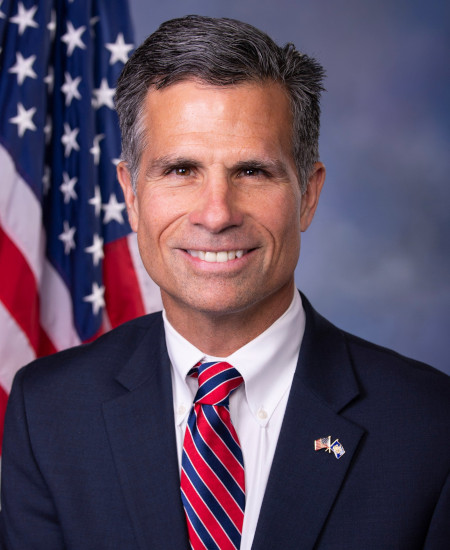
Rep. Daniel Meuser
Sponsored bills
Save America's Forgotten Equines Act of 2025 or the SAFE Act of 2025 This bill permanently prohibits the slaughter of equines (e.g., horses and mules) for human consumption. (Current law prohibits the slaughter of dogs and cats for human consumption. This bill extends the prohibition to equines.) Specifically, this bill prohibits a person from knowingly (1) slaughtering an equine for human consumption; or (2) shipping, transporting, possessing, purchasing, selling, or donating an equine to be slaughtered for human consumption or equine parts for human consumption. The bill subjects a violator to a fine. The bill applies to conduct in or affecting interstate or foreign commerce or within the special maritime and territorial jurisdiction of the United States. However, it does not apply to an activity carried out by an Indian for a religious ceremony. As background, in recent years, the appropriations acts have prohibited the Department of Agriculture (USDA) from using federal funds to inspect horses before they are slaughtered for human consumption. Therefore, there are currently no USDA-inspected horse slaughter facilities in the United States.
Maddy summaryHR 1613, the Protecting Mushroom Farmers Act, requires the federal Risk Management Agency to develop and research crop insurance policies specifically for mushroom farmers. The bill directs the agency to study insurance coverage for risks like pests (e.g., mushroom flies), fungal diseases, power outages, and extreme weather affecting growing media and production. Key provisions mandate streamlined paperwork to accommodate mushrooms' short growing cycles and multiple crop types within a single facility. The agency must submit a report to Congress within two years detailing research findings and recommendations for these new insurance policies. This bill directly affects commercial mushroom growers by aiming to create tailored insurance options for their unique production challenges.
Maddy summaryThis bill amends the tax code to allow health savings account (HSA) funds to be used tax-free for funeral expenses of the account holder. It defines covered expenses broadly - including burial, cremation, caskets, funeral services, and related costs - and sets a $5,000 annual limit per person. Expenses incurred within 90 days of the account holder’s death can be treated as if paid before death. The change applies to distributions after the bill’s enactment for eligible taxable years.
Maddy summaryHR 2398, the Rural Veterinary Workforce Act, amends federal tax law to exempt certain student loan repayment or forgiveness assistance from income tax for veterinarians working in rural areas. It specifically expands existing tax exclusions to include programs under the National Agricultural Research, Extension, and Teaching Policy Act (7 U.S.C. 3151a) and similar state-level programs designed to increase rural veterinary access. This change directly affects veterinarians participating in qualifying loan repayment or forgiveness programs in states prioritizing rural veterinary services. The policy change modifies IRS tax treatment to reduce the financial burden on veterinarians serving underserved rural communities.
Maddy summaryThis bill requires the VA and Department of Defense to provide stellate ganglion block therapy to eligible veterans and active-duty military members diagnosed with PTSD who have given informed consent after learning about the treatment's risks and benefits. It applies specifically to veterans enrolled in VA care and service members in the TRICARE program who meet the diagnosis and consent criteria. The bill mandates that VA and DoD update their joint clinical guidelines within 180 days to include this therapy option and its clinical indicators. The policy change takes effect 180 days after enactment, making this therapy a covered benefit through existing VA and military healthcare systems.
Maddy summaryThe PHIT Act of 2025 allows taxpayers to deduct certain fitness-related expenses as medical costs on their federal tax returns. It directly affects individuals and families who pay for qualifying physical activity programs, such as gym memberships, fitness classes, or approved equipment. Key provisions include setting annual limits ($1,000 per person or $2,000 for joint returns), defining eligible fitness facilities (excluding golf courses or private clubs), and specifying that equipment must be used exclusively for physical activity. The bill amends the Internal Revenue Code to treat these expenses as deductible medical costs, effective for taxable years after its enactment.
Maddy summaryThe Cellphone Jamming Reform Act of 2025 allows state and federal correctional facilities to operate jamming systems that block cell signals from entering or leaving the facility, specifically targeting contraband devices used by inmates. It directly affects prisons and jails by enabling them to disrupt unauthorized wireless communications without FCC approval, provided the jamming is limited to housing areas within the facility. Key requirements include state facilities covering all costs themselves, consulting with local law enforcement before implementation, and notifying the Bureau of Prisons. The law aims to address security risks from smuggled phones while restricting jamming to only necessary areas and requiring transparency.
Maddy summaryThis bill amends a provision of law governing eligibility for Department of Veterans Affairs headstones, markers, and burial receptacles. It removes a requirement that a veteran must have died on or after November 11, 1998, to qualify for these burial benefits. By eliminating this date cutoff, the bill expands eligibility to veterans who died before that date. This change would directly affect veterans who died prior to November 11, 1998, and their families, allowing them to receive these burial benefits.
Maddy summaryHR 2325, the CEMAC Act, requires the U.S. to withhold its voting support at the International Monetary Fund (IMF) for any CEMAC member state until the IMF publicly clarifies that funds paid by oil companies to the Bank of Central African States (BEAC) for site rehabilitation cannot count toward a country's foreign exchange reserves. This directly affects U.S. oil and gas companies operating in the CEMAC region, as the bill aims to prevent CEMAC countries from misusing these restoration funds as reserves - a practice the IMF has not properly addressed. The key mechanism is the U.S. withholding its vote on IMF quota increases or special financial assistance for CEMAC nations until this IMF clarification occurs. The bill does not alter CEMAC's regulation but pressures the IMF to correct a policy that risks billions in oil investment.