

Defund Planned Parenthood Act of 2021 This bill restricts federal funding for Planned Parenthood Federation of America Inc. or any of its affiliates or clinics for one year. Specifically, it prohibits funding those entities unless they certify that the affiliates and clinics will not perform, and will not provide funds to entities that perform, abortions during that year. If the certification requirement is not met, the Department of Health and Human Services and the Department of Agriculture must recoup any federal assistance received by those entities. However, the bill's funding restriction does not apply to abortions performed in cases of rape or incest or when necessary to resolve a physical condition that endangers a woman's life. The bill also provides additional funding for community health centers for the one-year period. These funds are subject to the same abortion-related restrictions and exceptions.
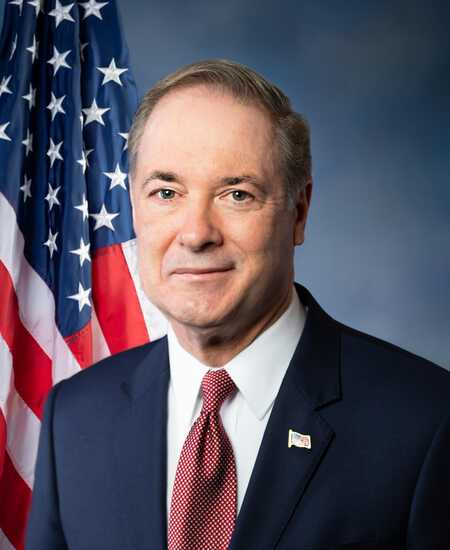
Rep. John Joyce
Sponsored bills
Protecting Life and Integrity in Research Act of 2021 This bill prohibits the Department of Health and Human Services from conducting or supporting any research that involves the use of human fetal tissue from an induced abortion. The bill also prohibits soliciting or acquiring a donation of human fetal tissue from an induced abortion, other than for purposes of an autopsy or burial. The bill applies requirements on the research of transplantation of fetal tissue for therapeutic purposes to research on fetal tissue in general.
Support And Value Expectant Moms and Babies Act of 2021 or the SAVE Moms and Babies Act of 2021 This bill prohibits the Food and Drug Administration (FDA) from approving any new drug (either as a brand-name drug or a generic) intended to terminate a pregnancy and imposes additional restrictions on such drugs that are already approved. Under the bill, an already-approved drug intended to terminate a pregnancy may be dispensed to a patient only with a prescription. Furthermore, the FDA may not approve any labeling change that would authorize (1) using the drug after 70 days of gestation, or (2) dispensing the drug by any means other than in-person administration by the prescribing health care practitioner. The FDA must also impose additional restrictions on such already-approved drugs, including by (1) requiring the prescribing health care practitioner to receive a special certification, (2) prohibiting the practitioner to also act as the dispensing pharmacist, and (3) requiring the practitioner to have the ability to provide surgical intervention to the patient. The bill also rescinds any investigational use exemption already granted to such a drug if the bill would have prohibited the FDA from granting the exemption. (Currently, the FDA may grant an exemption to certain market approval requirements if a drug is intended solely for use in safety and effectiveness investigations.)
Taxpayer Conscience Protection Act of 2021 This bill establishes reporting requirements for states regarding certain Medicaid payments to abortion providers. Specifically, the bill requires states that make Medicaid payments using federal funds for any items or services furnished by an abortion provider to annually (1) submit a report to the Centers for Medicare & Medicaid Services on all such payments, and (2) publish the report on the state's website. The report must include specified information, including the number of abortions performed by the providers and the gestational age with respect to each such abortion.
Title X Abortion Provider Prohibition Act This bill prohibits the Department of Health and Human Services (HHS) from awarding family planning grants to entities that perform abortions or provide funding to other entities that perform abortions. To receive a grant, an entity must certify it will refrain from those activities during the grant period. The bill provides exceptions for abortions (1) in cases of rape or incest; or (2) when the life of the woman is in danger due to a physical disorder, injury, or illness. It also exempts hospitals unless they provide funds to non-hospital entities that provide abortions. HHS must report annually on this prohibition.
Women's Public Health and Safety Act This bill allows a state to exclude from participation in the state's Medicaid program a provider that performs an abortion, unless (1) the pregnancy is the result of rape or incest, or (2) the woman suffers from a physical issue that would place her in danger of death unless an abortion is performed. Under current law, a state plan for medical assistance must provide that any individual eligible for medical assistance may obtain required services from any provider qualified to perform them.
This resolution expresses the gratitude of the House of Representatives to the members of the National Guard and law enforcement agencies who were deployed to the District of Columbia to ensure a safe and secure environment for the 59th inauguration.
Military Child Educational Freedom Act This bill modifies the requirements for tax-exempt Coverdell education savings accounts to permit members of the Armed Forces serving on extended active duty or their spouses to use the accounts for certain education expenses incurred in connection with a home school that provides elementary or secondary education. The home school must be treated under state law as a home school or a private school.
This bill establishes in the legislative branch the Election Integrity Commission. The commission must (1) study the integrity and administration of the November 2020 general election; and (2) make recommendations to Congress on improving the security, integrity, and administration of federal elections. The commission terminates 30 days after the submission of its final report.
Student Empowerment Act This bill allows tax-exempt distributions from qualified tuition programs (known as 529 plans) to be used for additional educational expenses in connection with enrollment or attendance at an elementary or secondary school. (Under current law, distributions in connection with an elementary or secondary school are limited to tuition for a public, private, or religious school.) The bill allows the distributions to be used for additional educational expenses, including curriculum and curricular materials, books or other instructional materials, online educational materials, tutoring or educational classes outside the home, testing fees, fees for dual enrollment in an institution of higher education, and educational therapies for students with disabilities. Distributions may also be used for tuition and the purposes above in connection with a homeschool (whether treated as a homeschool or a private school under state law).