Guarding Readers Independence and Choice Act or the GRINCH Act This bill generally prohibits states and local educational agencies that ban books or written materials from receiving Student Support and Academic Enrichment grants.
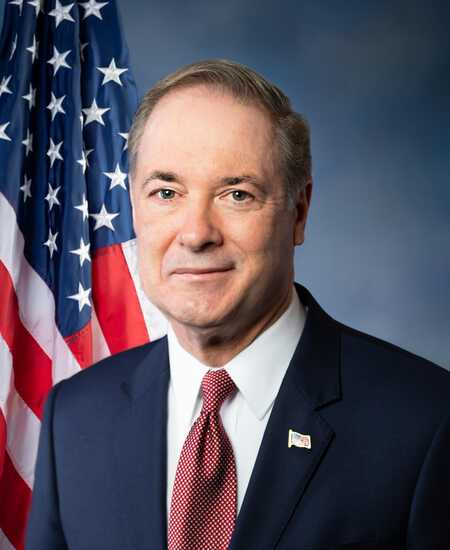
Rep. John Joyce
Sponsored bills
Neighborhood Homes Investment Act This bill establishes a new business-related tax credit to finance home building and rehabilitation in neighborhoods that meet certain eligibility criteria relating to poverty rates, income, and home values. The credit is limited to 35% of the lesser of the qualified development cost (i.e., the cost of construction, substantial rehabilitation, demolition, and environmental remediation of residential properties) or 80% of the national median sale price for new homes. The credit applies to single family homes containing four or fewer residential units, condominiums, or houses or apartments owned by cooperative housing corporations.
Safe Step Act This bill requires a group health plan to establish an exception to medication step-therapy protocol in specified cases. A medication step-therapy protocol establishes a specific sequence in which prescription drugs are covered by a group health plan or a health insurance issuer. A request for such an exception to the protocol must be granted if (1) an otherwise required treatment has been ineffective, (2) such treatment is expected to be ineffective and delaying effective treatment would lead to irreversible consequences, (3) such treatment will cause or is likely to cause an adverse reaction to the individual, (4) such treatment is expected to prevent the individual from performing daily activities or occupational responsibilities, (5) the individual is stable based on the prescription drugs already selected, or (6) there are other circumstances as determined by the Employee Benefits Security Administration. The bill requires a group health plan to implement and make readily available a clear process for an individual to request an exception to the protocol, including required information and criteria for granting an exception. The bill further specifies timelines under which plans must respond to such requests.
Heartbeat Protection Act of 2021 This bill makes it a crime for a physician to knowingly perform an abortion (1) without determining whether the fetus has a detectable heartbeat, (2) without informing the mother of the results, or (3) after determining that a fetus has a detectable heartbeat. It provides an exception for an abortion that is necessary to save the life of a mother whose life is endangered by a physical (but not psychological or emotional) disorder, illness, or condition. A physician who performs a prohibited abortion is subject to criminal penalties—a fine, up to five years in prison, or both. A woman who undergoes a prohibited abortion may not be prosecuted for violating or conspiring to violate the provisions of this bill.
Just and Unifying Solutions To Invigorate Communities Everywhere Act of 2021 or the JUSTICE Act This bill addresses policies and issues regarding policing practices and law enforcement accountability. The bill funds state and local grants, incentivizes state and local reporting on the use of certain policing practices, creates new federal offenses for certain misconduct, and establishes best practices and training requirements. The bill funds state and local grants, including to support the use of body-worn cameras, to implement information sharing systems for disciplinary records of law enforcement officers, and to prohibit officers from engaging in sexual acts under color of the law. Further, it requires state and local governments that receive grants under the Edward Byrne Memorial Justice Assistance Grant program to report information related to use-of-force incidents and the use of no-knock warrants. At the federal level, the bill establishes new criminal offenses related to falsifying police reports and engaging in sexual acts under color of law. The bill directs the Department of Justice to develop training on de-escalation tactics, behavioral health crises, alternatives to the use of force, and the duty to intervene when another officer uses excessive force. Finally, the bill establishes and funds the National Criminal Justice Commission. Among other tasks, the commission must develop best practices for policing tactics and procedures.

Teleabortion Prevention Act of 2021 This bill restricts the use of telehealth for chemical abortions (also known as medication abortions). Specifically, it requires a provider who dispenses or prescribes medication for a chemical abortion to physically examine the patient, be physically present at the location of the chemical abortion, and schedule a follow-up visit. The bill provides an exception for a chemical abortion that is necessary to save the life of a mother whose life is endangered by a physical disorder, illness, injury, or condition. The bill establishes criminal penalties—a fine, a prison term of up to two years, or both—for a provider who does not comply with the requirements. A patient who undergoes a chemical abortion may not be prosecuted.
Born-Alive Abortion Survivors Protection Act This bill establishes requirements for the degree of care a health care practitioner must provide in the case of a child born alive following an abortion or attempted abortion. Specifically, a health care practitioner who is present must (1) exercise the same degree of care as would reasonably be provided to any other child born alive at the same gestational age, and (2) ensure the child is immediately admitted to a hospital. Additionally, a health care practitioner or other employee who has knowledge of a failure to comply with the degree-of-care requirements must immediately report such failure to law enforcement. A health care practitioner who fails to provide the required degree of care, or a health care practitioner or other employee who fails to report such failure, is subject to criminal penalties—a fine, up to five years in prison, or both. An individual who intentionally kills or attempts to kill a child born alive is subject to prosecution for murder. The bill bars the criminal prosecution of a mother of a child born alive under this bill and allows her to bring a civil action against a health care practitioner or other employee for violations.
Teach Relevant Apprenticeships to Drive Economic Success Act or the TRADES Act This bill provides statutory authority for federal regulations titled Apprenticeship Programs, Labor Standards for Registration, Amendment of Regulations published by the Department of Labor in the Federal Register on March 11, 2020.
Whole Milk for Healthy Kids Act of 2021 This bill revises requirements for milk provided by the National School Lunch Program of the Department of Agriculture (USDA). Currently, schools participating in the program must provide milk that is consistent with the most recent Dietary Guidelines for Americans; USDA regulations require milk to be fat-free or low-fat and allow only fat-free milk to be flavored. The bill removes these restrictions and instead permits schools to offer students whole, reduced-fat, low-fat, and fat-free flavored and unflavored milk.
College Transparency Act This bill requires the National Center for Education Statistics to establish a secure and privacy-protected data system that contains information about postsecondary students. Specifically, the data system must evaluate student enrollment patterns, progression, completion, and postcollegiate outcomes, and higher education costs and financial aid; provide complete and customizable information for students and families making decisions about postsecondary education; reduce the requirements for reporting by institutions of higher education; and periodically match with other federal systems of data. The bill also establishes a postsecondary student data system advisory committee.