

Maddy summaryHRES 781 is a symbolic resolution expressing the House of Representatives' support for designating October 12, 2023, as "National Loggers Day." It highlights the logging industry's role in creating rural jobs, supporting forest management, and contributing to healthy ecosystems through activities like carbon sequestration and wildfire prevention. The resolution does not create new laws or policies but formally encourages the President to officially recognize the day. It directly affects the logging industry by acknowledging its economic and environmental contributions. The resolution was introduced by multiple representatives and referred to the Committee on Oversight and Accountability.
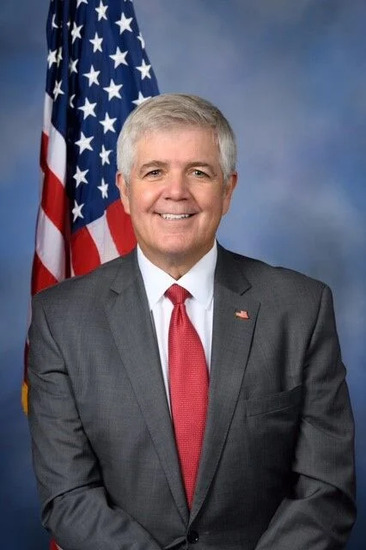
Rep. Cliff Bentz
Sponsored bills
Maddy summaryHRES 771 is a non-binding resolution expressing the U.S. House of Representatives' support for Israel following Hamas' October 7, 2023, attack. It condemns Hamas' actions, affirms Israel's right to self-defense, and calls for the immediate release of hostages. The resolution also urges enforcement of existing laws restricting aid to terrorists and sanctions against Iran for supporting Hamas. It does not create new policies or allocate funds, as it is a symbolic statement of congressional support.
Maddy summaryThis resolution designates the week of September 25-29, 2023, as "National Clean Energy Week" to recognize the growing role of clean energy in the U.S. economy. It expresses support for clean energy jobs and innovation, noting the sector employed about 8.1 million people in 2022. The resolution encourages federal, state, and local investment in affordable clean energy technologies and promotes "commonsense solutions" for energy needs. As a symbolic gesture, it has no legal force or funding implications - it simply urges recognition of clean energy's economic and environmental contributions.
Maddy summaryHR 5791, the "Define the Mission Act," requires the President to submit a comprehensive strategy report to Congress within 30 days of the bill's enactment, detailing U.S. involvement in the Ukraine conflict. The report must define U.S. national interests in the conflict, set specific objectives with timelines, benchmarks, and resource estimates (including personnel and funding), list expected European NATO security contributions, and assess Russia’s natural gas market impact on resolving the conflict. It mandates the strategy must aim for a Russia-Ukraine cease-fire agreement and explicitly cannot depend on U.S. funding for Ukrainian reconstruction. The report must be unclassified but may include a classified annex for full transparency. This bill establishes a formal process for Congress to review and oversee U.S. policy toward Ukraine.
Maddy summaryThis bill extends existing programs that provide payments to counties and states with federal land, primarily to support local schools and communities. It updates key deadlines, extending secure payments through 2026, special project authorities through 2029, and county fund expenditure authority through 2028. A new pilot program allows regional foresters to appoint resource advisory committee members directly, with this authority ending October 1, 2028. These changes directly affect rural counties and states managing federal lands, maintaining current funding mechanisms without altering eligibility or payment amounts.
Maddy summaryThis bill amends the definition of manufactured homes under federal law by removing the requirement that they be "built on a permanent chassis." The change directly affects manufactured home owners and manufacturers by potentially expanding eligibility for certain housing programs and financing options previously restricted to traditional homes. Within 90 days of enactment, a federal committee must develop revised safety standards for manufactured homes to implement this definition change. The core provision simplifies regulatory classification, aiming to make manufactured housing more accessible as a homeownership option.
Maddy summaryHR 4826 requires the FTC and CDC to study how social media platforms collect data and affect teens under 18, including mental health impacts and usage patterns. The study must examine data collection practices, algorithm use, daily screen time, and potential harms, with a report to Congress due within one year of enactment. The bill defines "social media platform" as any service with at least 30 million monthly U.S. users, targeting major platforms for this research. This is a procedural study mandate, not a regulatory change, directly affecting large platforms but focusing on teen users.
This resolution condemns Iran for the 1988 massacre of political prisoners. It also urges the Biden Administration and U.S. allies to publicly condemn the massacre and to pressure Iran to provide information to the families of the victims.
Maddy summaryThis bill directs the U.S. Treasury to mint commemorative coins marking the Marine Corps' 250th anniversary in 2025. It authorizes three coin types: $5 gold coins (max 50,000), $1 silver coins (max 400,000), and half-dollar coins (max 750,000), with surcharges of $35, $10, and $5 respectively. The surcharge proceeds will fund the Marine Corps Heritage Center's educational programs, with no net cost to taxpayers as the Treasury must recover all minting costs through the surcharges. The coins can only be issued during 2025, and the Treasury must ensure all costs are covered before distributing funds to the Heritage Foundation.
Maddy summaryThis bill creates two tax credits to support local media and small businesses. It provides a credit for small businesses (under 50 full-time employees) that advertise in qualifying local newspapers or broadcast stations, covering 80% of first-year ad costs up to $5,000 and 50% of subsequent-year costs up to $2,500. It also establishes a payroll tax credit for employers hiring local news journalists, covering 50% of wages for the first four quarters (capped at $12,500 per journalist) and 30% thereafter, with a maximum of 1,500 journalists per employer. Both credits expire after five years and require strict definitions of "local media" (e.g., publishers with local journalists and community focus) to prevent misuse.