Emergency Water is a Human Right Act This bill creates a grant program, administered by the Department of Health and Human Services, to provide funds to states and Indian tribes to assist low-income households that pay a high proportion of household income for drinking water and wastewater services. Further, any entity receiving financial assistance under this grant program must ensure that no home energy service or public water system service is or remains disconnected or interrupted during the COVID-19 (i.e., coronavirus disease 2019) public health emergency.
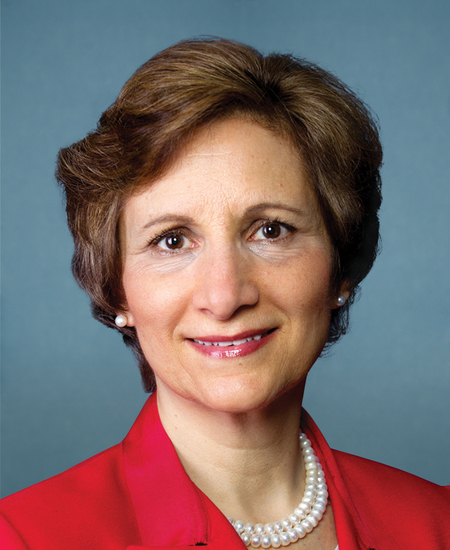
Rep. Suzanne Bonamici
Sponsored bills
Climate Smart Ports Act This bill requires the Environmental Protection Agency to establish a grant program for purchasing or installing equipment and technology to reduce pollution at ports. Specifically, the grants must be used for equipment or technology that produces zero exhaust emissions of certain pollutants and greenhouse gases or captures 100% of the exhaust emissions produced by an ocean-going vessel at berth.
Environmental Justice Mapping and Data Collection Act of 2021 This bill establishes an interagency Environmental Justice Mapping Committee that must create a tool to identify environmental justice communities. Environmental justice communities are communities with significant representation of communities of color, low-income communities, or tribal and indigenous communities that experience, or are at risk of experiencing, higher or more adverse human health or environmental effects, as compared to other communities. The Environmental Protection Agency (EPA) must establish an environmental justice data repository to maintain the data collected by the committee. The EPA must make the repository available to regional, state, local, and tribal governments.
Mental Health Access Improvement Act of 2021 This bill provides for coverage of marriage and family therapist services and mental health counselor services under Medicare. It also excludes such services from the skilled nursing facility prospective payment system, and authorizes marriage and family therapists and mental health counselors to develop discharge plans for post-hospital services.
Improving Social Determinants of Health Act of 2021 This bill requires the Centers for Disease Control and Prevention (CDC) to establish a program to improve health outcomes and reduce health inequities by, for example, coordinating activities across the CDC. As part of the program, the CDC must award grants to eligible organizations to build capacity to address social determinants of health. The CDC shall provide for an independent evaluation of certain grants and report findings to Congress.
Genetically Engineered Salmon Labeling Act This bill requires the market name of genetically engineered (commonly called genetically modified or GMO ) salmon to include Genetically Engineered or GE in front of the existing market name. The bill also requires the Department of Health and Human Services to ensure that an independent scientific organization reviews the Food and Drug Administration's environmental assessment that supports the approval of a new drug related to AquAdvantage Salmon, a type of genetically engineered salmon.
This bill prohibits the sale of food that contains genetically engineered fish unless the food bears a label stating that it contains genetically engineered fish.
Insular Area Medicaid Parity Act This bill eliminates Medicaid funding limitations for U.S. territories beginning in FY2021.
Learning Recovery Act of 2021 This bill establishes a program through which the Department of Education must award grants to state educational agencies and, through them, allocations to local educational agencies (LEAs) to provide students with additional learning time and related services. It also directs the Institute of Education Sciences (IES) to study and report on learning recovery. Specifically, LEAs must use funds to implement attendance-intervention strategies that reengage students and their families, support salaries and benefits for teachers and staff, and carry out school extension programs. School extension program refers to an evidence-based program (e.g., summer-school, extended-day, or extended-school-year program) at an elementary or secondary school that provides students with additional learning time. Further, LEAs may use funds for certain activities such as providing students with mental health services, reestablishing after-school programs, and supporting existing activities to combat learning loss due to the COVID-19 (i.e., coronavirus disease 2019) pandemic. The IES must, within 30 days, begin to study interventions and strategies to address learning recovery for all students, including students with disabilities, minority children, English learners, and low-income students. Further, the IES must disseminate findings to educational agencies.

Pre-Registration Of Voters Everywhere Act or the PROVE Act This bill requires each state to implement a preregistration process under which individuals age 16 or older may apply to register to vote in federal elections. Further, states must ensure that eligible preregistered individuals are registered to vote in federal elections held on or after the date the individual turns age 18. The Election Assistance Commission must make grants to states to increase the involvement of individuals under age 18 in public election activities.