

Maddy summaryHR 6818, the Part-Time Worker Bill of Rights Act, would expand rights for part-time workers by reducing eligibility requirements for family and medical leave from 12 months to 90 days of employment under the FMLA. The bill prohibits employers from discriminating against part-time workers based on hours worked, requiring equal treatment for benefits, promotions, and scheduling. It mandates that employers obtain written statements from employees about their desired work hours and prioritize offering available work hours to existing employees before hiring new external workers. The bill establishes enforcement mechanisms including civil penalties for violations and allows employees to file private lawsuits for damages, with the Secretary of Labor having investigative authority to ensure compliance. This legislation directly affects part-time workers and employers with more than 15 employees across both private and public sectors.
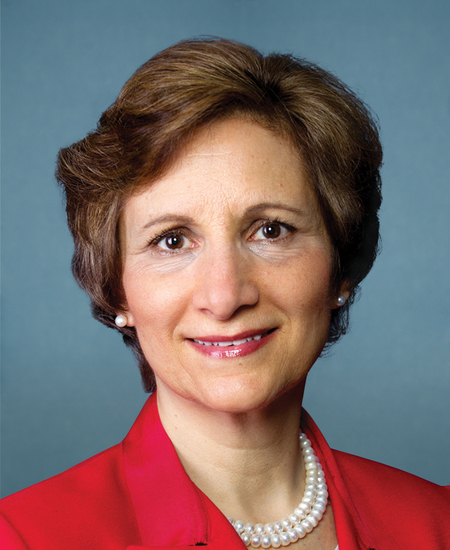
Rep. Suzanne Bonamici
Sponsored bills
Maddy summaryThe Schedules That Work Act would require employers in retail, food service, hospitality, cleaning, and warehouse sectors to provide workers with 14 days' advance notice of their schedules and pay predictability wages for last-minute changes. It allows employees to request schedule changes related to caregiving responsibilities, health conditions, education, or other jobs, with employers required to engage in good-faith discussions about such requests. The bill prohibits retaliation against employees who request schedule changes and mandates written notice of schedule changes and predictability pay. It applies to employers with 15 or more employees in covered sectors, aiming to address widespread issues with unpredictable schedules that negatively impact workers' ability to care for family members, maintain housing stability, and access health care.
Maddy summaryThe Public Health Air Quality Act of 2025 requires the Environmental Protection Agency to establish a national network for monitoring hazardous air pollutants near communities, focusing on facilities emitting specific chemicals linked to health risks like cancer and respiratory issues. The bill mandates fenceline monitoring at 100 high-priority facilities that emit chemicals such as benzene, formaldehyde, ethylene oxide, and other hazardous air pollutants, with public reporting of data within 7 days of collection. It also requires deployment of 1,000 low-cost air quality monitoring systems in communities disproportionately impacted by pollution, with data made accessible in multiple languages and formats. The Act authorizes $146 million for implementation during fiscal years 2026-2027 to support these monitoring requirements and public transparency efforts.
Essential Caregivers Act of 2025 This bill prohibits certain health care facilities from limiting the access of essential caregivers to residents of those facilities, including during designated emergency periods. Specifically, the bill generally prohibits Medicare skilled nursing facilities, Medicaid nursing facilities, Medicaid intermediate care facilities, and associated inpatient rehabilitation facilities from restricting the access of essential caregivers to residents of the facilities, including during emergency periods in which visitation rights are otherwise restricted. During emergency periods, facilities may restrict access for an initial period of up to seven days and for one additional maximum seven-day period (if the additional period is approved by the state health department). Facilities may restrict access for a total of 7 days (or 14 days with the approval of the state health department) during an emergency period. Essential caregivers must agree to comply with any safety protocols set by the facility, which may be no more stringent for caregivers compared to those for staff. Caregivers who fail to comply with these requirements may be denied access, subject to an appeals process.
Maddy summaryHR 6769 establishes a federal grant program to fund the complete destruction of firearms by state, tribal, and local governments. Eligible entities must submit applications detailing how they will fully destroy all firearm parts (including frames, barrels, and accessories) and maintain records, with grants covering equipment, contracted services, and staff training. The program allocates $15 million annually from 2026-2031, requiring grantees to use no more than 10% of funds for administration and reserving one-third of funding for small urban or rural areas. All grant recipients must provide documented proof of destruction through written policies and verified records. This is a direct funding mechanism for firearm disposal, not a crime-reduction measure.
Maddy summaryHR 3962, the ESTUARIES Act, extends a deadline within the National Estuary Program. It amends Section 320(i)(1) of the Federal Water Pollution Control Act by changing the year "2026" to "2031" in a requirement related to program management. This change directly affects the National Estuary Program, which oversees coastal water quality protection and restoration efforts. The bill makes a specific procedural adjustment to the program's timeline without altering its core policies or funding.
Maddy summaryThe Protect America's Workforce Act cancels an executive order issued on March 27, 2025, that excluded certain groups from federal labor-management relations programs, making it legally unenforceable. It also ensures that all collective bargaining agreements between federal agencies and labor unions, which were active as of March 26, 2025, remain fully effective until their agreed terms expire. This directly affects federal agencies, labor unions, and the employees covered by these agreements. The bill prevents federal funds from being used to implement the canceled executive order while preserving existing labor agreements.
Maddy summaryThe TALENTS Act establishes the Presidential Management Fellows Program to recruit recent advanced degree holders for leadership development in federal agencies. It requires fellows to complete 80 hours of annual training, develop individual development plans within 90 days of starting, and complete rotational assignments with management responsibilities. The program provides a pathway for fellows to convert to competitive service positions after completing the 2-year program, with agencies required to provide developmental opportunities and evaluate fellows for certification. The Act also establishes Federal Executive Boards in 36 metropolitan areas to coordinate program implementation and support agency leadership development activities.
Miracle on Ice Congressional Gold Medal Act This act provides for the award of Congressional Gold Medals to the members of the 1980 U.S. Olympic men's ice hockey team in recognition of the team's achievement at the 1980 Winter Olympic Games.
Maddy summaryThe Empowering App-Based Workers Act requires digital labor platforms (like ride-hail and delivery services) to disclose how they use algorithms and electronic monitoring tools to determine worker pay and assignments. It caps the percentage of consumer payments that platforms can keep (take rate) at 25% for ride-hail services and mandates detailed weekly pay statements showing compensation, take rate, and other work metrics. The bill prohibits platforms from using algorithms to set different pay rates for similar work based on protected characteristics like race or gender. These provisions directly affect app-based workers, platform companies, and consumers, aiming to create more transparent and fair working conditions in the gig economy. The bill does not override existing state or local laws that provide greater protections for workers.