

Maddy summaryThe Faithful Execution of the Law Act of 2023 would require federal officials, including the Attorney General and other federal officers, to publicly state the specific reasons for not enforcing a federal law they believe is unconstitutional. The bill amends U.S. Code Section 530D to expand this requirement from the Attorney General alone to all federal officers who establish or implement policies regarding law enforcement. It mandates that officials must document the grounds (e.g., constitutional concerns) for such non-enforcement decisions in writing. This change aims to increase transparency in how federal agencies handle laws they deem unconstitutional. The bill directly affects federal enforcement agencies and their decision-making processes.
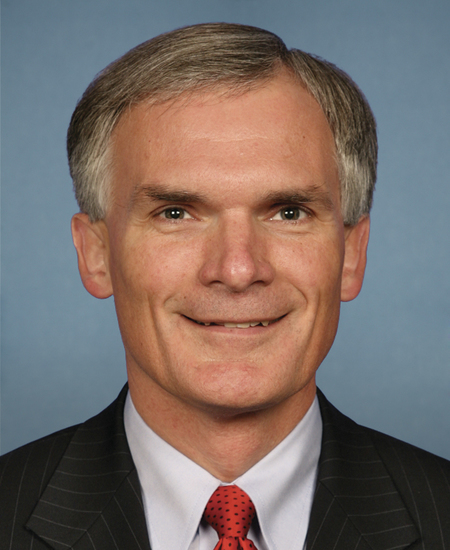
Rep. Robert E. Latta
Sponsored bills
Maddy summaryH.J.Res. 12 proposes a constitutional amendment requiring the federal government to balance its budget annually, meaning spending cannot exceed revenue except under specific circumstances. It would directly affect Congress and the President by mandating that annual budgets must not exceed revenue, with exceptions requiring a 3/5 vote in both chambers of Congress or a military conflict waiver approved by a joint resolution. Key provisions include prohibiting increases to the national debt without a 3/5 congressional vote, requiring the President to submit a balanced budget proposal each year, and defining "receipts" to exclude borrowing. The amendment would take effect five years after ratification by 38 states (three-fourths of states) and includes limited waivers for declared wars or imminent national security threats. This is a procedural constitutional change, not a spending bill, and would fundamentally alter federal budgeting processes.
Maddy summaryHJRES 8 proposes a constitutional amendment to permanently set the Supreme Court's size at nine justices. The bill would require any future changes to the Court's composition to follow this specific number, locking in the current structure. It does not alter the existing Court size (which has been nine since 1869) but aims to prevent future adjustments through legislative action. The amendment must be ratified by three-fourths of state legislatures within seven years to take effect. This is a procedural proposal focused on constitutional structure, not a direct policy affecting citizens or programs.
Maddy summaryThis bill establishes nationwide recognition for valid concealed carry permits. It allows permit holders from any state to carry concealed handguns in states that either issue such permits or don't ban concealed carry, provided they carry a photo ID and their valid permit. Key provisions include making presentation of a valid permit and ID prima facie evidence of compliance, shifting the burden of proof to prosecutors if challenged, and requiring courts to award attorney fees to successful defendants. It does not override state laws prohibiting concealed carry on private property or government lands, nor does it affect restrictions on federal lands like national parks.
Maddy summaryHR 53 (FIND Act) requires federal contractors to certify they do not refuse to work with firearm manufacturers, dealers, ammunition sellers, or related safety device companies based on bias. It prohibits main contractors from awarding subcontracts exceeding 10% of a contract’s value to entities that fail to make this certification, and bans efforts to circumvent the rule through complex subcontract tiers. The law applies to all federal procurement contracts, directly affecting businesses bidding on government work. Violations risk contract termination and suspension from future government contracts.
This act designates the facility of the United States Postal Service located at 226 North Main Street in Roseville, Ohio, as the Ronald E. Rosser Post Office.
This act designates the facility of the United States Postal Service located at 82422 Cadiz Jewett Road in Cadiz, Ohio, as the John Armor Bingham Post Office.
This act designates the facility of the United States Postal Service located at 275 Penn Avenue in Salem, Ohio, as the Howard Arthur Tibbs Post Office.
This resolution promotes increased public awareness of motorcyclist profiling. The resolution also encourages the motorcyclist community and law enforcement to collaborate and communicate on efforts to end motorcyclist profiling.
This act directs the Speaker of the House of Representatives and the President pro tempore of the Senate to arrange for the posthumous award of a Congressional Gold Medal to commemorate Glen Doherty, Tyrone Woods, J. Christopher Stevens, and Sean Smith, four Americans killed in the September 11, 2012, attack on the U.S. consulate in Benghazi, Libya. (Stevens was the U.S. Ambassador to Libya at the time, Smith was an officer in the Foreign Service, and Doherty and Woods were both government contractors and former Navy SEALs.) After the medal has been awarded, it shall be given to the Central Intelligence Agency Museum.