

Pre-existing Conditions Protection Act of 2021 This bill reestablishes requirements for private health insurance plans with respect to preexisting conditions, guaranteed enrollment, and discrimination based on health-related factors if they are repealed by another law. In such event, the bill prohibits private health insurance plans from (1) limiting or excluding benefits covering preexisting conditions; (2) denying enrollment to employers or individual applicants, subject to specified limits; (3) establishing rules for eligibility based on an individual's health status; or (4) requiring an individual to a pay higher premium than similarly situated individuals enrolled in the plan based the individual's health status. The bill also prohibits plans from collecting genetic information in connection with issuing health insurance and provides requirements for workplace wellness programs connected to health insurance.
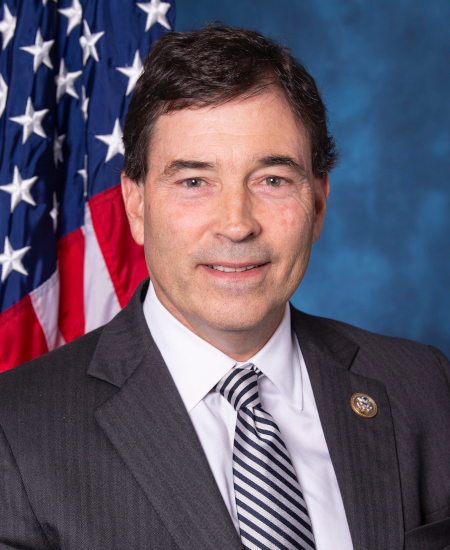
Rep. Troy Balderson
Sponsored bills
Small Business PPE Tax Credit Act This bill allows certain small businesses a tax credit for qualified personal protective equipment expenses, up to $25,000 in a taxable year. The entities eligible for such credit include farms, veterans organizations, and tribal business concerns. The bill defines qualified personal protective equipment expenses to include the cost of equipment for reducing the risk of coronavirus (i.e., the virus that causes COVID-19) transmission, including gloves, medical masks and protective gear, and cleaning supplies.
States Afforded Funding Extensions To Oppose Driving Recklessly In Vehicular Engagements Act or the SAFE TO DRIVE Act This bill requires the Department of Transportation to use up to 25% of the amounts available for national priority safety program grants to award grants to any state that certifies it has enacted a distracted driving statute that (1) is applicable to drivers of all ages, (2) makes a violation of the statute a primary offense, and (3) prohibits texting or all non-navigational viewing of a personal wireless communications device.
Rural Maternal and Obstetric Modernization of Services Act or the Rural MOMS Act This bill expands initiatives to address maternal health in rural areas. The bill provides funding through FY2026 for the Health Resources and Services Administration (HRSA) to establish rural obstetric networks. These networks must foster collaboration to improve birth outcomes and reduce maternal morbidity in rural areas. HRSA also must award demonstration grants to medical schools and other health professional training programs to support education and training on maternal health in rural areas. In addition, the bill incorporates maternal health services in certain telehealth grant programs. It also revises various research and other activities of the Department of Health and Human Services that pertain to maternal health. Furthermore, the Government Accountability Office must report on maternal health topics, including health inequities and data issues.
Reopen Schools Act This bill requires a local educational agency (LEA) to reopen its elementary and secondary schools as a condition for receiving certain supplemental education emergency relief funding. Specifically, an LEA must provide in-person instruction to at least 50% of its students in order to receive the full funding. An LEA that provides in-person instruction to at least some of its students shall have its funding reduced on a pro rata basis.
USPS Fairness Act This bill repeals the requirement that the U.S. Postal Service annually prepay future retirement health benefits.
Defund Planned Parenthood Act of 2021 This bill restricts federal funding for Planned Parenthood Federation of America Inc. or any of its affiliates or clinics for one year. Specifically, it prohibits funding those entities unless they certify that the affiliates and clinics will not perform, and will not provide funds to entities that perform, abortions during that year. If the certification requirement is not met, the Department of Health and Human Services and the Department of Agriculture must recoup any federal assistance received by those entities. However, the bill's funding restriction does not apply to abortions performed in cases of rape or incest or when necessary to resolve a physical condition that endangers a woman's life. The bill also provides additional funding for community health centers for the one-year period. These funds are subject to the same abortion-related restrictions and exceptions.
Protecting Americans from Unnecessary Spread upon Entry from COVID-19 Act of 2021 or the PAUSE Act of 2021 This bill maintains immigration restrictions put in place under public health emergency authorities to prevent the introduction of COVID-19 (i.e., coronavirus disease 2019) from foreign countries. Specifically, the bill prohibits the Department of Health and Human Services from rescinding or reducing the stringency of the restrictions. It also prohibits the Department of Homeland Security from stopping or reducing enforcement of the restrictions. These prohibitions remain in effect until (1) federal and state COVID-19 emergency orders are lifted, and (2) the risk of introducing COVID-19 in or from Canada and Mexico is minimal.
Title X Abortion Provider Prohibition Act This bill prohibits the Department of Health and Human Services (HHS) from awarding family planning grants to entities that perform abortions or provide funding to other entities that perform abortions. To receive a grant, an entity must certify it will refrain from those activities during the grant period. The bill provides exceptions for abortions (1) in cases of rape or incest; or (2) when the life of the woman is in danger due to a physical disorder, injury, or illness. It also exempts hospitals unless they provide funds to non-hospital entities that provide abortions. HHS must report annually on this prohibition.
Resilient Manufacturing Task Force Act of 2021 This bill requires the Department of Commerce to establish for one year the Resilient Manufacturing Task Force. Among other duties, the task force shall (1) identify critical vulnerabilities in the supply chains of products and resources that are essential to U.S. economic security, with a particular focus on vulnerabilities that have been made worse by COVID-19 (i.e., coronavirus disease 2019); and (2) develop specified plans to mitigate such vulnerabilities.