

Maddy summaryThis bill creates a federal grant program to help states and tribal governments improve their licensing systems for firearms dealers. To qualify for funding, a state must have laws requiring dealers to hold licenses valid for no more than three years, complete an application process, and allow for inspections with penalties for noncompliance. The Attorney General will award up to $2.5 million per year on a competitive basis to eligible applicants who submit detailed plans for developing or improving their programs. Recipients must provide annual reports on inspection numbers, violations, and license status, while the Attorney General must report grant details and denial reasons to Congress.
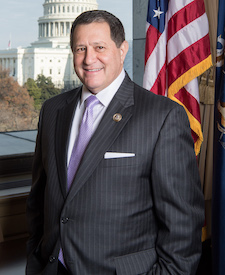
Rep. Joseph D. Morelle
Sponsored bills
Maddy summaryThis bill redesignates the existing National Parks and Public Land Legacy Restoration Fund as the America's Legacy Restoration Fund to address deferred maintenance on federal lands. It directs revenue from recreation fees and a portion of energy development income into the fund, which must be used primarily for repairing critical infrastructure like roads, trails, and buildings managed by agencies such as the National Park Service and the Forest Service. The legislation establishes strict rules requiring that most funds go toward non-transportation projects, mandates transparency through public dashboards tracking project status, and sets aside a small percentage for matching private donations. Additionally, the bill increases entrance fees for foreign visitors to ensure they contribute to the fund, while prohibiting the use of these specific funds for land acquisition or employee bonuses.
Maddy summaryThe Latonya Reeves Freedom Act of 2026 strengthens the Americans with Disabilities Act to ensure individuals with long-term service and support needs have a federally protected right to live in their communities rather than institutions. It requires states and insurance providers to offer community-based services that allow people to maintain independence, control their own care, and access affordable, integrated housing. The bill mandates that public entities and insurers create enforceable transition plans to move people out of institutions, conduct self-evaluations to identify barriers, and establish clear grievance procedures for resolving complaints. Enforcement is handled by the Department of Justice, which can investigate violations, while individuals may also file civil lawsuits to seek damages or court orders preventing institutionalization.
Maddy summaryThis resolution expresses support for designating June 21, 2026, as National ASK Day to promote the safe storage of firearms in homes. The bill encourages parents to ask visitors if there are guns in their house and, if so, whether those guns are locked and unloaded. It also urges medical and public health professionals to discuss gun safety and secure storage with their patients and parents. This symbolic measure aims to raise awareness about preventing accidental shootings and suicides among children by ensuring guns are stored safely.
Maddy summaryThis bill, known as the Supreme Court Justice Circuit Riding Act, would require Supreme Court justices to travel across the country to serve as judges in federal appeals courts, a practice that had ended in 1911. Under the new rules, justices must sit on at least one panel of an appeals court for a minimum of 10 days of oral arguments each year, while also being eligible to vote on panel rehearings but barred from participating in full court en banc reviews. The legislation mandates that these appearances occur in person rather than via video or teleconference and establishes a system for reimbursing travel and lodging expenses. Additionally, the bill adds a disqualification provision to prevent a justice from voting on any case after they have already participated in it as a circuit judge. Finally, the Chief Justice is tasked with creating regulations within 180 days to manage the assignment of justices to specific circuits.
Maddy summaryThis joint resolution seeks to reject a specific rule issued by the Department of Health and Human Services regarding the Child Care and Development Fund. By invoking a statutory process, the bill aims to prevent the rule from taking effect, which would stop the Department from implementing the proposed changes to child care funding flexibility. The measure directly impacts the administration of federal child care assistance programs and affects families and organizations relying on the CCDF. If passed, the original regulations published in May 2026 would be nullified and have no legal force.
Maddy summaryThe Child Care Modernization Act of 2026 updates federal rules to help states create flexible child care systems that offer parents more choices across different settings like homes, centers, and schools. It expands eligibility for assistance to include children of parents who are job seekers, students, or those receiving health treatment, while also raising the income limit for some families. The bill requires states to use cost-based models to set payment rates that cover provider expenses and mandates the creation of new grants to help build and expand child care facilities. Additionally, it establishes new reporting requirements to track how much families spend on care and measures progress on improving workforce quality and access.
Maddy summaryThe Chief Nimham Purple Heart Act authorizes the President to posthumously award the Purple Heart medal to Daniel Nimham. This provision recognizes injuries he sustained during the Revolutionary War while serving as a commissioned captain in the Continental Army. The bill overrides existing criteria to allow this specific award, directly affecting the historical record and the recognition of Nimham's service.
Maddy summaryThis bill, known as the Alice Cogswell and Anne Sullivan Macy Act, amends the Individuals with Disabilities Education Act to improve special education services for children who are deaf, hard of hearing, deafdisabled, blind, visually impaired, or deafblind. It requires states to identify these students regardless of how they are currently classified, ensuring they receive specialized instruction in their primary language and access to qualified professionals. Key provisions mandate that state plans include specific strategies for language development, Braille instruction, and the use of assistive technologies, while also establishing a new national center to support research and training for educators of students with visual disabilities. Additionally, the legislation clarifies definitions for deafblindness and interveners, updates data reporting requirements to track these populations more accurately, and ensures early intervention services are delivered in natural environments to support language and communication milestones.
Maddy summaryThis resolution expresses support for designating June 5, 2026, as National Gun Violence Awareness Day and June 2026 as National Gun Violence Awareness Month. The bill calls on the public to wear orange on the designated day to honor victims and promote awareness of gun safety. It highlights statistics on gun-related deaths and injuries to underscore the need for community discussions on making neighborhoods safer.