

Maddy summaryThe Loan Forgiveness for Educators Act would provide full student loan forgiveness to educators who work in high-need schools or early childhood education programs. After completing 5 years of qualifying service, educators would have 100% of their outstanding student loans forgiven, with the option for monthly loan forgiveness during their service period. The bill defines "high-need schools" as those with over 30% of students in poverty or identified for improvement, and includes special provisions for educators working in Native American, Tribal, and Bureau of Indian Education schools. Educators could count service completed before the law's enactment toward their 5-year requirement, and the program would cover both FFEL and Direct Loan programs.
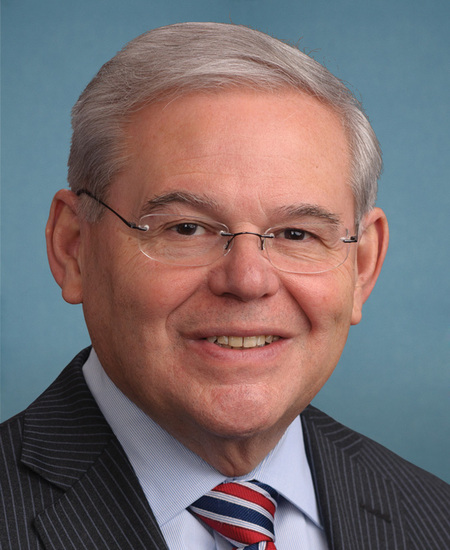
Rep. Robert Menendez
Sponsored bills
Maddy summaryThe Office of Gun Violence Prevention Act of 2023 establishes a new office within the Department of Justice to coordinate federal efforts on gun violence prevention. The office, led by a Director appointed by the Attorney General, will evaluate existing programs, identify data gaps, and make evidence-based policy recommendations to Congress and the President. It will work with an advisory council including DOJ officials and external members like gun violence survivors, community service providers, and public health experts. The office must produce an annual report to Congress on gun violence trends and policy recommendations, and the bill authorizes funding to support these activities.
American Families United Act This bill authorizes the Department of Homeland Security (DHS) or the Department of Justice (DOJ) to exercise discretion in certain immigration cases. Under this bill, DOJ or DHS may, on a case-by-case basis, exercise discretion by declining to remove a non-U.S. national ( alien under federal law) or bar an alien from entering the United States to prevent hardship for the alien's U.S. citizen spouse, parent, or child. This discretion may also be exercised if the alien is the spouse or child of a deceased U.S. citizen. For the purposes of this bill, it shall be presumed that family separation constitutes hardship. However, DOJ or DHS may not exercise this discretion if the alien is removable or inadmissible due to certain grounds, including specified crime- and security-related grounds. This exercise of discretion may be applied to an alien who was ordered removed or denied entry prior to this bill's enactment if the alien files a motion to reopen or reconsider within two years of this bill's enactment.
Maddy summaryHR 1723, the Abortion is Health Care Everywhere Act of 2023, amends the Foreign Assistance Act to remove restrictions on using U.S. foreign aid funds for abortion services. It explicitly allows U.S. foreign assistance programs to fund comprehensive reproductive health care, including abortion services, training, and equipment. This change directly affects U.S. international health programs and recipient countries, enabling them to integrate safe abortion care into broader reproductive health services. The bill aims to align U.S. policy with global health guidelines by making abortion services a standard part of reproductive health care funded through foreign assistance.
Maddy summaryHR 1320, the COAST Anti-Drilling Act, bans new oil and gas leasing in four specific coastal areas: the Mid-Atlantic, South Atlantic, North Atlantic, and Straits of Florida planning areas of the outer Continental Shelf. The bill amends federal law to prohibit the Secretary of the Interior from issuing any leases or authorizations for exploration, development, or production of oil, natural gas, or minerals in these regions. This directly affects coastal states and marine ecosystems in those areas by preventing new offshore drilling projects. The law creates a permanent restriction on new leasing in these designated zones.
Maddy summaryHR 1595 establishes a federal grant program to help states improve their licensing systems for firearms dealers. It authorizes annual competitive grants (up to $2.5 million per state per year) for states to develop, implement, or evaluate their dealer licensing programs, provided they already meet minimum standards like requiring 3-year licenses, conducting inspections, and imposing penalties for violations. States receiving grants must report annually on inspections, violations, license status, and other metrics, with the Attorney General also submitting annual reports to Congress. This bill directly affects state governments that operate firearms dealer licensing programs, providing funding to strengthen oversight without changing existing state laws.
Maddy summaryThis bill authorizes a Congressional Gold Medal to honor the "Hello Girls" - female telephone operators who served in the Army Signal Corps during World War I. They provided critical battlefield communications in France (connecting 26 million calls), wore military uniforms, and faced combat risks, but were denied veteran benefits for 60 years due to being classified as civilian contractors. The medal recognizes their pioneering service, devotion, and the decades-long struggle to gain military recognition. The award follows similar recognition for other WWII women veterans and aims to correct the historical injustice they faced.
Maddy summaryHR 1499, the Good Jobs for Good Airports Act, requires airports receiving federal funding to pay covered service workers a minimum wage of at least $15 per hour (or higher if state/local laws or federal standards require it) and provide minimum fringe benefits. It directly affects workers in specific airport roles like security, ticketing, concessions, cleaning, and ramp services at small, medium, or large hub airports. The bill mandates annual certification from airport operators to verify compliance with these wage and benefit standards, tied to eligibility for federal airport grants under the Infrastructure Investment and Jobs Act. It does not override stricter state or local laws but ensures minimum standards for workers supporting airport operations.
Maddy summaryThis bill amends the World Trade Center Health Program to expand eligibility to include certain Department of Defense and Federal agency workers who responded to the September 11 attacks at the Pentagon and Shanksville, Pennsylvania. It establishes a 500-person enrollment cap for these responders, allows a broader range of licensed health care providers to conduct program evaluations, and creates two new funding mechanisms totaling $2.04 billion for the program through 2033. The bill also clarifies enrollment counts by excluding deceased individuals from program statistics and adjusts funding calculations to ensure continued support for affected responders and survivors. These changes directly affect 9/11 responders who worked at the Pentagon and Shanksville sites and their families participating in the health program.
Maddy summaryThe Paycheck Fairness Act (HR 17) strengthens equal pay protections by amending the Fair Labor Standards Act. It prohibits pay discrimination based on sex, pregnancy, childbirth, sexual orientation, gender identity, and sex characteristics. The bill modifies employer defenses for pay differences to require demonstration that any disparity is job-related, consistent with business necessity, and accounts for the entire pay differential. It also prohibits employers from relying on wage history when making hiring decisions or setting pay, enhances penalties for violations, and requires the EEOC to collect compensation data disaggregated by sex, race, and national origin.