

Maddy summaryThe Universal School Meals Program Act of 2026 mandates that all public schools provide free breakfast and lunch to every enrolled student, regardless of income. It establishes specific funding rates for these meals, adjusts payments based on the use of locally sourced food, and eliminates the ability of schools to collect debt for unpaid charges. Additionally, the bill expands free meal access to summer programs, afterschool care, and incarcerated juveniles while updating poverty measurement standards across various federal education and nutrition laws.
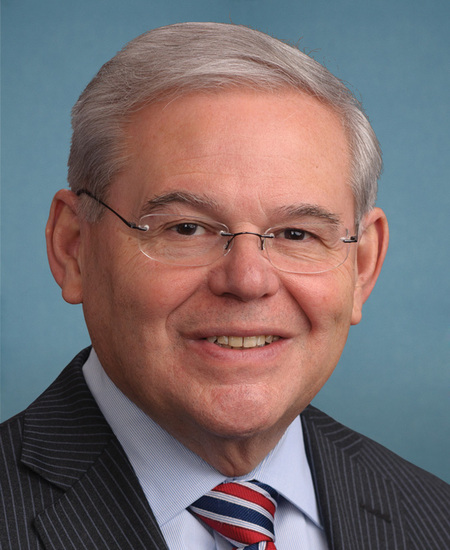
Rep. Robert Menendez
Sponsored bills
Maddy summaryThe No Delay for Immigration Oversight Act mandates that the Department of Homeland Security immediately grant Members of Congress access to immigration detention facilities for oversight purposes. This legislation requires all federal contractors operating these facilities to certify that their staff are trained to comply with these access rules and allows the department to cancel contracts with entities that fail to do so. By defining "without delay" as immediate admission, the bill ensures that lawmakers can inspect facilities without waiting outside or providing prior notice. Ultimately, the law aims to uphold congressional authority to monitor the humane treatment and civil rights of detainees within these centers.
Maddy summaryThis bill authorizes the President to provide International Military Education and Training assistance to Greece to strengthen defense cooperation between the two nations. The program will fund training for future military leaders, improve understanding between the U.S. and Greek armed forces, and enhance their ability to work together in joint operations. It allocates $1.8 million annually for each of the fiscal years 2027 through 2031 to support these educational and partnership initiatives. The legislation also emphasizes professional military education, civilian oversight of the military, and human rights protections within Greece's armed forces.
Maddy summaryThis resolution formally acknowledges the cultural and historical importance of Cinco de Mayo, a holiday celebrated by Mexican and Mexican-American communities. It commemorates the 1862 Battle of Puebla, where Mexican forces defeated the French army, symbolizing resilience and the pursuit of self-determination. The text highlights the holiday's role in honoring diverse contributions to the United States and strengthening ties between Mexico and the U.S. Ultimately, the House of Representatives is encouraged to observe the day with appropriate ceremonies and activities.
Maddy summaryThis resolution formally designates May 10, 2026, as National Asian American, Native Hawaiian, and Pacific Islander Mental Health Day to raise awareness about mental health within these communities. The text highlights that many individuals in this diverse group face barriers to care, including high costs, language differences, and cultural stigma, which result in low rates of treatment utilization. While the measure itself is symbolic and does not create new laws or funding, it encourages federal, state, and local agencies to develop policies that improve access to culturally and linguistically appropriate mental health services.
Maddy summaryThe Assault Weapon Financing Accountability Act prohibits the use of "Buy Now, Pay Later" loans to purchase semiautomatic assault weapons. This ban applies to both lenders offering these short-term credit products and dealers who accept such loans for firearm sales. The bill defines "semiautomatic assault weapons" based on specific physical features like pistol grips, forward grips, and high-capacity magazines, and sets a civil penalty of $100,000 for violations by lenders or sellers.
Maddy summaryThis bill is a non-binding resolution that expresses the House of Representatives' sentiment to honor public servants for their dedication to the United States. It specifically acknowledges the work of federal, state, and local government employees, as well as uniformed service members, who deliver essential services and support the economy. The resolution calls on the American public to observe Public Service Recognition Week with ceremonies and activities that recognize these contributions. Because it is a symbolic expression of the House's feelings rather than a law with enforceable rules, it does not create new policies or mandate specific actions.
Maddy summaryH.R. 1243 is a House resolution that formally recognizes May as Asian American, Native Hawaiian, and Pacific Islander Heritage Month to celebrate the contributions of these communities to U.S. history. The bill highlights the diverse populations, historical milestones, and significant achievements of Asian Americans, Native Hawaiians, and Pacific Islanders in government, the military, and society. It also acknowledges the ongoing challenges faced by these groups, including a rise in hate crimes and historical discrimination. As a commemorative resolution, the measure does not create new laws or funding but serves to express official congressional appreciation and awareness.
Maddy summaryThis bill establishes a national, toll-free hotline to provide emotional support, information, and referrals to caregivers of individuals with developmental disabilities. The service would be available 24/7 in both voice and text formats, staffed by trained professionals and peer supporters who can connect callers to local and federal resources. To ensure quality and reach, the program would prioritize partnerships with community organizations and include a public awareness campaign alongside a national database of available services. Funding of $10 million per year from 2027 to 2032 is authorized to maintain the hotline and support related training and reporting requirements.
Maddy summaryThis bill, titled the Protecting Human Rights and Public Health in Foreign Assistance Act, aims to cancel specific regulations issued by the Department of State. It directly affects the federal government by prohibiting any department or agency from enforcing, implementing, or proposing rules related to protecting life, combating discriminatory equity ideology, and combating gender ideology in foreign aid programs. The legislation treats these cancelled rules as if they never existed, effectively nullifying their impact on future foreign assistance policies.