

Value in Health Care Act of 2021 This bill makes a series of changes to certain methodologies and components used in the Medicare Shared Savings Program. The program enables accountable care organizations (ACOs) to receive payments for savings stemming from care coordination and management. Among other changes, the bill requires the Centers for Medicare & Medicaid Services to increase the shared savings rate for participating ACOs, as specified, and to establish a program that assists ACOs with start-up and operational costs of participation. The bill also extends certain incentive payments for health professionals who participate in eligible alternative payment models. The Government Accountability Office must report on health outcomes and racial disparities among beneficiaries who receive care from providers under alternative payment models compared to beneficiaries who receive care from providers under the traditional fee-for-service system.
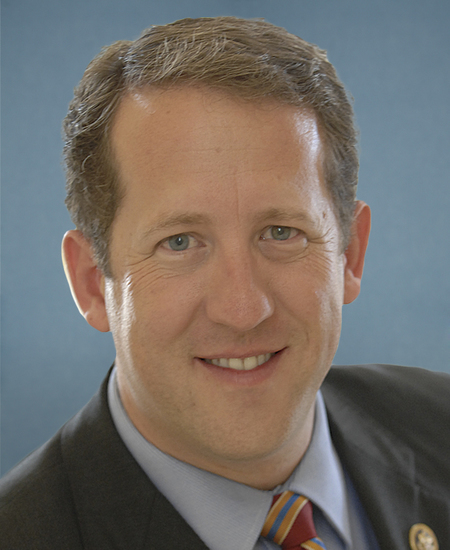
Rep. Adrian Smith
Sponsored bills
Jobs and Opportunity with Benefits and Services for Success Act This bill renames the Temporary Assistance for Needy Families (TANF) program as the Jobs and Opportunity with Benefits and Services (JOBS) program, reauthorizes the program through FY2027, and makes changes relating to work requirements for beneficiaries. States providing aid under the program shall create an individual opportunity plan for each beneficiary. States shall impose work requirements on all work-eligible beneficiaries and shall reduce benefits for noncompliance. (Currently, individual plans are optional under TANF, and states have discretion as to whether to reduce benefits for noncompliant individuals.) States providing aid shall meet annual performance targets related to the number of beneficiaries who exit the program and find unsubsidized employment. The Department of Health and Human Services (HHS) shall reduce grants to states that fail to meet such targets. States shall provide data related to beneficiary employment and wages to HHS, which shall be publicly available. The bill modifies certain limitations that restrict the use of funds for case management and other purposes and requires states to spend at least 25% of funds from various grants on core activities. Certain existing laws relating to monitoring and recovering improper benefits payments shall apply to the JOBS program. The bill eliminates programs providing (1) supplemental grants for population increases, (2) bonuses for high performance states, (3) welfare-to-work grants, and (4) contingency funds for state welfare programs.
Focusing State Efforts to Expand Opportunity Act This bill prohibits states from using Temporary Assistance for Needy Families grants to provide assistance or services to families whose monthly incomes exceed twice the poverty line. Under current law, families must be financially needy and have a minor child to qualify for assistance; however, individual states determine the financial eligibility requirements.
Facilitating Innovative Nuclear Diagnostics Act of 2021 This bill establishes separate payment requirements for diagnostic radiopharmaceuticals under the Medicare prospective payment system for hospital outpatient department services. The bill's requirements apply to diagnostic radiopharmaceuticals that have an average daily cost of $500 or more in 2022 and as adjusted based on a specified fee schedule factor in each year thereafter.
Year-Round Fuel Choice Act of 2021 This bill amends the Clean Air Act to address the limitations on Reid vapor pressure (a measure of gasoline's volatility) that are placed on gasoline during the summer ozone season. The bill applies the Reid vapor pressure requirements that are applicable to gasoline blended with 10% ethanol (E10) to gasoline blended with more than 10% ethanol. Thus, the waiver given to E10 gasoline, which allows an increase in the Reid Vapor Pressure volatility, is extended to gasoline blended with more than 10% ethanol.
Technical Reset to Advance the Instruction of Nurses Act or the TRAIN Act This bill modifies the methodology and application of Medicare Advantage nursing and allied health education payments for hospitals. Specifically, for 2010-2019, the bill eliminates the annual cap on total payments and excludes any resulting increase from factoring into calculations for graduate medical education payments for such hospitals. (The Centers for Medicare & Medicaid Services recently issued guidance providing for the recalculation and correction of certain payments to account for the annual payment cap.)
This bill sets forth special tax rules for determining whether financial guaranty insurance companies are qualifying insurance corporations under the passive foreign investment company rules.
30 x 30 Termination Act This bill limits federal acquisition of land or declaration of a national monument in certain areas and nullifies a provision of an executive order related to conservation. In a state or county where 15% or more of the land is managed by a federal agency (1) federal funds may not be used to acquire nonfederal land unless the agency proposing the acquisition disposes of an equal amount of federal land within the state or county, and (2) a declaration of a national monument shall not apply. The bill prohibits from having the force and effect of law a provision of Executive Order 14008 (86 Fed. Reg. 7619), titled Tackling the Climate Crisis at Home and Abroad , that requires the Department of the Interior to recommend steps to achieve the goal of conserving at least 30% of U.S. lands and waters by 2030. No federal funds may be used to implement, administer, enforce, or carry out any report or program substantially similar to such provision. No federal funds may be used to implement, administer, enforce, or carry out any action on federal land that results in a net-loss of multiple use or any principal or major use, unless such action has been authorized by federal statute.
Low Carbon Biofuel Act This bill allows certain taxpayers (defined by this bill as an oxygenate blender and a retailer ) a new business-related income tax credit for the sale or blending of E15 gasoline (more than 13 and not more than 15 volume percent ethanol) and other fuels containing more than 15 volume percent ethanol.
Essential Caregivers Act of 2021 This bill requires skilled nursing facilities, nursing facilities, intermediate care facilities for the intellectually disabled, and nearby inpatient rehabilitation facilities to establish an essential caregivers program during a public health emergency. Under the program, facilities must allow each resident to select up to two essential caregivers to provide daily living assistance, emotional support, or companionship during the emergency. Facilities must afford such caregivers 12 hours of access to residents each day (or unlimited access for end-of-life care), and caregivers must agree to follow facility protocols for staff safety. Facilities may deny access to caregivers who violate protocols, subject to certain notification requirements; the Centers for Medicare & Medicaid Services must establish an appeals process relating to such decisions and may take specified enforcement actions against facilities that violate the bill's requirements.