

Maddy summaryThe Retirement Savings for Americans Act of 2025 creates a new retirement savings program called the American Worker Retirement Fund to help workers without access to employer-sponsored retirement plans. It requires businesses to automatically enroll qualifying workers (those without existing retirement plans) at a 3% contribution rate, with the option to opt out. The program includes a government match tax credit that provides up to 5% of a worker's income as matching contributions, phasing out for higher earners. The Fund will be managed by a Board and Executive Director, offering multiple investment options and maintaining accounts until retirement or withdrawal.
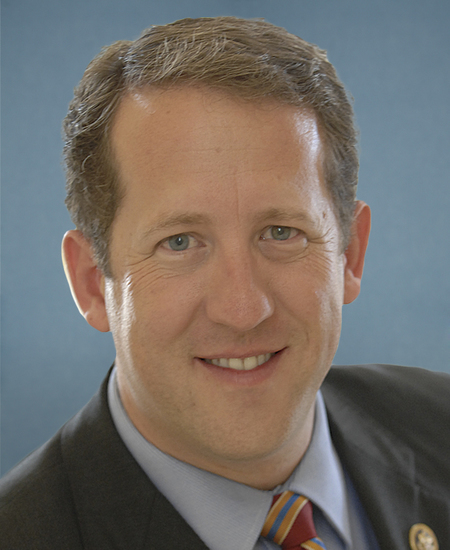
Rep. Adrian Smith
Sponsored bills
Maddy summaryThis bill creates a new Medicare payment model (the "Comprehensive Alternative Response for Emergencies Model") that allows Medicare Part B to cover ground ambulance services provided in response to emergency medical calls *without* a full transport. It directly affects Medicare beneficiaries receiving emergency ambulance care and ambulance providers, ensuring they are paid for services like dispatch and initial response that don't include transport. The model requires payment rates to align with standard transport payments, mandates compliance with state protocols, and operates for a 5-year test period. A report by the Comptroller General will evaluate the model's impact on beneficiary access, outcomes, and regional differences after 4 years.
Maddy summaryHR 2552, the RIFLE Act, repeals the federal tax on firearm transfers (Section 5811 of the Internal Revenue Code). This directly affects firearm sellers and purchasers by removing the tax paid when transferring firearms. The bill also updates related tax code references to reflect the repeal and specifies the tax removal applies to transfers after the law's enactment. It clarifies that the repeal does not change how firearms are regulated under the National Firearms Act or involve the Consumer Product Safety Commission.
Maddy summaryHR 2567 amends tax code rules to prevent certain financial guaranty insurance companies from being classified as passive foreign investment companies (PFICs). It directly affects insurers whose sole business is financial guaranty insurance (e.g., insuring bonds) and meet specific exposure thresholds: at least 15-to-1 financial guaranty exposure or 9-to-1 state/local bond exposure relative to total assets. The bill creates new rules requiring these companies to include unearned premium reserves in insurance liabilities for PFIC calculations, while mandating separate reporting of key financial metrics. This change provides clarity for insurers meeting the defined criteria, avoiding unintended PFIC classification under current tax rules.
Sanctioning Russia Act of 2025 This bill imposes penalties on certain persons (individuals and entities) if the President determines that the Russian government or a person acting at Russia's direction is involved with (1) refusing to negotiate a peace agreement with Ukraine; (2) violating a negotiated peace agreement; (3) initiating another invasion of Ukraine; or (4) overthrowing, dismantling, or seeking to subvert the Ukrainian government. If the President makes such a determination, the bill requires certain actions including the President must impose visa- and property-blocking sanctions on specified persons such as the Russian president, certain Russian military commanders, and any foreign person that knowingly provides defense items to the Russian armed forces; the President must increase the rate of duty on all goods and services imported from Russia into the United States to at least 500% relative to the value of such goods and services; the President must increase the rate of duty on all goods and services imported into the United States from countries that knowingly engage in the exchange of Russian-origin uranium and petroleum products to at least 500% relative to the value of such goods and services; the Department of the Treasury must impose property-blocking sanctions on any financial institution organized under Russian law and owned wholly or partly by Russia, and any financial institution that engages in transactions with those entities; and the Department of Commerce must prohibit the export, reexport, or in-country transfer to or in Russia of any U.S.-produced energy or energy product.
Maddy summaryHR 2533, the EASE Act of 2025, requires Medicare and Medicaid to test a new telehealth model designed to improve specialty care access for rural and underserved Medicare/Medicaid beneficiaries. The bill mandates the Centers for Medicare & Medicaid Services (CMS) to partner with nonprofit provider networks - comprising at least 50 community health centers or rural clinics (half in rural areas) - to deliver specialty care via telehealth and coordinate with primary care providers. Eligible individuals must be enrolled in Medicare Part B, Medicaid, or CHIP and reside in designated rural or underserved areas. The model requires networks to collect and evaluate data on service delivery, with funding subject to existing program rules. This creates a structured pilot program focused on expanding remote specialty care access in underserved regions.
Maddy summaryThe FARMLAND Act of 2025 strengthens oversight of foreign ownership of U.S. agricultural land, particularly from countries like China and other "foreign entities of concern" as defined in the law. It requires agricultural land buyers to conduct due diligence and certify compliance, creates civil penalties for false or missing reports, and prohibits foreign persons from participating in Farm Service Agency programs. The bill mandates annual reports to Congress on foreign ownership of farmland by specific countries and requires development of a centralized database tracking foreign ownership. It also expands the Committee on Foreign Investment in the United States' authority to review certain real estate transactions involving foreign entities of concern.
Amplifying Processing of Livestock in the United States Act or the A–PLUS Act This bill directs the Department of Agriculture (USDA) to revise its regulations to allow certain packers to hold an ownership interest in, finance, or participate in the management or operation of a market agency selling livestock on a commission basis. The bill applies to packers that have a cumulative slaughter capacity of (1) less than 2,000 animals per day or 700,000 animals per year with respect to cattle or sheep, and (2) less than 10,000 animals per day or 3 million animals per year with respect to hogs. In addition, USDA must revise its regulations to include a disclosure requirement for a market agency that has an ownership interest in, finances, or participates in the management or operation of a packer. Specifically, the market agency must disclose the existence of such ownership interest, financial relationship, or participation.
Maddy summaryHJRES 82 disapproves the District of Columbia Council's approval of the Insurance Regulation Amendment Act of 2024 (D.C. Act 25-699), a local law that would have amended insurance regulations in Washington, D.C. This procedural resolution, submitted under the District of Columbia Home Rule Act, allows Congress to reject the District's legislative action. The bill itself does not change insurance regulations but formally expresses disapproval of the District's law, preventing it from taking effect.
Maddy summaryThe SHORT Act (HR 2395) redefines federal firearm definitions to exclude antique and collector firearms from being classified as firearms, and removes distinctions between short-barreled rifles and shotguns in federal regulations. It prevents state laws from imposing taxes or registration requirements on short-barreled rifles and shotguns, requiring state rules to align with federal compliance instead. The bill also mandates the federal government to destroy specific records related to these firearms within one year of enactment.