

Maddy summaryThis bill would require all states to recognize valid concealed carry permits issued by other states, allowing permit holders to carry concealed handguns (excluding machine guns) in any state that either issues such permits or doesn't prohibit concealed carry. It directly affects law-abiding gun owners with valid permits from their home state, ensuring they can carry in states with similar permit systems or no prohibitions. Key provisions include treating valid permit documents as proof of legal carry (reducing officer stops), shifting the burden of proof to prosecutors if challenged, and allowing civil lawsuits for violations with attorney's fee awards. The bill does not override state laws restricting firearms on private property or government land, nor does it affect federal gun restrictions like those in section 922(q).
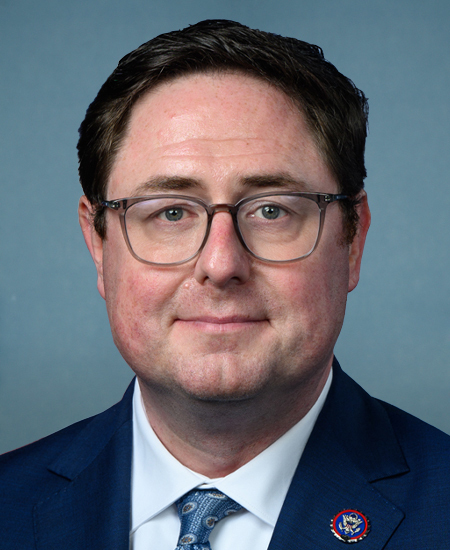
Rep. Mike Flood
Sponsored bills
Maddy summaryThe Pray Safe Act of 2025 establishes a federal Clearinghouse within the Department of Homeland Security to provide houses of worship, faith-based organizations, and nonprofit groups at risk of threats with evidence-based safety resources. The Clearinghouse will publish online best practices for security planning, facility safety, and incident response, while listing existing federal and state grant programs to help these organizations implement these measures. It requires annual updates based on user feedback and includes a centralized resource section for contacts like Protective Security Advisors and Fusion Centers. The program expires four years after enactment and does not create new funding but coordinates existing federal and state safety resources.
Maddy summaryThis bill changes how federal homeless assistance funds are distributed. It prevents the government from blocking grants to programs that require supportive services (like job training or addiction treatment) for residents, or that set occupancy conditions (such as sobriety requirements), and protects faith-based organizations from exclusion. At least 50% of funds must go to grantees offering wraparound services, and the government must report annually to Congress on compliance. It directly affects homeless assistance providers receiving McKinney-Vento funds. The bill focuses on funding rules, not new services or outcomes.
Maddy summaryHR 5580, the Charlie Kirk Commemorative Coin Act, authorizes the U.S. Mint to produce 400,000 $1 silver coins in 2026 to honor Charlie Kirk, founder of Turning Point USA, who died in 2025. The coins must feature Kirk's image on the obverse and "well done, good and faithful servant" on the reverse, with standard minting specifications. They will be sold at face value plus production costs to collectors, with no net cost to the government. This bill has no policy impact beyond commemoration; it affects only the U.S. Mint and coin collectors.
Maddy summaryHRES 719 is a House resolution honoring Charles "Charlie" James Kirk, the founder of Turning Point USA who was assassinated on September 10, 2025. The resolution condemns his assassination and all political violence, extends condolences to his family, and calls on Americans to reject violence while promoting civil discourse. It specifically recognizes Kirk's legacy as a defender of constitutional principles and his role in inspiring youth through free speech and faith-based civic engagement. As a commemorative resolution, it does not enact policy changes but formally expresses the House's stance on honoring his life and legacy.
Maddy summaryThis bill requires health plans and insurers to create a clear, timely process for patients or doctors to request exceptions when step therapy protocols (which force patients to try cheaper drugs first) might harm them. It mandates approval for exceptions in six specific cases, such as when prior treatments failed, delaying care risks severe harm, or the required drug causes adverse reactions. Plans must respond within 72 hours (24 hours for emergencies) and cover the requested drug for at least one year if approved. Additionally, health plans must report annual data on exception requests, approvals, denials, and reasons to the government for transparency.
Maddy summaryHRES 744 is a non-binding House resolution supporting the designation of September 21-27, 2025, as "Gold Star Families Remembrance Week." It honors families who lost members in military service (Gold Star Families) and families of veterans, recognizing their sacrifices. The resolution encourages Americans to observe the week through community service and by celebrating the lives of those who died defending the U.S. It does not create new laws or policies but formally recognizes these families annually. This is a commemorative measure, not a legislative change.
Maddy summaryThis bill reauthorizes federal funding for diabetes programs targeting Type 1 diabetes. It extends annual funding of $160 million for fiscal years 2026 through 2030, continuing existing support for research, treatment, and prevention initiatives. The funds remain available until expended, directly supporting programs serving people with Type 1 diabetes and the organizations delivering these services. The bill makes no changes to program eligibility or structure, only extending current funding levels.
Maddy summaryHR 5401, the Pay Our Troops Act of 2026, ensures military personnel, civilian Defense workers, and supporting contractors receive pay during government funding gaps in fiscal year 2026. It appropriates emergency funds for active-duty service members, reserves, and their supporting personnel (including Coast Guard staff under DHS) if regular appropriations aren't enacted by the end of the fiscal year. The bill provides necessary pay and allowances during any period when full-year funding is unavailable, covering both active service and support roles. Funding expires when regular appropriations are passed, a funding resolution is enacted, or January 1, 2027, whichever comes first. This is a procedural measure to prevent pay delays for military and support staff during fiscal year 2026 funding lapses.
Maddy summaryHR 5357, the College Students Continuation of Mental Health Care Act of 2025, allows college mental health providers to offer telehealth services to enrolled or recently attending students across state lines. It directly affects college mental health providers (employed by institutions of higher education) and students registered at or who attended the college within the past three months. Key provisions require providers to verify student identity, obtain consent for telehealth, maintain backup communication methods, and respect state prohibitions on specific services while operating under their home state’s licensing rules. The bill also clarifies that malpractice insurance covers these telehealth services as if provided in the provider’s home state and permits states to form compacts to facilitate cross-state telehealth.