

Maddy summaryThis bill expands eligibility for workers' compensation medical care under the Federal Employees' Compensation Act by adding nurse practitioners and physician assistants as covered providers. It directly affects injured federal workers who can now receive care from these professionals within their state-authorized scope of practice. Key provisions redefine "other eligible provider" in the law and update related sections to replace "physician" with "physician or other eligible provider" throughout the statute. The bill requires the Secretary of Labor to issue final regulations within six months of enactment to implement these changes.
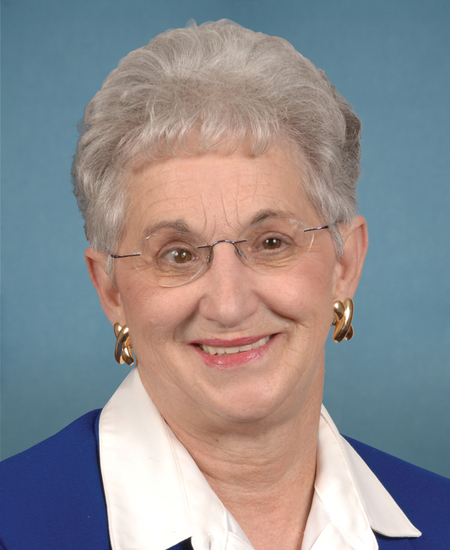
Rep. Virginia Foxx
Sponsored bills
Maddy summaryHR 5749, the Official Time Reporting Act, requires federal agencies to report annually on how they use "official time" - when union-represented employees perform union duties during work hours. Agencies must submit detailed data to the Office of Personnel Management (OPM) by December 31 each year, including total official time granted, costs, explanations for year-over-year increases, and specific activities covered. OPM then compiles this information into a public report by March 31, showing agency-level breakdowns and comparing data across years. This bill directly affects all federal agencies with union-represented employees, mandating transparency about official time usage and associated costs. The reporting aims to provide clear, standardized data for public accountability without changing existing official time policies.
Maddy summaryHR 6188 would amend U.S. law to designate "Here Rests in Honored Glory" (composed by Donald B. Miller) as the national hymn of the United States, replacing the current national anthem designation under Title 36. The bill adds a new section (307) to the U.S. Code specifying this composition as the official national hymn. This is a procedural change affecting national symbols, not a policy or funding measure. It directly affects how the United States formally recognizes its national musical emblem. The bill does not alter the status of "The Star-Spangled Banner" as the national anthem.
Maddy summaryHR 6019 repeals a requirement that Senate offices must be notified when legal requests seek Senate data. Specifically, it removes Section 213 of the 2026 appropriations act, which mandated that Senate offices be informed about legal processes requesting disclosure of Senate data. This change directly affects Senate offices by eliminating a procedural notification step for legal requests involving their data. The bill makes no other policy changes, solely removing this specific administrative requirement.
Maddy summaryThis bill requires labor unions to provide members with key documents related to union operations and collective bargaining agreements. Specifically, unions must share copies of their contracts with employers (or post them online) within 18 months of enactment, and provide members with the union's constitution, bylaws, and a summary of the law itself - either by mail/email or via a website hyperlink. New members must receive these materials within 30 days of joining, while all members get annual updates. The law applies to all unions with employer contracts and mandates annual compliance reports to the Department of Labor.
Maddy summaryHRES 886 elects Representative Fong to serve on the House Committee on Homeland Security. This procedural resolution formally appoints him to the committee without changing any policy or affecting constituents. It is a routine administrative action to fill a committee seat, not a substantive legislative measure. The resolution requires no further action beyond the formal appointment.
Maddy summaryHRES 879 is a procedural resolution that would allow the House to debate and vote on multiple specific legislative items. It enables consideration of three joint resolutions seeking to block Bureau of Land Management rules about oil and gas activities in Alaska (National Petroleum Reserve, Buffalo Field Office, and Coastal Plain areas), a concurrent resolution denouncing socialism, and three bills: one to remove natural gas export/import restrictions, one requiring an energy report on refineries, and two related to criminal justice reforms in Washington, D.C. The resolution waives debate rules and points of order to streamline votes on these items. It does not change policy itself but facilitates the House's review of the referenced bills and resolutions.
Maddy summaryThis bill requires all new passenger vehicles manufactured for sale in the U.S. to include AM radio as standard equipment (not an optional add-on) by 2027-2028, depending on manufacturer size. It mandates that AM radio receivers must be easily accessible to drivers and allows compliance through digital AM broadcast technology. During a transition period, manufacturers must clearly label vehicles without AM radio but cannot charge extra for this feature. The bill also mandates a GAO study on AM radio's role in emergency alerts and includes a 10-year sunset provision for the rule. It preempts state laws regarding AM radio access in vehicles.
Maddy summaryThis bill would require all states to recognize valid concealed carry permits issued by other states, allowing permit holders to carry concealed handguns (excluding machine guns) in any state that either issues such permits or doesn't prohibit concealed carry. It directly affects law-abiding gun owners with valid permits from their home state, ensuring they can carry in states with similar permit systems or no prohibitions. Key provisions include treating valid permit documents as proof of legal carry (reducing officer stops), shifting the burden of proof to prosecutors if challenged, and allowing civil lawsuits for violations with attorney's fee awards. The bill does not override state laws restricting firearms on private property or government land, nor does it affect federal gun restrictions like those in section 922(q).
Maddy summaryHRES 719 is a House resolution honoring Charles "Charlie" James Kirk, the founder of Turning Point USA who was assassinated on September 10, 2025. The resolution condemns his assassination and all political violence, extends condolences to his family, and calls on Americans to reject violence while promoting civil discourse. It specifically recognizes Kirk's legacy as a defender of constitutional principles and his role in inspiring youth through free speech and faith-based civic engagement. As a commemorative resolution, it does not enact policy changes but formally expresses the House's stance on honoring his life and legacy.