

Maddy summaryThis bill strengthens fraud prevention in two federal child care programs: the Child Care and Development Block Grant (CCDBG) and the Child and Adult Care Food Program (CACFP). It requires the Secretary to investigate fraud involving program funds and mandates permanent debarment (removal from the program) for providers found to have committed fraud, such as submitting false information, misrepresenting services, or improperly spending funds. Providers debarred from one program (like CACFP) face automatic debarment from the other (CCDBG), creating a unified enforcement mechanism. The law directly affects child care providers receiving federal funding, aiming to protect taxpayer dollars by ensuring only compliant providers continue to serve eligible families.
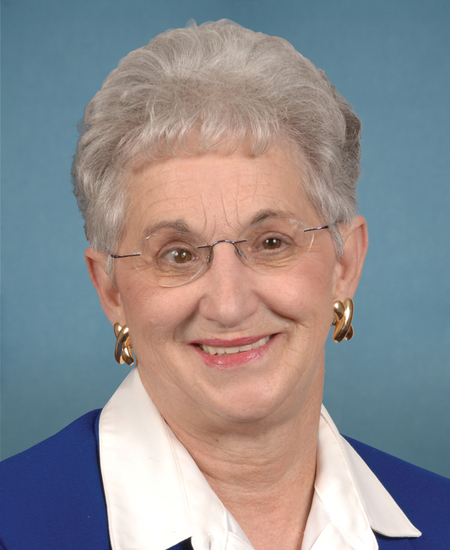
Rep. Virginia Foxx
Sponsored bills
Maddy summaryThis bill, the Workforce Investments Accountability Act, strengthens how federal workforce training programs are measured and held accountable by updating performance metrics and reporting requirements under the Workforce Innovation and Opportunity Act. It directly affects state and local workforce agencies, training providers, and program participants by requiring more detailed outcome tracking including earnings gains, employment retention, and completion rates. The bill mandates standardized reporting templates, allows access to wage records for better outcome measurement, and introduces stricter sanctions for states and local areas that fail to meet performance targets, including funding reductions and reallotment to higher-performing states. Additionally, it requires at least 50 percent of certain training funds be used for direct skills development services rather than administrative costs.
Maddy summaryThe PREDICT Act prohibits federal government officials, including Members of Congress, their spouses and dependents, high-ranking executive branch employees, and political appointees from trading on prediction markets tied to political events. This restriction applies to any agreement or transaction where payment depends on whether a specific political event occurs, does not occur, or happens to a certain degree. If a covered individual violates this rule, they must pay a 10% fee and forfeit any profits from the transaction, with penalties paid from personal funds rather than government salaries or allowances. The Office of Government Ethics will issue guidance on undefined terms and publish details of any fines on a public website.
This resolution provides for the consideration of the bill (H.R. 556) to prohibit the Secretary of the Interior and the Secretary of Agriculture from prohibiting the use of lead ammunition or tackle on certain Federal land or water under the jurisdiction of the Secretary of the Interior and the Secretary of Agriculture, and for other purposes; providing for consideration of the bill (H.R. 1958) to amend the Immigration and Nationality Act to clarify that aliens who have been convicted of defrauding the United States Government or the unlawful receipt of public benefits are inadmissible and deportable; providing for consideration of the bill (H.R. 4638) to amend the Immigration and Nationality Act to provide that an alien who has been convicted of harming animals used in law enforcement is inadmissible and deportable, and for other purposes; and relating to consideration of motions to suspend the rules.
Maddy summaryThe ERISA Litigation Reform Act (HR 6084) changes how lawsuits under the Employee Retirement Income Security Act (ERISA) are handled, directly affecting retirement and health plan beneficiaries who sue plan fiduciaries over alleged violations. It requires plaintiffs to specifically allege and prove that transactions (like purchases of company stock) aren’t exempt under ERISA rules before proceeding. The bill also temporarily halts discovery (gathering evidence) during early court motions to dismiss, mandates document preservation during this pause, and allows courts to impose penalties for failing to preserve relevant evidence. These changes aim to streamline litigation by reducing early-stage discovery costs and frivolous claims.
Maddy summaryThis resolution (HRES 1111) is a ceremonial recognition of the 245th anniversary of the Battle of Guilford Courthouse (March 15, 1781) during the Revolutionary War. It honors the bravery of American and North Carolinian troops who fought there and encourages all U.S. citizens to visit the existing Guilford Courthouse National Military Park in North Carolina. The resolution has no binding effect or policy changes - it simply commemorates the historical event and promotes public visitation to the park. It does not create new laws, allocate funds, or affect any specific group beyond encouraging general public engagement with the site.
This bill specifies a legal standard for determining whether an individual is considered an independent contractor rather than an employee for the purposes of federal labor laws that address issues such as the federal minimum wage, overtime compensation, and collective bargaining. The rights and protections provided by these laws exclusively apply to employees. Under the bill, an individual is considered an independent contractor if (1) another individual or entity does not exercise significant control over the details of how the individual's work is performed, without regard to any control the other individual or entity may exercise over the final result of the work performed; and (2) while performing such work, the individual has opportunities and risks inherent with entrepreneurship (for example, the discretion to exercise professional judgment). The bill also sets forth factors that may not be used to determine whether an individual is an employee. Specifically, factors such as whether another individual or entity requires the individual to meet certain legal, health and safety, insurance, or performance requirements may not be used to make such a determination.
Maddy summaryThis bill modifies tax credit rules to help businesses recover after disasters. It allows businesses operating in designated disaster areas to treat certain unused tax credits (carryforwards) as transferrable credits against current tax liability, rather than letting them expire. Specifically, it applies to taxpayers making eligible expenditures for business operations in areas with a major disaster declaration after December 31, 2023, or a state-declared disaster meeting specific criteria. The change affects businesses in affected zones by providing immediate tax relief for qualifying expenses incurred within two years of the disaster declaration. It does not involve energy policy or new funding, but adjusts existing tax credit rules for disaster recovery.
Maddy summaryThis bill modifies federal budget rules for unspent agency funds. It requires federal agencies to allocate 49% of unused funds to the next fiscal year, 49% toward paying the national debt, and 2% for retention bonuses (capped at 10% of an employee's base pay). Agencies must also limit future budget requests to the previous year's amount adjusted for inflation. The bill directly affects all executive branch agencies (excluding the Red Cross), altering how they manage leftover budget authority. It does not create new savings programs for individuals but changes government fiscal management procedures.
Maddy summaryThis bill prevents state or local governments from banning or restricting energy connections (like installation, modification, or access) based on the type or source of energy, such as electricity, natural gas, or renewable fuels. It directly affects consumers choosing energy providers and energy companies seeking to offer services. The key provision prohibits local laws, regulations, or policies that limit energy services sold in interstate commerce, covering all energy types listed in the bill’s definitions. It does not create new programs but limits regulatory authority at the state or local level. The law aims to ensure open access to diverse energy sources without source-based restrictions.