

Fair Access to Banking Act This bill places restrictions on certain banks, credit unions, and payment card networks if they refuse to do business with a person who complies with the law. Restrictions include prohibiting the use of electronic funds transfer systems and lending programs, termination of an institution's depository insurance, and specified civil penalties. Banks and other specified financial institutions are allowed to deny financial services to a person only if the denial is justified by a documented failure of that person to meet quantitative, impartial, risk-based standards established in advance by the institution. This justification may not be based upon reputational risks to the institution. The bill establishes the right for a person to bring a civil action for a violation of this bill.
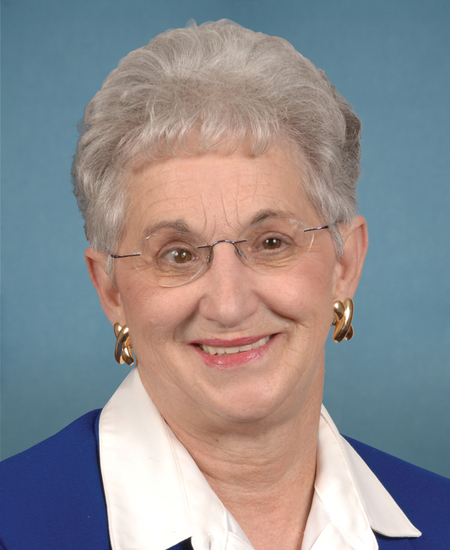
Rep. Virginia Foxx
Sponsored bills
Maddy summaryHR 1007, the Antisemitism Awareness Act of 2025, clarifies how the Department of Education enforces Title VI of the Civil Rights Act of 1964 to address discrimination against Jewish individuals. It requires the Department to consider the International Holocaust Remembrance Alliance (IHRA) definition of antisemitism when investigating complaints involving discrimination based on actual or perceived Jewish ancestry or ethnic characteristics. This affects Jewish students and communities in K-12 schools and colleges receiving federal funding, as it ensures antisemitism is assessed under existing civil rights protections. The bill does not create new laws but specifies that the IHRA definition - already used by the Department since 2018 - must be applied in Title VI enforcement cases.
Maddy summaryHRES 83 is a procedural resolution that allocates $8,544,397.95 in funding for the House Committee on Rules during the 119th Congress. This amount covers all committee expenses, including staff salaries, split equally between the first (2025-2026) and second (2026-2027) sessions of the Congress. Payments will be made via vouchers approved by the Committee Chairman and must follow House Administration regulations. The resolution directly affects the Committee on Rules and its staff by providing budget authority for their operations.
Maddy summaryHR 723, the Protect American Election Administration Act of 2025, prohibits states from accepting or using funds, property, or services from private entities for administering federal elections. This directly affects state election offices, which would no longer be allowed to take private donations for activities like voter education, outreach, or registration. The bill includes an exception allowing states to accept private donations of physical space for polling places or early voting sites. It amends the Help America Vote Act of 2002 to add this prohibition, effective for federal elections after the law's enactment.
Life at Conception Act This bill declares that the right to life guaranteed by the Constitution is vested in each human being at all stages of life, including the moment of fertilization, cloning, or other moment at which an individual comes into being. Nothing in this bill shall be construed to authorize the prosecution of any woman for the death of her unborn child.
Maddy summaryHR 21, the Born-Alive Abortion Survivors Protection Act, requires medical staff at abortion facilities to provide the same immediate care and hospital admission to any infant born alive during an abortion as they would for any newborn. It mandates reporting failures to provide this care to law enforcement and imposes penalties of up to 5 years in prison for violations, with harsher penalties for intentional killing. The bill also allows women who undergo abortions to sue for civil damages, including triple the abortion cost, and provides for attorney fees. It defines "abortion" to exclude procedures performed after viability to preserve a live birth. This law directly affects healthcare providers at abortion facilities and creates new federal legal obligations for them.
Maddy summaryThis bill, the Asylum Accountability Act (HR 698), amends immigration law to eliminate a 10-year waiting period that previously barred certain immigrants from adjusting their immigration status after failing to attend a removal hearing. It directly affects individuals who miss court proceedings related to deportation, removing a barrier to obtaining legal permanent residency. The key provision modifies Section 240(b)(7) of the Immigration and Nationality Act by striking the 10-year ineligibility period, effectively allowing these individuals to apply for status adjustment sooner. The change focuses on procedural accountability in immigration proceedings without altering asylum eligibility criteria.
Maddy summaryHR 703, the Main Street Tax Certainty Act, makes a key tax deduction permanent for small business owners. It removes the temporary sunset provision (subsection (i)) from Section 199A of the tax code, ensuring the qualified business income deduction remains available for eligible small businesses. This change directly affects pass-through business owners (like S-corps, partnerships, and sole proprietorships) who currently qualify for this deduction. The permanent change takes effect for tax years starting after December 31, 2025.
Maddy summaryHR 650, the Families’ Rights and Responsibilities Act, protects parents’ fundamental right to direct their child’s education, moral or religious upbringing, and health care decisions. It prohibits government (including agencies and officials) from substantially interfering with these parental choices without proving a "compelling governmental interest" using strict scrutiny. The bill applies to all federal laws and programs, allowing parents to challenge government actions in court and seek remedies if their rights are violated. It specifically exempts cases involving serious child safety risks but aims to prevent government overreach in parenting decisions based on disagreement with parental choices. This bill directly affects parents of children under 18 and sets a legal standard for how government can interact with family decisions.
Maddy summaryHJRES 28 proposes a constitutional amendment to permanently fix the number of justices on the U.S. Supreme Court at nine. This would require ratification by 38 state legislatures (three-fourths of states) within seven years to become part of the Constitution. The amendment directly affects the structure of the Supreme Court, which has had nine justices since 1869 but could otherwise be altered by future congressional action. It does not change current court operations or create new laws, but instead seeks to make the nine-justice composition a permanent constitutional requirement.