

Maddy summaryThe Energy Bills Relief Act aims to lower household energy costs and accelerate the development of low-cost, clean energy by modifying federal tax credits, expanding weatherization programs, and streamlining permitting processes. Key provisions include restoring tax incentives for renewable energy projects, increasing funding for low-income heating assistance, and requiring federal agencies to treat wind, solar, and storage projects with the same procedural fairness as oil and gas projects. The bill also establishes new incentives for upgrading the electricity grid, such as tax credits for transmission lines and grants for wildfire prevention measures, while creating mechanisms to ensure utilities serve public interests and protect consumers from price volatility.
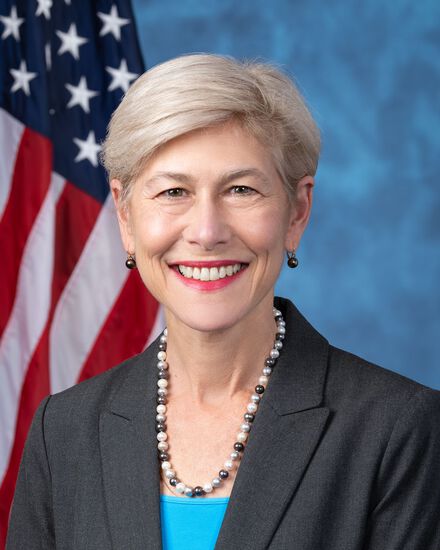
Rep. Deborah K. Ross
Sponsored bills
Maddy summaryThis bill requires the Department of Veterans Affairs (VA) to cover abortion care, counseling, and related medication as part of standard hospital and medical services for eligible veterans and certain dependents. It amends VA healthcare law to explicitly include these services under existing coverage for veterans qualifying under section 1703 and dependents eligible under section 1781(a). The policy directly affects veterans and their dependents enrolled in VA healthcare programs by expanding covered benefits to include abortion-related care. This is a concrete policy change to VA healthcare benefits, not a broader abortion law.
Governing Unaccredited Representatives Defrauding VA Benefits Act or the GUARD VA Benefits Act This bill imposes fines on individuals for soliciting, contracting for, charging, or receiving any unauthorized fee or compensation with respect to the preparation, presentation, or prosecution of any claim for Department of Veterans Affairs benefits. The attempted commission of such offenses is also punishable by fine.
Maddy summaryHCONRES 78 is a symbolic resolution designating March 10, 2026, as "Abortion Provider Appreciation Day" to honor abortion providers and staff. It recognizes their work amid rising violence, clinic closures, and abortion restrictions following the Dobbs decision, citing threats and challenges faced by providers. The resolution expresses congressional support for providers' safety and access to abortion care, condemning policies that restrict access. It does not create new laws or alter existing policies - it solely affirms Congress’s stance through a symbolic gesture. This is a procedural resolution focused on recognition, not policy change.
Maddy summaryThis bill, known as the Diabetes Foot Health Access and Modernization Act of 2026, makes two main changes to federal healthcare programs. First, it allows Medicaid to cover foot and ankle care services provided by podiatric physicians, ensuring patients have access to this specialized care. Second, it updates Medicare rules to clarify documentation requirements for diabetic shoes, specifying conditions under which patients can receive extra-depth or custom-molded footwear. The changes take effect on January 1, 2026, for Medicaid services and January 1, 2028, for Medicare shoe coverage.
Maddy summaryThis bill would require infant formula manufacturers to conduct standardized testing for specific pathogens and microorganisms in both their facilities and finished products. It mandates that companies report positive test results to the FDA within one business day and retain records of these findings for inspections. The legislation also requires the FDA to notify congressional committees within one business day of receiving positive test results or issuing certain inspection classifications. Additionally, the bill establishes clear inspection standards that apply to all infant formula products regardless of where they are made.
Maddy summaryHRES 1107 is a House resolution urging the President to issue a proclamation flying the U.S. flag at half-staff to honor Rev. Jesse Jackson. The resolution recognizes his civil rights leadership, including founding the Rainbow PUSH Coalition and his presidential campaigns in 1984 and 1988, which advanced racial equality and economic justice. This symbolic gesture directly affects the President (as the one who would issue the proclamation) and the public, who would observe the flag at half-staff.
Maddy summaryThis bill, the PrEP Access and Coverage Act of 2026, requires most health insurance plans to cover HIV prevention medication without charging patients any out-of-pocket costs. It directly affects people with private insurance, government health programs like Medicare and Medicaid, military health care, and the Indian Health Service. The law mandates that insurance companies cannot require pre-approval for these medications, cannot charge deductibles or copayments for them, and cannot deny or charge higher premiums for life, disability, or long-term care insurance based on someone taking HIV prevention medication. The bill also creates a new public education campaign to increase awareness about HIV prevention options and provides federal funding to states and community organizations to expand access to these services.
Maddy summaryHR 7856, the Fair Housing for Survivors Act of 2026, amends the Fair Housing Act to explicitly prohibit housing discrimination based on being a survivor of domestic violence, sexual assault, or severe trafficking in persons. It adds "survivor of domestic violence, sexual assault, or severe trafficking" as a protected class in the law, alongside existing categories like race or national origin. This means landlords, housing providers, and programs cannot deny housing, evict, or otherwise discriminate against individuals due to their status as a survivor. The bill directly affects survivors who face housing barriers, including those with protective orders, shelter histories, or past evictions linked to abuse.
Maddy summaryThis bill establishes the Red Star Service Banner as an officially recognized symbol to honor U.S. service members and veterans who died by suicide, as well as first responders who died by suicide. The banner features a white field with a blue border and a single red star, and it may be displayed at private residences, workplaces, public buildings, community spaces, and other appropriate locations to recognize the sacrifice of those who died and support their families. The legislation clarifies that displaying the banner does not create new eligibility for benefits, requires VA approval for individual display, or establish any legal status beyond recognition. It also allows the Secretary of Veterans Affairs to promote awareness of the banner in coordination with the Department of Defense without requiring additional funding.