

Maddy summaryThe Build to Scale Reauthorization Act of 2026 extends funding and updates rules for the Regional Technology and Innovation Hub Program, which supports economic development in specific geographic areas. The bill defines eligible organizations as state or nonprofit groups that provide direct financing, commercialization services, and entrepreneurial support to local businesses. It mandates that the federal government cover up to 90 percent of project costs and requires outreach to rural communities and areas facing economic hardship. Additionally, the legislation authorizes $50 million annually from 2026 to 2030 and allows the use of previously unspent funds to continue the program.
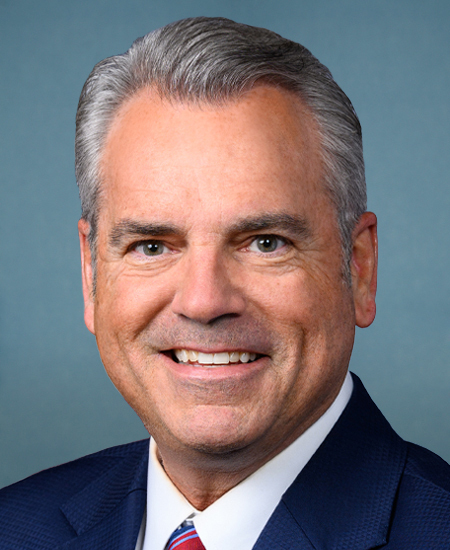
Rep. Mark Alford
Sponsored bills
Maddy summaryHR 6444 establishes a VA-DoD task force to improve care for veterans and active-duty service members diagnosed with blast-related injuries like traumatic brain injury (TBI) or PTSD. The task force will coordinate research on specific issues (e.g., sleep therapy, gut health, brain inflammation), develop clinical baselines, and create guidelines for evaluating disability claims related to blast exposure. It must report annually to Congress on research progress and claim evaluation recommendations, and will expire on September 30, 2029. The bill directly affects veterans and service members with blast exposure symptoms by focusing research and care coordination on their specific health needs.
Nationwide Consumer and Fuel Retailer Choice Act of 2025 This bill amends the Clean Air Act to address the limitations on Reid Vapor Pressure (a measure of gasoline's volatility) that are placed on gasoline during the summer ozone season. Specifically, the bill applies the waiver for Reid Vapor Pressure requirements that is applicable to gasoline blended with 10% ethanol (E10) to gasoline blended with up to 15% ethanol (E15). This change allows gasoline that is blended with 10% to 15% ethanol to be sold year-round. Currently, states may be excluded from the waiver for Reid Vapor Pressure requirements by submitting documentation supporting that the waiver would increase air pollution. The bill nullifies existing state exclusions, but states may submit documentation after enactment of the bill to be excluded going forward. The bill also modifies the Renewable Fuel Standard Program, which requires transportation fuel sold or introduced into commerce in the United States to contain minimum volumes of renewable fuel. Under the existing program, obligated parties, such as small refineries, must satisfy the volume obligations by either blending renewable fuels into their gasoline or diesel fuel products or by acquiring credits that represent the required renewable fuel volume. The bill directs the Environmental Protection Agency to return compliance credits to small refineries under certain circumstances.
Maddy summaryThe Critical Mineral and Extraction Tax Parity Act expands a federal tax credit for advanced manufacturing to include eleven new critical minerals, such as boron, copper, and uranium, while also adding specific rules for phosphate. It allows companies that extract ore in the United States to claim these credits for the extraction costs themselves, provided they certify that the ore is refined into a qualifying mineral and sold to an unrelated buyer. Additionally, the bill removes a previous penalty that reduced tax credit amounts for metallurgical coal, ensuring these materials receive the same financial support as other critical minerals. These changes are designed to encourage domestic production and processing of essential raw materials and will take effect for minerals produced and sold after December 31, 2025.
Maddy summaryThis House Resolution formally recognizes the contributions of elementary and secondary school teachers in the United States. It thanks educators for their dedication to students and communities during National Teacher Appreciation Week. The measure encourages parents, administrators, and officials to acknowledge the profession during the designated week in May.
Maddy summaryThe FAIR Labels Act of 2026 establishes new labeling requirements for cell-cultivated protein products and plant-based alternatives designed to look like meat or poultry. It mandates that labels for these products prominently display the terms "cell-cultivated" or "plant-based alternative protein product" and include clear disclaimers stating the items are not derived from live animals or birds. Additionally, the bill updates regulatory oversight by requiring the USDA and FDA to revise their agreement, assigning the USDA primary responsibility for regulating cell-cultivated meat and poultry while the FDA oversees production safety and facility compliance. The legislation also directs these agencies to create common standards of identity for these products within 180 days of enactment.
Maddy summaryThe Local Law Enforcement Support Act of 2026 expands funding opportunities for local police departments through the Byrne JAG and COPS programs. These funds can be used to recruit and train officers, purchase protective gear, and acquire specific tools like digital forensics equipment, drone technology, and ballistics analysis systems. The bill also allows for investments in software for cyber investigations and victim services. By adding these categories to the list of eligible expenses, the legislation provides law enforcement agencies with more options for addressing modern crime challenges.
Maddy summaryThis House Resolution proposes to formally "expunge" the two impeachments of President Donald Trump that passed the House of Representatives on December 18, 2019, and January 13, 2021. If passed, the resolution specifies that these impeachments would be treated "as if such Articles had never passed the full House of Representatives." This action directly affects President Trump by aiming to remove these impeachment proceedings from his official record and would alter the historical legislative record of the House. The resolution's text outlines several reasons for this action, including claims of wrongful accusations, lack of due process, and political bias in the original impeachment proceedings.
Maddy summaryThe Peer Support for Our First Responders Act of 2026 directs the Department of Health and Human Services to create a temporary working group focused on improving mental health support for law enforcement officers and first responders. This group will examine current peer-to-peer behavioral health programs, considering the unique challenges faced by these workers, and develop updated recommendations for Congress on reducing suicide risk and addressing substance use. The committee will include representatives from federal agencies, local governments, and organizations, as well as law enforcement officers and first responders with direct experience in these programs. Within one year of passing, the group must publish a report with evidence-based findings and minimum standards for effective support, then submit specific proposals to Congress on how to integrate these services into broader healthcare systems. The working group will dissolve after completing its report, though the Secretary may request to reconvene it later if new updates are deemed necessary.
Maddy summaryThe Ensuring Excellence in Mental Health Act expands federal support for certified community behavioral health clinics (CCBHCs) by modifying how these facilities are funded under Medicaid and Medicare. Under the new rules, states and the federal government will use a prospective payment system to pay CCBHCs based on the cost of providing care rather than per-visit fees, while also extending coverage to additional services like primary health care. The legislation establishes a new grant program to help clinics operate and expand, creates a national data system to track clinic performance, and introduces an accreditation requirement to ensure quality standards are met. Additionally, the bill extends liability protections to clinicians working in these clinics and removes certain financial barriers for Medicare patients seeking care at CCBHCs.