

Maddy summaryThis bill authorizes a Congressional Gold Medal to honor the "Hello Girls" - female telephone operators who served in the Army Signal Corps during World War I. They provided critical battlefield communications in France (connecting 26 million calls), wore military uniforms, and faced combat risks, but were denied veteran benefits for 60 years due to being classified as civilian contractors. The medal recognizes their pioneering service, devotion, and the decades-long struggle to gain military recognition. The award follows similar recognition for other WWII women veterans and aims to correct the historical injustice they faced.
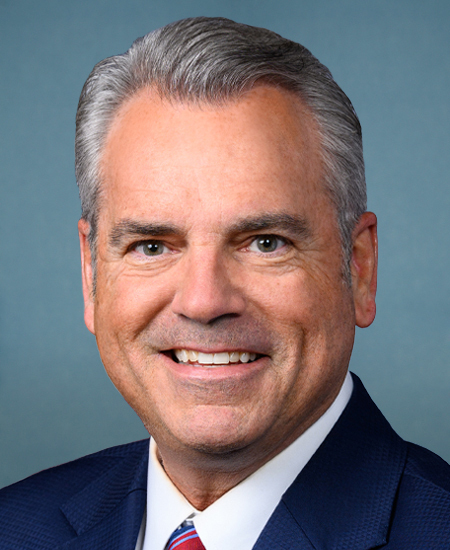
Rep. Mark Alford
Sponsored bills
Maddy summaryThe PHIT Act of 2023 allows individuals and families to deduct certain fitness expenses as medical costs on their federal taxes. It covers gym memberships, fitness classes, and specific equipment used exclusively for exercise (like home workout gear), with a yearly limit of $1,000 ($2,000 for joint returns). Expenses for activities like golf, hunting, or non-exercise-focused facilities (e.g., private clubs) are excluded, and equipment must be used solely for physical activity. This directly affects taxpayers who pay for qualifying fitness programs, making these costs partially tax-deductible under revised IRS rules.
Amplifying Processing of Livestock in the United States Act or the A-PLUS Act This bill directs the Department of Agriculture to revise its regulations to allow livestock market agencies (e.g., auction market owners) to hold an ownership interest in, finance, or participate in the management or operation of a meat packer with a cumulative slaughter capacity of (1) less than 2,000 animals per day or 700,000 animals per year for cattle and sheep, and (2) less than 10,000 animals per day or 3 million animals per year for hogs.
FDIC Board Accountability Act This bill revises provisions related to the board of directors of the Federal Deposit Insurance Corporation. Specifically, the bill removes the director of the Consumer Financial Protection Bureau from the board as a voting member and requires the appointment of an individual with demonstrated primary experience working in or supervising small depository institutions. Further, the bill limits the term length of a board member to twelve years.
Maddy summaryThis bill renames the Bureau of Consumer Financial Protection as the Consumer Financial Protection Commission and updates its governance structure. It establishes a 5-member Commission (with no more than 3 from the same political party), sets staggered 5-year terms for members, and designates a Chair as the principal executive officer. The bill requires all federal laws referencing the "Bureau" to instead cite the "Consumer Financial Protection Commission," affecting over a dozen statutes including the Dodd-Frank Act and mortgage disclosure laws. The changes are administrative, updating titles and references without altering the agency's regulatory authority or policy functions.
Maddy summaryThis bill creates a dedicated Inspector General position for the Consumer Financial Protection Bureau (CFPB), replacing the previous arrangement where the Federal Reserve's IG also oversaw the CFPB. It requires the CFPB to allocate 2% of its annual funding to support the Inspector General's office and mandates semiannual congressional hearings by the IG to report on oversight activities. The bill also sets a 60-day deadline for the President to appoint the IG after enactment. These changes directly affect the CFPB's internal oversight structure and reporting requirements.
Maddy summaryThe TABS Act of 2023 would rename the Consumer Financial Protection Bureau (CFPB) to the Consumer Financial Empowerment Agency (CFEA) throughout U.S. federal law. This bill would change the agency's name in the Consumer Financial Protection Act of 2010 and over 25 other federal statutes, including the Dodd-Frank Act and Truth in Lending Act. The bill does not alter the agency's responsibilities, authority, or budget structure - only its name. This is a procedural change affecting all federal documents, regulations, and references to the agency.
Maddy summaryHR 1143 prohibits the President from declaring any federal emergency (under the National Emergencies Act, Public Health Service Act, or Stafford Act) for two specific purposes: promoting abortion access or taking action against states that restrict abortion. The bill amends three federal laws to add these explicit restrictions, directly affecting the President's emergency declaration authority. It defines "abortion" as intentionally terminating a pregnancy except for medical reasons like increasing live birth chances or removing a dead fetus. This is a procedural change that limits how emergencies can be used regarding abortion policy, not a direct regulation of abortion services.
This resolution supports the designation of National FFA Week. It also (1) recognizes the important role of the National FFA Organization (Future Farmers of America) in developing the next generation of leaders who will change the world, and (2) celebrates the 90th anniversary of the iconic FFA jacket.
Maddy summaryThis bill prohibits the Department of Defense from using funds to pay for or reimburse abortion services, except when the pregnancy endangers the mother's life, results from rape, or results from incest. It directly affects military personnel, civilian DOD employees, and contractors receiving medical care at military facilities by restricting funding for abortion-related expenses. Key provisions include amending federal law to ban reimbursement for travel or licensing costs related to abortion services and repealing a 2022 DOD memo that expanded access to such care. The bill explicitly blocks all funding for abortion services beyond the existing exceptions, with no new exceptions added. It does not change abortion access for civilians outside the military healthcare system.