

Maddy summaryHRES 229 is a formal House resolution impeaching Chief Judge James E. Boasberg of the U.S. District Court for the District of Columbia. It accuses him of abusing judicial power by interfering with President Trump's enforcement of immigration policies under the Alien Enemies Act, specifically blocking efforts to remove aliens linked to the Tren de Aragua terrorist group and ordering planes to turn around midair. The resolution claims these actions violated separation of powers by second-guessing the President's constitutional authority without judicial authority. This is a procedural impeachment resolution pending Senate action, not a law affecting the public.
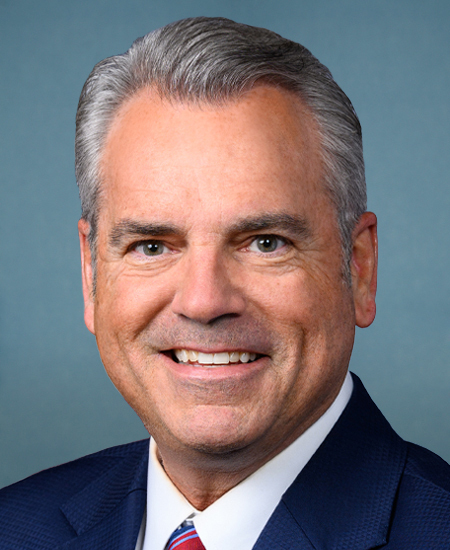
Rep. Mark Alford
Sponsored bills
Maddy summaryHRES 227 is a non-binding resolution expressing the House of Representatives' support for designating March 18, 2025, as "National Agriculture Day" to honor agriculture's role as a vital U.S. industry. It does not create new laws, allocate funds, or impose requirements on any group. The resolution serves as a symbolic gesture to highlight agriculture's economic impact and contributions to the nation. As a procedural resolution, it has no direct policy effect beyond raising awareness.
Maddy summaryHR 2205, the NEDD Act, amends existing defense law to expand the Department of Energy's (DOE) authority over drone operations near nuclear facilities. It specifically shifts responsibility from the State Department to the DOE for: (1) exempting DOE from restrictions on purchasing foreign drones, (2) allowing DOE to operate drones near nuclear sites, and (3) managing classified tracking for nuclear facility security. The bill directly affects U.S. nuclear facilities that store, transport, or use special nuclear materials, or research/produce components for nuclear weapons. These changes streamline drone-related security protocols under the DOE’s existing nuclear safety oversight, without creating new restrictions.
Maddy summaryThis is a non-binding resolution (HRES 206), not a legislative bill. It expresses the House's support for preserving the "stepped-up basis" tax provision (Section 1014 of the Internal Revenue Code), which allows heirs to reset the tax cost basis of inherited assets like farmland or business equipment to their current market value. The resolution cites that 98% of farms and 19% of businesses are family-owned, noting that eliminating this provision could increase taxes for 66% of midsized farms. It specifically urges opposition to new taxes on family farms and small businesses but does not change any tax law or policy.
Maddy summaryThis bill amends the Clean Air Act to update the definition of fossil fuel, explicitly including "fuel for ocean-going vessels" alongside home heating oil and jet fuel. It directly affects the shipping industry by requiring the Environmental Protection Agency (EPA) to issue regulations within one year of enactment to implement this updated definition. The key mechanism is changing the statutory definition to ensure ocean vessel fuels are covered under existing fossil fuel regulations, potentially influencing future clean fuel standards for ships. The EPA must also submit a report to Congress on implementation within one year of finalizing these regulations.
Maddy summaryThe LIONs Act of 2025 increases the maximum loan amounts available through two key Small Business Administration (SBA) programs. It raises the cap for standard 7(a) loans from $3.75 million to $7.5 million (with a $10 million ceiling), and doubles the maximum for development company loans from $5 million to $10 million. This bill directly affects small businesses seeking SBA financing for operations, expansion, or equipment, allowing them to access larger loans. The changes simplify access to capital by removing previous funding limits for qualifying businesses.
Federal Firearms Licensee Protection Act of 2025 This bill modifies criminal penalties for an offense involving the theft of a firearm from a licensed importer, manufacturer, or dealer, or from their business premises. Specifically, the bill does the following: increases from 10 to 20 years the maximum prison term, and creates a 3- or 5-year mandatory minimum prison term for an offense that occurs during the commission of a burglary or robbery. An attempt to commit an offense is subject to the same penalties as a substantive offense.
Maddy summaryThe PLUS for Veterans Act of 2025 regulates how agents and attorneys can represent veterans in claims for benefits with the Department of Veterans Affairs. It establishes new requirements for these representatives, including application processes, conditional recognition periods while verification occurs, and caps on fees (limiting them to $12,500 or 5 times the monthly benefit increase). The bill reinstates penalties for unauthorized fee charging, including fines up to $50,000 and bars from representation for repeat violations. This legislation directly affects veterans seeking benefits, their representatives, and the Department of Veterans Affairs in handling claims. The bill also preempts state laws that conflict with these new federal regulations.
Maddy summaryHR 1707, the Grown in America Act of 2025, creates a new tax credit for agricultural businesses that use predominantly domestically produced inputs. The credit equals 25% of a business's domestic agricultural input costs (capped at $100 million annually), but only if the business meets a 3-year average threshold for domestic sourcing (starting at 50% in 2026 and rising to 85% after 2033). It directly affects food and agricultural producers who source inputs like crops or fish raised in the U.S. for products sold domestically without further processing. The bill defines "domestic agricultural input costs" as expenses for U.S.-produced commodities used in U.S.-made food products, excluding certain commodities listed by the Secretary of Agriculture.
Maddy summaryHR 1659, the Truck Parking Safety Improvement Act, creates a federal grant program to address commercial truck parking shortages on highways. It authorizes $151 million annually (2025-2029) for states, local governments, tribes, and other eligible entities to build or improve public parking facilities for commercial motor vehicles. Projects must be on or near highways, include safety features, and provide free, publicly accessible parking - prohibiting fees for drivers. The bill also requires annual reports to Congress evaluating parking availability and project effectiveness.