

Maddy summaryThis bill prohibits the U.S. Department of Agriculture (USDA) from using race-based or sex-based criteria when making decisions about 10 specific farm programs. It applies to programs including pandemic aid for farmers, crop insurance, conservation programs like the Conservation Reserve Program, farm loans, and rural development grants. The law requires USDA to administer these programs based on merit, fairness, and equal opportunity for all applicants. It directly affects farmers, ranchers, and agricultural businesses applying for these federal programs.
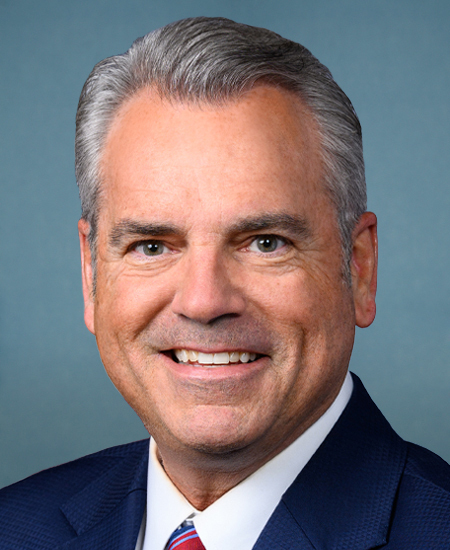
Rep. Mark Alford
Sponsored bills
Maddy summaryHR 4924, the Rails to Trails Landowner Rights Act, requires states and trail groups to notify landowners and local governments before converting abandoned railroad corridors into trails. It mandates that trail sponsors obtain written landowner approval, pay fair market value compensation for property impacts (including lost development and infrastructure costs), and maintain the right-of-way in perpetuity. The bill also requires a 90-day public comment period, a cost-benefit analysis of safety, economic, and environmental impacts, and creates an online portal for transparency. These changes directly affect landowners adjacent to former rail corridors and trail sponsors seeking interim trail use.
Maddy summaryHR 4945, the GO Ag Act, creates a $5 million grant program to fund new agricultural education programs in secondary schools. It provides competitive grants (max $100,000 per school) for schools to develop new programs focused on agriculture, including curriculum, equipment, and work-based learning. To qualify, schools must show programs are new, align with regional employer needs, and include sustainable funding beyond the grant. Grantees must track student progress (including special populations) and submit annual reports on program effectiveness through 2028.
Maddy summaryThe Biomanufacturing and Jobs Act of 2025 aims to strengthen the U.S. biobased products industry by increasing federal procurement of products made from renewable agricultural resources like corn and soybeans. It establishes new definitions for biobased terms, creates a Biobased Task Force within the Department of Agriculture to coordinate research and promotion, and requires federal agencies to update procurement systems to identify biobased products and train staff on their purchase. The bill mandates annual reporting on procurement progress, creates a labeling system for biobased products, and requires the Department of Agriculture to conduct public education on biobased products. This legislation directly affects farmers, biobased manufacturers, and federal procurement agencies, with the goal of supporting rural economic development.
Maddy summaryHR 4710, the No Surprises Act Enforcement Act, increases penalties for health insurance plans and issuers that violate balance billing protections, which prevent surprise medical bills. The bill raises fines from $100 to $10,000 per violation for specific balance billing rule violations and adds a new penalty of three times the difference between initial payment and out-of-network rates for late payments after Independent Dispute Resolution decisions. It requires health plans and nonparticipating providers to make timely payments within 30 days of a payment determination, with interest accruing on late payments. The bill also establishes new transparency reporting requirements for the Secretary to submit regular reports to Congress about audits, enforcement actions, and penalties. These provisions directly affect health insurance issuers, group health plans, and nonparticipating healthcare providers.
Maddy summaryThis bill establishes a federal right for livestock producers to sell meat and dairy products across state lines without facing conflicting state regulations. It prevents states from imposing production standards (like animal welfare rules) on products not raised within that state, ensuring a uniform national market for covered livestock products. The law specifically covers animals raised for meat or dairy (including milk products), but excludes egg production. This aims to eliminate barriers to interstate commerce for these products while aligning with U.S. trade obligations.
Maddy summaryHR 4620 amends federal law to include rioting as a form of racketeering activity under Title 18, United States Code. This change would allow prosecutors to charge individuals who organize or participate in riots as part of a larger criminal enterprise under federal racketeering laws. The bill specifically targets coordinated riot activities linked to organized crime, not isolated or spontaneous protests.
Maddy summaryHRES 589 requires the U.S. Attorney General to publicly release, within 30 days of enactment, searchable and downloadable documents related to the Jeffrey Epstein investigation - including DOJ communications, case files (like *United States v. Maxwell*), and materials about Epstein’s detention or death. It mandates the release of all such records unless specific, limited exceptions apply (e.g., to protect victims’ privacy, prevent child exploitation, or safeguard ongoing investigations). The resolution prohibits withholding documents solely due to embarrassment, reputational harm, or political sensitivity to officials or public figures. It also requires a detailed report to Congress within 15 days, listing all released materials, redactions, and unclassified summaries for any withheld classified information.
Maddy summaryHRES 591 is a symbolic House resolution congratulating the 509th and 131st Bomb Wings for completing "Operation Midnight Hammer," a military operation targeting Iran's nuclear program. It recognizes these units for their role in a successful mission involving B-2 bomber flights, including 36-hour missions with mid-air refueling, to disrupt Iran's nuclear activities. The resolution does not create new policy, funding, or obligations - it is purely ceremonial, acknowledging military service without altering laws or government actions. It directly affects the named military units and their personnel by formally recognizing their operation.
Maddy summaryHR 4448, the Restoring Equal Opportunity Act, prohibits lawsuits alleging discrimination based on "disparate impact" in employment and housing. It amends the Civil Rights Act of 1964 and Fair Housing Act to ban claims where a neutral policy (like a test or screening rule) unintentionally disadvantages protected groups (such as race or gender), even if there was no discriminatory intent. The bill also nullifies specific federal regulations implementing civil rights laws, removing legal grounds for such claims under current enforcement rules. This directly affects employers, housing providers, and federal agencies that enforce civil rights laws, changing how discrimination claims can be brought in court.