

Maddy summaryHR 10256, the DETERRENCE Act, adds sentencing enhancements for certain federal crimes when committed at the direction of or in coordination with a foreign government. It directly affects individuals convicted of offenses like kidnapping, murder-for-hire, stalking, attacks on officials, or threats against federal employees if foreign government involvement is proven. Key provisions increase sentences by up to 10 years for the primary crime, up to 5 years for attempts, and additional years if serious harm occurs (e.g., bodily injury, use of weapons, or victim age). The bill modifies existing law without creating new offenses, only increasing penalties under specific, defined circumstances involving foreign coordination.
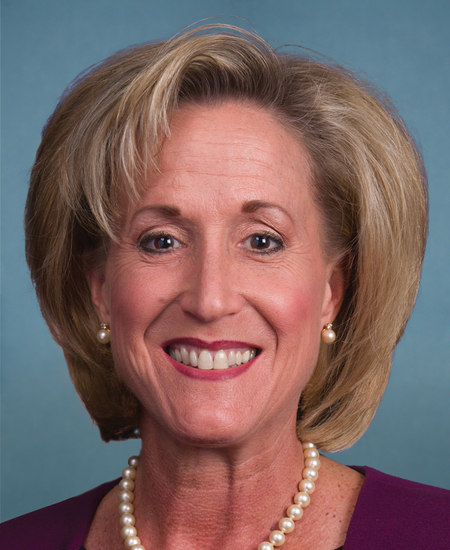
Rep. Ann Wagner
Sponsored bills
Maddy summaryHR 3012 reauthorizes U.S. programs under the North Korean Human Rights Act of 2004 through 2028, extending funding and reporting requirements for existing initiatives. It directs the U.S. Agency for Global Media to continue broadcasting independent news into North Korea, supports transparent humanitarian aid delivery, and urges China to halt forcible repatriation of North Korean refugees. The bill directly affects North Korean citizens by promoting information access and refugee protection, and North Korean refugees in China by advocating for UNHCR access and refugee rights. Key provisions include extending program deadlines, reinforcing U.S. diplomatic efforts on human rights, and calling for swift confirmation of the Special Envoy on North Korean Human Rights Issues.
Maddy summaryHRES 1574 is a non-binding House resolution calling for the immediate removal of Federal Deposit Insurance Corporation (FDIC) Chairman Martin J. Gruenberg. It cites concerns about his leadership, including alleged mistreatment of staff, a "toxic workplace," staffing shortages, and failures in bank supervision that contributed to financial institution failures. The resolution does not change law or remove Gruenberg (as the President appoints FDIC leaders), but formally demands his removal. It was introduced by 25 Republican representatives and referred to the Financial Services Committee.
Maddy summaryHRES 1566 is a symbolic House resolution honoring all U.S. veterans on Veterans Day 2024. It recognizes the service and sacrifice of the estimated 15.8 million veterans living in the U.S. as of 2023, including those who served in conflicts from World War II to post-9/11. The resolution calls on the American public to observe Veterans Day to acknowledge veterans' role in preserving national freedom. As a non-binding resolution, it has no direct policy impact but formally expresses congressional recognition of veterans' contributions.
Maddy summaryHJRES 100 is a congressional resolution seeking to block a Securities and Exchange Commission (SEC) rule on cybersecurity. It targets the SEC's August 2023 rule requiring public companies to disclose cybersecurity risks, strategies, governance practices, and incident details. If passed, this resolution would nullify the SEC rule, preventing it from taking effect. The bill directly affects public companies subject to SEC regulations and the SEC itself, as it would invalidate the specific cybersecurity disclosure requirements.
Maddy summaryHR 4551 (Protecting Investors’ Personally Identifiable Information Act) prevents the Securities and Exchange Commission (SEC) from requiring securities exchanges or associations to share investors' personal details - such as names, addresses, or Social Security numbers - for routine reporting. The SEC may only request such information during investigations into securities law violations, and exchanges must provide it within 24 hours. The SEC must destroy this data within one day after the investigation concludes. This law directly protects investors' privacy by limiting when their personally identifiable information can be collected and retained.
Maddy summaryThis bill establishes a federal task force to address "coerced debt" - a form of financial abuse where abusers force victims to take on debt using their names, often through threats, identity theft, or fraud. The task force, co-led by the Treasury Secretary and Consumer Financial Protection Bureau Director, will study how this issue affects domestic violence survivors, coordinate responses across agencies (including Health, Housing, Justice, and financial regulators), and gather input from advocates and industry representatives. It will define coerced debt, assess its financial and legal impacts on survivors, and develop recommendations for legislative or regulatory changes. The task force must submit its findings and proposals to Congress within one year, but does not directly change existing laws or protections.
Maddy summaryHRES 1537 is a non-binding House resolution condemning Hamas' October 7, 2023, attacks on Israel, which killed over 1,200 people and took 251 hostages, including 7 Americans still held captive. It calls on Hamas to immediately surrender, cease attacks, and release all hostages unconditionally, while reaffirming Israel's right to self-defense. The resolution also urges international organizations to condemn Hamas' actions and address the global surge in antisemitism following the attacks. As a symbolic statement, it does not create new laws or alter policy but expresses congressional position. The bill specifically references the ongoing captivity of seven U.S. citizens: Edan Alexander, Itay Chen, Sagui Dekel-Chen, Gadi Haggai, Judith Weinstein Haggai, Omer Neutra, and Keith Siegel.
Maddy summaryThe LINK Act of 2024 creates a military exchange program between the U.S. and Middle Eastern partner nations to support regional integration. It requires the Secretary of Defense to establish a program where U.S. and allied military officers (from E-7 to O-9 pay grades) with expertise in areas like cyber defense, counterterrorism, and military law exchange knowledge through quarterly in-person meetings. The program must cover topics including defense planning, budgeting, and women's participation in peace and security, with annual reports to Congress for six years detailing activities and effectiveness. This directly affects U.S. military personnel, partner nations' militaries, and their defense cooperation efforts.
Maddy summaryHR 9950, the "Miracle on Ice Congressional Gold Medal Act," authorizes three gold medals to be awarded to the members of the 1980 U.S. Olympic men's ice hockey team for their historic victory over the Soviet Union during the Winter Olympics. The medals, designed by the Treasury Secretary, will be presented by Congress to honor the team's achievement, which revitalized American morale during the Cold War. One medal will be displayed at the Lake Placid Olympic Center, one at the USA Hockey Hall of Fame in Eveleth, Minnesota, and one at the U.S. Olympic Museum in Colorado Springs. The bill also permits the sale of bronze duplicates to cover production costs. This is a ceremonial honor, not a policy change, directly recognizing the team members and their legacy.