

Coronavirus Unemployment Benefits Tax Relief Act This bill excludes from gross income, for income tax purposes, up to $10,200 of unemployment compensation received by an individual in a taxable year beginning in 2020.
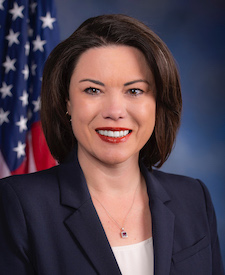
Rep. Angie Craig
Sponsored bills
Effective Drug Control Strategy Act of 2021 This bill requires the Office of National Drug Control Policy to (1) evaluate the effectiveness of all federally funded activities aimed at reducing the demand for illegal drugs, and (2) publish annually a complete list of all drug control grant programs.
Emergency Water is a Human Right Act This bill creates a grant program, administered by the Department of Health and Human Services, to provide funds to states and Indian tribes to assist low-income households that pay a high proportion of household income for drinking water and wastewater services. Further, any entity receiving financial assistance under this grant program must ensure that no home energy service or public water system service is or remains disconnected or interrupted during the COVID-19 (i.e., coronavirus disease 2019) public health emergency.
Ally's Act This bill requires private health insurance plans to cover certain hearing devices and systems (e.g., bone-anchored auditory implants) and related items and services. The bill also imposes limits on cost sharing.
Mental Health Access Improvement Act of 2021 This bill provides for coverage of marriage and family therapist services and mental health counselor services under Medicare. It also excludes such services from the skilled nursing facility prospective payment system, and authorizes marriage and family therapists and mental health counselors to develop discharge plans for post-hospital services.
Preventing Mental Health and Substance Use Crises During Emergencies Act This bill establishes a task force and requires a strategy to address mental health and substance use issues during public health emergencies. The Department of Health and Human Services must convene the task force to assess the federal response to such issues during and after the COVID-19 (i.e., coronavirus disease 2019) emergency. In addition, the Substance Abuse and Mental Health Services Administration must develop and annually update the strategy. The task force's work must inform the strategy.
Insular Area Medicaid Parity Act This bill eliminates Medicaid funding limitations for U.S. territories beginning in FY2021.
Relaunching America's Workforce Act This bill establishes several grant programs to address employment, the workforce, and education access in response to the COVID-19 national emergency. The Department of Labor must provide grants in response to the COVID-19 national emergency to provide training and employment for dislocated, unemployed, and underemployed workers; support youth employment; establish workforce information systems improvements; provide reentry employment opportunities for justice-involved youth and young adults; and create or expand apprenticeship programs. Programs directed towards assisting Native Americans and migrant and seasonal farmworkers may be extended. The Department of Education must provide grants to expand the capacity of adult education providers to prioritize serving adults with low-literacy or numeracy levels negatively impacted by the COVID-19 national emergency, and to improve or expand career and technical education programs and programs of study to respond to state and local needs as a result of the COVID-19 national emergency.
Reopen Small Businesses Safely Act This bill requires the Small Business Administration to issue rules or guidance to ensure that an economic injury disaster loan recipient may use loan amounts for covered worker protection expenditures related to the COVID-19 (i.e., coronavirus disease 2019) pandemic.
Global Health, Empowerment and Rights Act This bill establishes that a foreign nongovernmental organization shall not be disqualified from receiving certain U.S. international development assistance solely because the organization provides medical services using non-U.S. government funds if the medical services are legal in both the United States and the country in which they are being provided. Such foreign organizations shall not be subject to requirements relating to their use of non-U.S. funds for advocacy or lobbying activities, other than those that apply to U.S. nongovernmental organizations. Current U.S. policy prohibits various foreign assistance from going to a foreign nongovernmental organization unless it agrees to not perform or actively promote abortions.