

Maddy summaryThe Find It Early Act requires most health insurance plans, Medicare, Medicaid, TRICARE, and VA benefits to cover certain breast cancer screenings without cost-sharing for specific at-risk groups. It affects individuals at increased breast cancer risk (as determined by medical guidelines), those with dense breast tissue (as defined by the American College of Radiology), and others requiring screening due to factors like age, race, ethnicity, or family history. The bill mandates coverage for various screening methods including mammograms, ultrasounds, MRI, and other technologies at frequencies recommended by the National Comprehensive Cancer Network. This requirement takes effect for plan years beginning January 1, 2026, removing financial barriers to early detection.
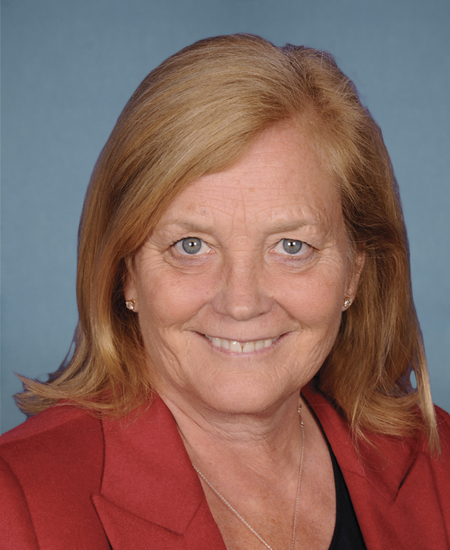
Rep. Chellie Pingree
Sponsored bills
Maddy summaryHRES 1001 is a House resolution requesting the President and Secretary of State to provide the House with specific documents related to U.S. policy on Greenland. It directs them to submit all communications (including emails, meeting notes, and records) created since January 2025 about potential U.S. ownership of Greenland, U.S. relations with Denmark, security agreements under the 1951 defense pact, and diplomatic engagements concerning recent statements about Greenland. The resolution focuses on transparency regarding the Administration's stance, including discussions with Danish and Greenlandic authorities and assessments of legal implications under NATO and UN obligations. This procedural request does not change policy but seeks documentation for congressional oversight.
Maddy summaryHRES 996 is a resolution introduced by multiple House members to impeach Kristi Lynn Arnold Noem, the Secretary of Homeland Security, for alleged violations of law and the Constitution. It outlines three articles of impeachment: obstructing congressional oversight by denying access to detention facilities and withholding funds, violating public trust through warrantless arrests and excessive force (including tear gas on children), and self-dealing by awarding federal contracts to associates without competitive bidding. If approved by the House, this resolution would formally charge Noem, triggering a Senate trial to determine her removal from office. The resolution itself does not enact new policy but initiates the constitutional impeachment process against a sitting Cabinet official.
Maddy summaryHR 7066, the SHIELD Act, requires electricity utilities to fully recover grid upgrade costs from large commercial or industrial facilities (those with peak demand over 75 megawatts) that drive these upgrades. It prioritizes new service requests from such facilities that use energy efficiency, onsite storage, or zero-emission energy (like solar or wind) to meet their needs. The bill also defines "large load facilities" to exclude existing sites where increased demand results from electrification or emissions-reduction efforts. Utilities must implement these requirements within 2 years, with states reporting progress to Congress. This directly affects major electricity consumers and shapes how grid costs are allocated.
Maddy summaryHR 7046, the Qualified Immunity Abolition Act of 2026, removes qualified immunity as a defense in civil rights lawsuits against law enforcement officers. It directly affects federal, state, and local law enforcement officers by eliminating their ability to avoid liability in cases where they allegedly violated constitutional rights. The bill amends Section 1983 of federal law to prohibit using four specific defenses: claiming good faith, believing conduct was lawful, arguing rights weren't clearly established, or asserting the law was unclear at the time. This change means officers can no longer dismiss lawsuits based on these arguments after the bill's enactment. The law applies to all civil actions pending or filed after the effective date.
Maddy summaryHR 6476, the Relief for Farmers Hit with PFAS Act, creates a federal grant program to assist farmers and agricultural communities affected by unsafe levels of PFAS (chemicals used in industrial products) in soil or water. Eligible governments (states, tribes, territories) can receive grants to fund specific actions, including compensating farmers for contaminated land or products, covering health monitoring for affected residents, investing in remediation equipment, conducting PFAS research, and developing educational programs. Grants prioritize direct financial assistance to producers experiencing losses due to contamination and require annual reports on fund usage. The program is authorized with $500 million for fiscal years 2026-2029, targeting communities with PFAS-contaminated agricultural land or water used for farm production.
Maddy summaryHR 6088, the *Restoring Food Security for American Families and Farmers Act of 2025*, repeals specific sections (10101-10108) from a prior reconciliation law. This action revives previous provisions related to food security programs that were modified by those repealed sections. The bill directly affects federal food assistance and agricultural support programs by restoring their prior legal framework. It does not create new policies but reverses recent changes to existing food security measures.
Maddy summaryThis bill updates federal nutrition law to include Puerto Rico in the Supplemental Nutrition Assistance Program (SNAP), allowing it to transition from its current funding method to the same SNAP benefits available to U.S. states. Puerto Rico must submit a 180-day plan to the USDA detailing its transition to SNAP, with approval required within another 180 days. The transition period lasts up to 5 years from the bill's effective date, during which Puerto Rico would continue receiving block grants while preparing for full SNAP participation. This change directly affects Puerto Rico's 1.4 million residents who currently receive nutrition assistance under a separate funding structure.
Maddy summaryThe MORE Act (HR 5068) would remove cannabis from the federal list of controlled substances, effectively decriminalizing it at the federal level while establishing a new tax on cannabis products. The bill creates an Opportunity Trust Fund that would distribute tax revenues to support communities disproportionately impacted by cannabis prohibition, including funding for expungement programs, job training, and equitable licensing initiatives for minority business owners. It also includes provisions to prevent discrimination based on cannabis use in federal programs, immigration proceedings, and workplace policies. The bill would require federal courts to expunge non-violent cannabis convictions and establish a process for resentencing individuals currently serving time for such offenses. These provisions aim to address racial disparities in cannabis enforcement and create more equitable opportunities in the legal cannabis industry.
Maddy summaryHR 5017, the Greyhound Protection Act of 2025, prohibits commercial greyhound racing, live lure training, open field coursing, and related betting across state lines. It bans activities like using live animals as bait, conducting interstate simulcast betting, and transporting greyhounds for racing purposes. The law amends the Animal Welfare Act to make these actions unlawful, with penalties including fines and up to 7 years in prison per violation. It applies to conduct occurring on or after October 1, 2027, and does not override existing state laws banning these activities. The bill directly affects greyhound racing industry participants and the animals involved in these practices.