

Maddy summaryHR 7803, the "Save Medicare Act," renames Medicare Advantage plans to "Alternative Private Health Plan" for all federal references, including in the Social Security Act. It requires health plans to stop using "Medicare" in their titles after enactment, imposing a $100,000 civil penalty per violation. The change applies to all Part C Medicare plans and mandates a full transition by October 15, 2023, with a temporary period allowing both terms to be used during the switch. This bill directly affects private health insurers offering Medicare Part C plans and federal agencies managing Medicare programs. The policy change is solely about terminology, not benefits or coverage.
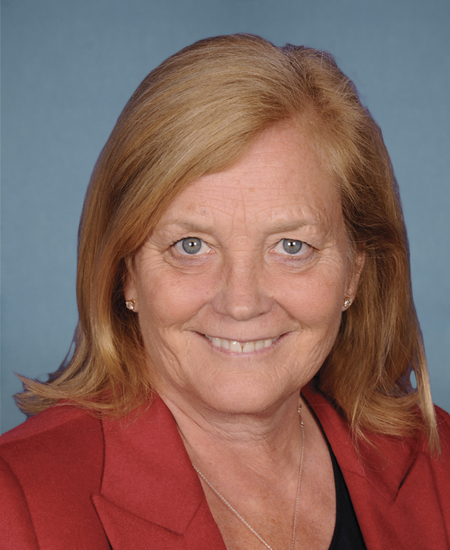
Rep. Chellie Pingree
Sponsored bills
Maddy summaryHR 7743, the Stop ICE Intimidation Act of 2026, prohibits the Department of Homeland Security from spending funds on biometric surveillance systems, related contracts, or hiring additional ICE personnel until a detailed report is submitted to Congress. The required report must establish policies banning ICE from using surveillance systems to collect data on individuals exercising constitutional rights (like free speech), and must include rules for data storage, retention, access, and notification for affected individuals. The bill also explicitly prevents using federal funds to restrict people from recording or documenting ICE enforcement operations, as long as such actions don’t interfere with operations. This bill directly affects ICE’s operational funding and data practices, and impacts individuals whose constitutional rights could be monitored under current ICE surveillance systems.
Maddy summaryHRES 1087 is a non-binding House resolution recognizing community water fluoridation as a safe and effective public health measure to prevent tooth decay. It acknowledges decades of scientific support for fluoridation, including CDC recognition as a top public health achievement, and highlights its cost-effectiveness in reducing dental treatment costs. The resolution encourages states and localities to maintain or adopt optimal fluoridation levels but does not create new legal requirements or directly affect any specific group. It serves as a symbolic endorsement of existing public health practice, referencing support from major health organizations.
Maddy summaryThis resolution (HRES 1088) is a non-binding House of Representatives measure recognizing the importance of Black history museums and cultural institutions. It formally acknowledges their role in preserving Black American history and contributions, particularly in relation to the 2026 100th anniversary of Black History Month and the U.S. 250th anniversary. The resolution urges the House to affirm that Black history is foundational to American history and calls for federal agencies to support these institutions through funding and partnerships. It also encourages the public to visit these museums, support them financially, and engage with their educational resources. The resolution does not create new laws or allocate funding, but serves as a symbolic endorsement of these institutions' cultural and historical significance.
Maddy summaryHR 7740, the African American History Act of 2026, authorizes $4 million annually for the National Museum of African American History and Culture to develop educational resources and support teaching about African American history. The bill directs the museum to create digital and print materials, provide teacher training, and expand access to curriculum resources for K-12 and college classrooms. It requires annual reports to Congress on fund usage and expires in 2030. This program directly affects educators and students by enhancing classroom materials and professional development on African American history.
Maddy summaryThis bill requires the Department of Homeland Security to return all identification documents to individuals when they are released from immigration custody, with specific exceptions for fraudulent documents, evidence in criminal cases, or documents the individual is no longer legally allowed to possess. It defines covered documents to include passports, green cards, driver's licenses, and social security cards, and mandates that if a document is retained, the individual must receive a certified copy and a written explanation of why. The legislation also explicitly prohibits keeping documents for operational convenience or anticipated future enforcement actions. This change aims to prevent the loss of important personal identification during immigration proceedings.
Maddy summaryThis bill requires states to create and maintain searchable online directories of career and technical education programs. Each directory must list programs by school district, industry focus, and credentials earned, using open, standardized data formats that work together. States must update the directories annually and include details like course sequences, work-based learning opportunities, and evidence linking programs to local job market needs. These directories directly affect state education agencies and school districts operating career training programs under the Perkins Act.
End Veteran Homelessness Act of 2025 This bill requires the Department of Veterans Affairs (VA) to furnish case management to certain veterans who are eligible for the HUD-Veterans Affairs Supportive Housing (HUD-VASH) program administered by the Department of Housing and Urban Development (HUD) and the VA. Specifically, the VA must furnish case management to veterans who are eligible for HUD-VASH that the VA determines require case management. The VA must prioritize vulnerable homeless veterans in assigning case managers and providing services. The VA must take certain actions if a veteran refuses case management. HUD or a public housing authority may not revoke assistance solely on the basis that a veteran has refused case management. Additionally, a veteran may not be evicted or penalized by the owner of a property solely on the basis that they have refused case management or cannot be provided case management for health and safety reasons. The Government Accountability Office must report to Congress on veterans who are served by the HUD-VASH program, case managers and case management services provided under the program, and metrics about housing stability for veterans participating in federal housing assistance programs. The bill also provides statutory authority to expand eligibility for the HUD-VASH program to any veteran who is homeless, at risk of homelessness, or receiving assistance under another housing assistance program if the VA determines a voucher under HUD-VASH is more appropriate. (Currently, assistance is statutorily limited to certain veterans who have chronic mental illness or substance use disorders.)
Maddy summaryThe Ceasefire Compliance Act of 2026 establishes requirements for Israel to comply with the October 10, 2025, ceasefire agreement, including allowing sufficient humanitarian aid into Gaza, halting military operations in Gaza, preventing settler violence, and supporting Palestinian governance. The bill requires the US government to submit quarterly reports certifying Israel's compliance with these conditions, with potential restrictions on US defense sales to Israel if violations occur. If Israel fails to meet the requirements, the US would prohibit the sale, export, or transfer of US-origin defense articles for use in the West Bank or Gaza. The bill also creates an end-use monitoring group to track if US defense articles are being used in those areas, with a 5-year sunset provision. This legislation directly affects US-Israel defense relations and the flow of military assistance.
Maddy summaryThe Head Start for America's Children Act amends the Head Start Act to enhance early childhood education services for low-income children, with specific provisions to improve culturally responsive programming for Native American and Native Hawaiian communities. It increases funding for Head Start programs, including $91.575 million for transportation, $37.5 million for workforce development, and $863 million for extended operations to provide full calendar year services. The bill updates definitions throughout the law to use more inclusive language, replacing "limited English proficient" with "children who are developing English proficiency," and establishes new requirements for staff compensation and benefits to improve recruitment and retention. Native American Head Start programs and migrant/seasonal programs are exempt from certain requirements, such as the full calendar year service requirement.