

Maddy summaryThe PREDICT Act prohibits federal government officials, including Members of Congress, their spouses and dependents, high-ranking executive branch employees, and political appointees from trading on prediction markets tied to political events. This restriction applies to any agreement or transaction where payment depends on whether a specific political event occurs, does not occur, or happens to a certain degree. If a covered individual violates this rule, they must pay a 10% fee and forfeit any profits from the transaction, with penalties paid from personal funds rather than government salaries or allowances. The Office of Government Ethics will issue guidance on undefined terms and publish details of any fines on a public website.
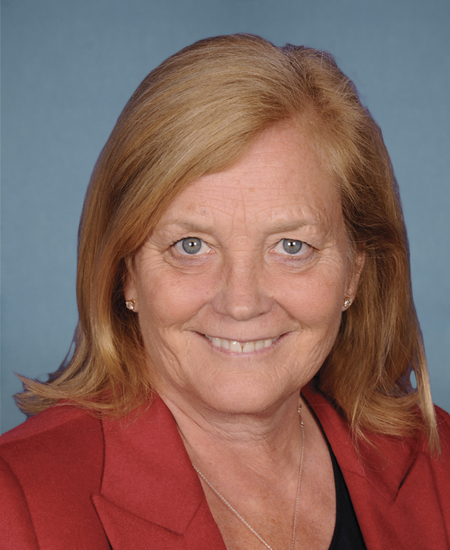
Rep. Chellie Pingree
Sponsored bills
Maddy summaryThis bill would eliminate interest on all existing and future Federal student loans starting in 2026, directly affecting current borrowers and future students. It requires the Department of Education to automatically modify eligible Federal Direct loans to stop interest accrual and allows borrowers to refinance other Federal loans into zero-interest consolidation loans without origination fees. The legislation also creates a new Education Affordability Trust Fund that would use loan repayments to fund these interest-free loans and potentially provide additional Pell Grants, while establishing a six-member board to oversee investments in government bonds.
Maddy summaryThe Opportunities in Organic Act establishes a new federal program to support farmers and ranchers transitioning to organic certification and expanding organic operations. It provides cost-share payments for organic certification (up to $1,500 per producer, with higher amounts allowed for socially disadvantaged farmers or in high-cost regions) and funds eligible nonprofits to deliver technical assistance, transition support, and supply chain development. The program specifically targets socially disadvantaged farmers, organic producers, and farms in vulnerable or under-resourced areas, with annual funding starting at $50 million for 2027-2028 and increasing to $100 million annually by 2030.
Maddy summaryHR 7251, the "Prohibit Partisan Park Passes Act," amends federal law to prevent the use of living political figures on National Park Service and federal recreational lands passes. The bill specifically prohibits including images of current or former elected officials or other living political figures on these passes. This change directly affects the National Park Service, which issues the passes, and ensures the design remains neutral. The law modifies existing regulations under the Federal Lands Recreation Enhancement Act to remove partisan imagery from these commonly used visitor passes.
Maddy summaryThis resolution supports designating March 21, 2026, as National Women in Agriculture Day to recognize the contributions of women in the agricultural sector. It highlights that over 1.2 million women in the U.S. are agricultural producers, representing more than one-third of all producers, and notes their significant economic impact through farm sales and roles in research, education, and agribusiness. The measure encourages citizens to acknowledge and celebrate women working in agriculture during National Ag Week, aligning with the 2026 International Year of the Woman Farmer.
Maddy summaryThe Energy Bills Relief Act aims to lower household energy costs and accelerate the development of low-cost, clean energy by modifying federal tax credits, expanding weatherization programs, and streamlining permitting processes. Key provisions include restoring tax incentives for renewable energy projects, increasing funding for low-income heating assistance, and requiring federal agencies to treat wind, solar, and storage projects with the same procedural fairness as oil and gas projects. The bill also establishes new incentives for upgrading the electricity grid, such as tax credits for transmission lines and grants for wildfire prevention measures, while creating mechanisms to ensure utilities serve public interests and protect consumers from price volatility.
Maddy summaryThis bill requires the Department of Veterans Affairs (VA) to cover abortion care, counseling, and related medication as part of standard hospital and medical services for eligible veterans and certain dependents. It amends VA healthcare law to explicitly include these services under existing coverage for veterans qualifying under section 1703 and dependents eligible under section 1781(a). The policy directly affects veterans and their dependents enrolled in VA healthcare programs by expanding covered benefits to include abortion-related care. This is a concrete policy change to VA healthcare benefits, not a broader abortion law.
Governing Unaccredited Representatives Defrauding VA Benefits Act or the GUARD VA Benefits Act This bill imposes fines on individuals for soliciting, contracting for, charging, or receiving any unauthorized fee or compensation with respect to the preparation, presentation, or prosecution of any claim for Department of Veterans Affairs benefits. The attempted commission of such offenses is also punishable by fine.
Maddy summaryThis bill establishes a new excise tax on crude oil extracted or imported by large oil companies and uses the revenue to provide rebates to eligible consumers. The tax would be imposed on companies that extract or import over 300,000 barrels of crude oil per day, at a rate of 50% of the difference between the current Brent crude oil price and a 2025 baseline price, adjusted for inflation. All revenue from this tax would be deposited into a new "Protect Consumers from Gas Hikes Fund." This fund would then be used to provide refundable tax credits, or rebates, to eligible individuals, with the rebate amount determined by the Secretary based on fund revenues and the number of eligible individuals. These rebates would be phased out for individuals with adjusted gross incomes exceeding certain thresholds, such as $150,000 for joint filers.
Maddy summaryThis bill designates the Chí'chil Biłdagoteel Historic District, a traditional cultural place significant to Western Apache and other Native American tribes, as protected land within the Tonto National Forest. It prohibits mining, toxic waste disposal, pipeline construction, and other development activities on the area to preserve its cultural and natural integrity. The legislation requires the Secretary of Agriculture to maintain the land in its natural condition, consult with affected tribes, and ensure continued access for traditional religious and cultural practices. By withdrawing the land from public land laws and mining rights, the bill prevents future extraction projects that could damage sacred sites, water sources, and ecosystems.