

Maddy summaryThe TREE Act prohibits the import and sale in the U.S. of goods linked to deforestation, starting in 2029, and directly affects companies that trade or sell commodities like cattle, soy, palm oil, and wood. To enforce this ban, the bill requires importers to submit detailed due diligence statements proving their products are deforestation-free, while also mandating increased customs inspections for goods from countries categorized as high or moderate risk. The U.S. Trade Representative will annually assess and rank countries based on their deforestation rates and environmental laws, with higher-risk nations facing stricter scrutiny and potential trade restrictions. Additionally, the law establishes civil penalties for violations and directs half of the collected fines toward providing financial assistance to developing countries for forest management.
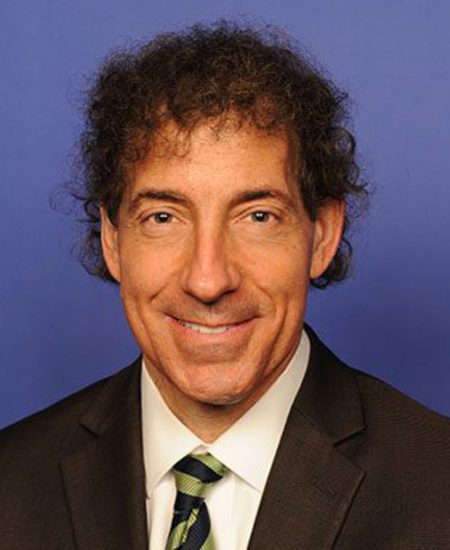
Rep. Jamie Raskin
Sponsored bills
Maddy summaryThis bill expands the Department of Defense Military Retirement Fund to include retired pay for members of the uniformed services beyond the current military branches. It specifically adds the National Oceanic and Atmospheric Administration and the Public Health Service to the list of agencies whose commissioned officers receive pensions from this fund. The legislation requires a calculation of the financial gap for these new groups by 2027 and establishes a schedule for paying off that debt over time. Additionally, the bill updates various legal definitions and administrative procedures to ensure these new services are treated consistently with existing military personnel regarding retirement benefits and survivor protections.
Maddy summaryThis resolution expresses support for designating July 15, 2026, as Glioblastoma Awareness Day to raise public awareness about this aggressive and deadly form of brain cancer. The bill honors patients and caregivers while encouraging greater understanding of the urgent medical needs associated with the disease, which currently has a low survival rate and limited treatment options. It also calls for increased collaboration among government, private, and nonprofit organizations to advance research and develop better therapies for those affected.
Maddy summaryThis resolution expresses support for designating May 4, 2026, as a "National Day of Reason" to highlight the value of critical thinking and evidence-based decision-making. It encourages all Americans to observe the day by promoting the scientific method and free inquiry as tools for solving social problems and advancing human welfare. The text cites historical figures and principles to argue that reason is essential for protecting democracy, civil liberties, and addressing challenges like climate change and misinformation. As a non-binding congressional resolution, it does not create new laws or alter government operations but serves as a formal statement of the House's position.
Maddy summaryThis bill is a non-binding resolution that expresses the House of Representatives' sentiment to honor public servants for their dedication to the United States. It specifically acknowledges the work of federal, state, and local government employees, as well as uniformed service members, who deliver essential services and support the economy. The resolution calls on the American public to observe Public Service Recognition Week with ceremonies and activities that recognize these contributions. Because it is a symbolic expression of the House's feelings rather than a law with enforceable rules, it does not create new policies or mandate specific actions.
Maddy summaryThe No WAR Act prohibits Congress from using budget reconciliation procedures to fund military hostilities against Iran unless such actions are explicitly authorized by a formal declaration of war or a specific authorization for the use of military force. This legislation directly affects the legislative process by establishing a point of order that blocks any reconciliation bill attempting to provide budget authority for offensive military operations, strikes, or covert actions targeting Iranian military forces, territory, or government institutions. The bill also defines proxy forces as any foreign military or irregular groups operating with U.S. direction or material support, ensuring these entities are included in the restrictions on unauthorized funding. By amending the Congressional Budget and Impoundment Control Act, the measure aims to prevent the use of budgetary shortcuts to bypass the constitutional requirement for congressional approval before engaging in armed conflict with Iran.
Maddy summaryThis bill, titled the Protecting Human Rights and Public Health in Foreign Assistance Act, aims to cancel specific regulations issued by the Department of State. It directly affects the federal government by prohibiting any department or agency from enforcing, implementing, or proposing rules related to protecting life, combating discriminatory equity ideology, and combating gender ideology in foreign aid programs. The legislation treats these cancelled rules as if they never existed, effectively nullifying their impact on future foreign assistance policies.
Maddy summaryThe Special Election Timeliness Act requires states to hold special elections to fill vacancies in the U.S. House of Representatives within 180 days, unless a regular general election is scheduled during that period. This law directly affects state officials who manage elections and federal representatives who may lose their seats due to death, resignation, or failure to be elected. The bill establishes legal enforcement mechanisms, allowing the Attorney General or aggrieved federal leaders to sue state executives in federal court if these deadlines are missed. By setting a specific timeline, the legislation aims to ensure timely representation in Congress without altering the existing process for nominating candidates.
Maddy summaryThe Countering Russia's War on Faith Act requires the U.S. government to produce annual reports detailing how Russian forces in occupied Ukrainian territories are persecuting religious groups such as Christians, Jews, and Muslims. These reports must document specific actions like the destruction of religious sites, the detention of clergy, and efforts to force local faith communities to align with the Russian Orthodox Church. If the President certifies that specific individuals or entities are responsible for these violations, the law mandates imposing sanctions on them under existing U.S. regulations. The bill focuses on gathering factual information and enforcing penalties against those directly involved in religious persecution, without speculating on the broader geopolitical outcomes of these actions.
Maddy summaryHR 5543, the Baltic Security Assessment Act of 2025, requires the U.S. State and Defense Departments to submit a report within 180 days of enactment. The report will assess emerging military, cyber, hybrid, and political threats to Estonia, Latvia, and Lithuania, including the roles of Russia, Belarus, China, Iran, and other actors. It will also evaluate U.S. and NATO military presence in the region, opportunities for defense cooperation, and recommendations to strengthen deterrence, cybersecurity, and democratic resilience in the Baltic countries. This bill directly affects U.S. foreign policy and defense planning regarding the Baltics, but does not create new programs or funding.