

Maddy summaryThis bill requires most employers to provide workers with earned paid sick leave. Employees would earn 1 hour of paid sick time for every 30 hours worked, up to 56 hours per year, which can be used for their own illness, medical care, caring for family members (including children, parents, spouses, domestic partners, or other family-like relationships), or addressing domestic violence, sexual assault, or stalking situations. The bill prohibits employers from retaliating against workers who use this leave and requires employers to inform employees about their rights. It ensures that workers who leave and return to the same employer within a year can reinstate their unused sick leave. This law would not override more generous state or local paid leave policies.
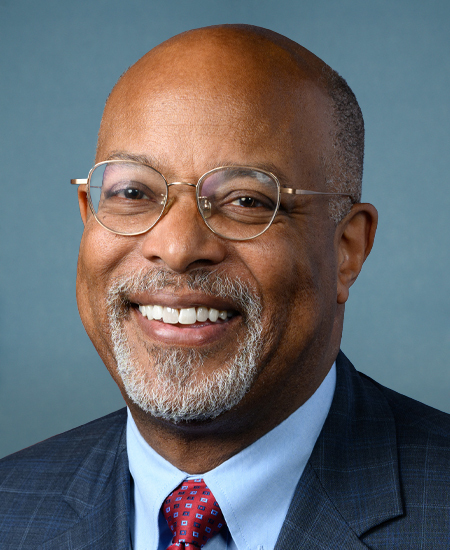
Rep. Glenn Ivey
Sponsored bills
Maddy summaryThis bill establishes a 12-member National Council on African American History and Culture within the National Endowment for the Humanities (NEH). The Council, appointed by the President with Senate approval, will include experts in African American history and culture who are not federal employees, with balanced representation (6 Democrats, 6 Republicans) and attention to diversity. Its duties include evaluating NEH programs related to African American history, preparing annual reports, and making recommendations to improve preservation and celebration efforts. The Council will operate for 10 years, with members serving five-year terms and receiving partial compensation for their service.
Maddy summaryHRES 1058 is a non-binding House resolution recognizing the federal government’s duty to develop a Transgender Bill of Rights. It calls for specific policy changes, including amending civil rights laws to explicitly prohibit discrimination based on gender identity in employment, housing, and public accommodations; protecting access to gender-affirming medical care; and streamlining legal recognition of gender identity on federal documents like passports and voter registration. The resolution also proposes expanding protections for transgender and nonbinary individuals in healthcare, education, immigration, and correctional facilities, while emphasizing community-led policy development. As a resolution, it does not create new law but sets a framework for future legislative action.
Department of Homeland Security Appropriations Act, 2026 This bill provides FY2026 appropriations for various agencies and offices within the Department of Homeland Security (DHS), except for U.S. Immigration and Customs Enforcement (ICE), U.S. Customs and Border Protection (CBP), and management and oversight activities of the Office of the Secretary. Specifically, the bill provides appropriations to DHS for the Federal Protective Service, the Office of Inspector General, the Transportation Security Administration, the U.S. Coast Guard, the U.S. Secret Service, the Cybersecurity and Infrastructure Security Agency, the Federal Emergency Management Agency (FEMA), U.S. Citizenship and Immigration Services, the Federal Law Enforcement Training Centers, and the Science and Technology Directorate. The bill does not provide appropriations for some agencies and activities that have been funded in prior DHS appropriations acts, including ICE, CBP, and management and oversight activities of the Office of the Secretary.
Maddy summaryHR 7507, the Fiscal Harms of Federal Firings Act, mandates the Government Accountability Office (GAO) to study how federal workforce reductions (RIFs) impact state and local government budgets. The study will examine increased costs for services like unemployment insurance and Medicaid, reduced tax revenues, regional economic shifts, and varying fiscal challenges across states. It requires the GAO to consult with state officials, economists, and federal agencies, then submit a public report to Congress within 18 months detailing findings, historical case studies, and policy options. This bill does not change federal policy but aims to provide data for future decisions about RIFs' fiscal effects.
Maddy summaryHR 7480, the FAIR Act, sets pay adjustments for federal employees in 2027. It increases base pay by 3.1% for most federal workers under standard pay systems and for employees paid according to local civilian wages in high-cost areas. Additionally, it raises locality pay adjustments by 1% for 2027. The bill directly affects all federal employees covered by these pay systems through concrete, formula-based adjustments.
Maddy summaryHRES 1040 is a symbolic resolution recognizing the Greensboro Four sit-in during Black History Month. It commemorates the 66th anniversary of the February 1, 1960, sit-in at a Greensboro Woolworth's lunch counter, where four Black students challenged racial segregation. The resolution encourages states to include the Greensboro Four's history and contributions in school curricula. As a non-binding resolution, it has no legal effect but formally honors this pivotal civil rights moment.
Maddy summaryHR 7347, the *Stop Inhumane Conditions in ICE Detention Act of 2026*, requires all facilities detaining noncitizens under U.S. immigration law - including contracted facilities - to implement real-time health reporting systems for medical, dental, and mental health conditions. It mandates anonymous, multilingual complaint systems for detainees with anti-retaliation protections, annual DHS audits of health conditions (including gender-specific care), and full-time health liaisons at each facility. The bill triggers contract reviews for facilities with three verified health complaints and requires quarterly public reports on conditions and complaints to Congress. These provisions directly affect ICE detention facilities, detainees, and DHS oversight processes, focusing on transparency and accountability in health care.
Maddy summaryHR 7345 directs the Congressional Budget Office (CBO) to study the long-term economic effects of immigration policies implemented beginning January 20, 2025. The CBO must assess impacts across specific sectors (like healthcare, agriculture, STEM fields), public safety concerns, demographic shifts, small business effects, and tax revenue at federal, state, and local levels. Federal agencies - including Homeland Security, the Bureau of Labor Statistics, and the IRS - must provide requested data to support this study. The report must be completed within 180 days of the bill’s enactment or by the end of the current congressional session, whichever comes first. This is a procedural study bill, not a policy change.
Maddy summaryHR 7346, the Drain ICE Act of 2026, repeals specific funding provisions (sections 90003 and 100052) from the "One Big Beautiful Bill Act" and cancels all unspent funds allocated under those sections. This bill directly affects ICE’s detention budget by removing existing financial authority for detention operations. It does not change immigration enforcement practices or directly impact individuals; it solely modifies budgetary allocations. The bill focuses on eliminating funding mechanisms, not on policy changes for migrants or enforcement. (Procedural bill; summary limited to 2 sentences as specified.)