

Transparency in Government Contracts Act This bill expands the Small Business Administration's (SBA) reporting requirements to include certain disaggregated demographic data about federal contracts (and subcontracts to the extent practicable) awarded to small businesses owned by socially and economically disadvantaged individuals. The SBA also must include whether such a small business participates in the 8(a) business development program.
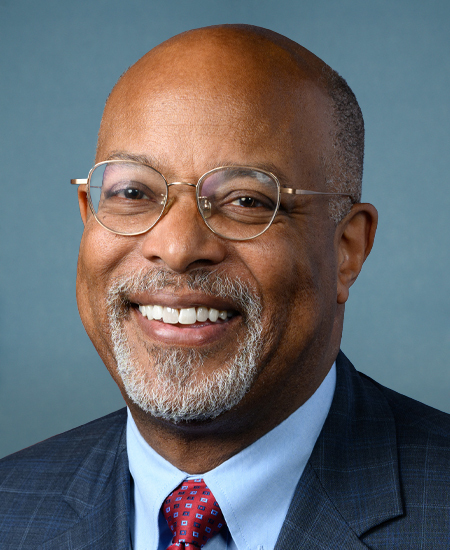
Rep. Glenn Ivey
Sponsored bills
Maddy summaryThis bill restores access to VA housing loans and educational benefits for Black World War II veterans who were denied GI Bill benefits due to racial discrimination, as well as for their living spouses, children, grandchildren, or direct descendants. It defines eligibility by requiring applicants to certify that their veteran relative was denied GI Bill benefits on racial grounds, with a five-year application window starting from the bill's enactment date. The VA must process these applications within 90 days and report to Congress on the number of recipients and total benefit value within one year. This addresses historical discrimination by creating new pathways to benefits for affected individuals and their families.
Maddy summaryHR 1723, the Abortion is Health Care Everywhere Act of 2023, amends the Foreign Assistance Act to remove restrictions on using U.S. foreign aid funds for abortion services. It explicitly allows U.S. foreign assistance programs to fund comprehensive reproductive health care, including abortion services, training, and equipment. This change directly affects U.S. international health programs and recipient countries, enabling them to integrate safe abortion care into broader reproductive health services. The bill aims to align U.S. policy with global health guidelines by making abortion services a standard part of reproductive health care funded through foreign assistance.
Maddy summaryThis bill modifies federal highway funding rules to prioritize safety for cyclists and pedestrians. It allows states and local governments to receive 100% federal funding for projects that connect existing bike/pedestrian infrastructure or reduce safety risks for these users, instead of the usual lower federal share. The bill also requires projects to align with state safety plans focusing on vulnerable road users and includes specific "Proven Safety Countermeasures" for cyclists/pedestrians. These changes directly affect states administering federal highway funds and local governments seeking to improve non-motorized transportation infrastructure.
Maddy summaryHR 1619 requires schools participating in the National School Lunch Program to provide fluid milk substitutes (like soy or almond milk) upon request by a student or their parent/guardian. The bill removes the previous requirement that substitutions needed a medical authority's written statement for most dietary needs, instead allowing requests based on the student's or parent's request alone. It aligns the definition of acceptable substitutes with current Dietary Guidelines for Americans. This change directly affects students with dietary restrictions, making it simpler for schools to accommodate their needs without extra medical documentation.
Maddy summaryThis bill authorizes a Congressional Gold Medal to honor the "Hello Girls" - female telephone operators who served in the Army Signal Corps during World War I. They provided critical battlefield communications in France (connecting 26 million calls), wore military uniforms, and faced combat risks, but were denied veteran benefits for 60 years due to being classified as civilian contractors. The medal recognizes their pioneering service, devotion, and the decades-long struggle to gain military recognition. The award follows similar recognition for other WWII women veterans and aims to correct the historical injustice they faced.
Maddy summaryHR 1499, the Good Jobs for Good Airports Act, requires airports receiving federal funding to pay covered service workers a minimum wage of at least $15 per hour (or higher if state/local laws or federal standards require it) and provide minimum fringe benefits. It directly affects workers in specific airport roles like security, ticketing, concessions, cleaning, and ramp services at small, medium, or large hub airports. The bill mandates annual certification from airport operators to verify compliance with these wage and benefit standards, tied to eligibility for federal airport grants under the Infrastructure Investment and Jobs Act. It does not override stricter state or local laws but ensures minimum standards for workers supporting airport operations.
Maddy summaryHR 1328, the Medical Device Nonvisual Accessibility Act of 2023, requires certain home-use medical devices (like blood pressure monitors and sleep apnea machines) to include nonvisual accessibility features - such as voice commands or audio feedback - by 2025. It directly affects blind or low-vision users who rely on these devices for independent, safe, and private care at home. The bill mandates that devices classified as Class II or III (and cleared via FDA processes) must meet accessibility standards ensuring equal usability for blind or low-vision individuals, with limited waivers allowed for manufacturers facing undue hardship. The FDA will develop and enforce these standards within two years, consulting with accessibility experts and blind users.
Maddy summaryThe Paycheck Fairness Act (HR 17) strengthens equal pay protections by amending the Fair Labor Standards Act. It prohibits pay discrimination based on sex, pregnancy, childbirth, sexual orientation, gender identity, and sex characteristics. The bill modifies employer defenses for pay differences to require demonstration that any disparity is job-related, consistent with business necessity, and accounts for the entire pay differential. It also prohibits employers from relying on wage history when making hiring decisions or setting pay, enhances penalties for violations, and requires the EEOC to collect compensation data disaggregated by sex, race, and national origin.
Maddy summaryHR 1478 requires federal firearm dealers to implement physical security measures, including locked cabinets, security systems, and video surveillance, to prevent gun thefts. The bill mandates quarterly inventory checks, extends background check record retention from 24 hours to 90 days, and repeals restrictions that prevented the ATF from disclosing crime gun trace data. It increases penalties for violations, including fines up to $20,000 and license suspension or revocation for repeated failures. The bill directly affects all federally licensed firearm dealers, manufacturers, and importers by holding them accountable for security failures and recordkeeping. This legislation aims to reduce gun trafficking by strengthening enforcement and transparency in the firearm industry.