Maddy summaryThe SHADOW Act creates a new State Department Coordinator to lead U.S. efforts against hybrid warfare threats from China and Russia, particularly in Europe. The Coordinator will assess threats like cyberattacks and disinformation campaigns, coordinate with NATO allies and partners (including Japan and Australia), and help protect critical infrastructure sectors. The bill requires the Coordinator to submit a strategy within 60 days and annual reports for three years detailing threat assessments and coordination progress. It also mandates a specific report within 180 days identifying Chinese entities supporting Russia’s defense industry.
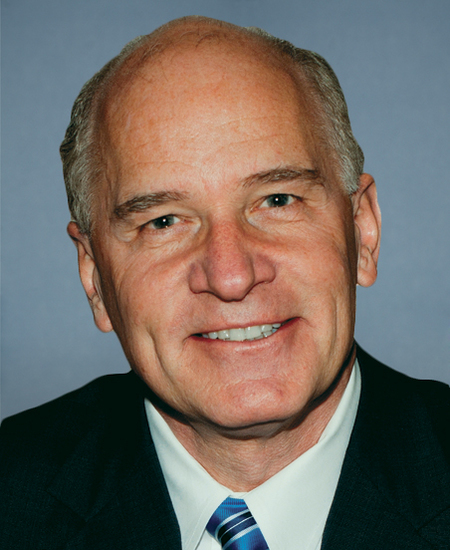
Rep. William R. Keating
Sponsored bills
Maddy summaryThis bill requires the U.S. Department of State to develop a strategy within 120 days to strengthen nuclear energy cooperation with Europe and reduce Russian influence in the nuclear sector. The strategy must assess reactor types, fuel cycles, and U.S. nuclear technology investments to decrease Russia’s market share in uranium, enrichment, and reactor supply by 2030. It authorizes $30 million annually (2025-2029) for U.S. engagement, including capacity building and countering Russian disinformation, targeting European countries with active nuclear programs. The bill directly affects U.S. foreign policy coordination, European energy security, and the competitiveness of U.S./European nuclear technology against Russian suppliers like Rosatom.
Love Lives On Act of 2025 This bill extends entitlement for various benefit programs and services for surviving spouses of deceased members of the Armed Forces or veterans. The bill provides that the remarriage of a surviving spouse must not bar the furnishing of dependency and indemnity compensation or special pension benefits to such spouse. Additionally, the Department of Defense may not terminate the payment of an annuity for a surviving spouse under the Survivor Benefit Plan solely because the surviving spouse remarries. The bill also expands the definition of a dependent under TRICARE to include a remarried widow or widower whose subsequent marriage has ended due to death, divorce, or annulment.
Maddy summaryThis bill establishes a new National and Nuclear Risk Reduction Center within the U.S. Department of State to improve communication and coordination on arms control and international security matters. The center would operate a 24-hour government-to-government communications hub to handle notifications related to arms control agreements and confidence-building measures between the United States and foreign governments. Key provisions include translating urgent messages between agencies, advising on technical communication issues, and providing technical assistance to foreign partners on maintaining communication systems for security agreements. The center must maintain at least one linguist fluent in Mandarin Chinese and Russian who understands arms control technical matters to facilitate critical communications. The center will report directly to the Under Secretary for Arms Control and International Security and will coordinate with other federal agencies through established liaison roles.
Maddy summaryHR 7522, the Improving Access to Nutrition Act of 2026, removes work requirements from the Supplemental Nutrition Assistance Program (SNAP). It directly affects approximately 6.1 million SNAP recipients currently subject to these requirements, including people with health issues, Black Americans disproportionately impacted by such rules, families with children, and individuals experiencing homelessness. The bill amends the Food and Nutrition Act of 2008 by striking subsection (o) and related provisions that mandate work requirements for SNAP eligibility. This change would eliminate a barrier that studies show reduces participation without reducing poverty and increases administrative burdens. The bill does not create new benefits but removes an existing eligibility requirement affecting vulnerable populations.
Maddy summaryThe Energy Bills Relief Act aims to lower household energy costs and accelerate the development of low-cost, clean energy by modifying federal tax credits, expanding weatherization programs, and streamlining permitting processes. Key provisions include restoring tax incentives for renewable energy projects, increasing funding for low-income heating assistance, and requiring federal agencies to treat wind, solar, and storage projects with the same procedural fairness as oil and gas projects. The bill also establishes new incentives for upgrading the electricity grid, such as tax credits for transmission lines and grants for wildfire prevention measures, while creating mechanisms to ensure utilities serve public interests and protect consumers from price volatility.
Maddy summaryThis bill requires the Department of Veterans Affairs (VA) to cover abortion care, counseling, and related medication as part of standard hospital and medical services for eligible veterans and certain dependents. It amends VA healthcare law to explicitly include these services under existing coverage for veterans qualifying under section 1703 and dependents eligible under section 1781(a). The policy directly affects veterans and their dependents enrolled in VA healthcare programs by expanding covered benefits to include abortion-related care. This is a concrete policy change to VA healthcare benefits, not a broader abortion law.
Governing Unaccredited Representatives Defrauding VA Benefits Act or the GUARD VA Benefits Act This bill imposes fines on individuals for soliciting, contracting for, charging, or receiving any unauthorized fee or compensation with respect to the preparation, presentation, or prosecution of any claim for Department of Veterans Affairs benefits. The attempted commission of such offenses is also punishable by fine.
Enhanced Iran Sanctions Act of 2025 This bill imposes sanctions on certain foreign persons (individuals and entities) that are involved in Iran's petroleum sector as well as certain associated persons. The bill also requires or authorizes actions to facilitate the enforcement of sanctions on Iran. Specifically, the bill requires the President to impose visa- and property-blocking sanctions on any foreign person that, after the bill's enactment, knowingly engages in any transaction related to the processing, export, or sale of oil, condensates, gas, liquefied natural gas, or other petrochemical products in whole or in part from Iran. The President must also impose sanctions on certain foreign persons associated with a sanctioned individual or entity. For example, the President must sanction the subsidiaries and corporate officers of a sanctioned business. The bill provides certain exceptions to these sanctions, including specifying that sanctions do not apply to the importation of goods or to conducting or facilitating transactions for humanitarian assistance. The Department of State must establish an interagency working group that shall seek to establish a multilateral contact group to coordinate international efforts to enforce sanctions on Iran. The bill expands the State Department rewards program to authorize a reward payment to any individual who furnishes information leading to the identification of a person (1) subject to sanctions under this bill, or (2) that has attempted or is attempting to evade sanctions under this bill.

Maddy summaryThis bill, known as the Fair Wages for Home Care Workers Act, would change federal labor rules to require overtime pay and minimum wage protections for certain babysitters. It specifically targets casual babysitting work that is irregular or intermittent, while excluding trained medical professionals like nurses and home health aides from these changes. The law would also allow babysitters to perform up to 20% of their work time on unrelated household tasks without losing their protected status. These amendments would apply to workers covered by the Fair Labor Standards Act of 1938 who provide custodial care for infants or children in private homes.