

Maddy summaryThis bill removes a barrier preventing most low-income students from accessing SNAP benefits. It amends the Food and Nutrition Act to explicitly allow students enrolled at least half-time in recognized higher education programs to qualify for SNAP, reversing a prior exclusion. The key change eliminates the previous requirement that students meet specific exceptions (now deleted) and adds a new eligibility category under Section 3(m)(5). This directly affects low-income undergraduate and graduate students at colleges and training programs who were previously ineligible. The changes take effect January 2, 2026.
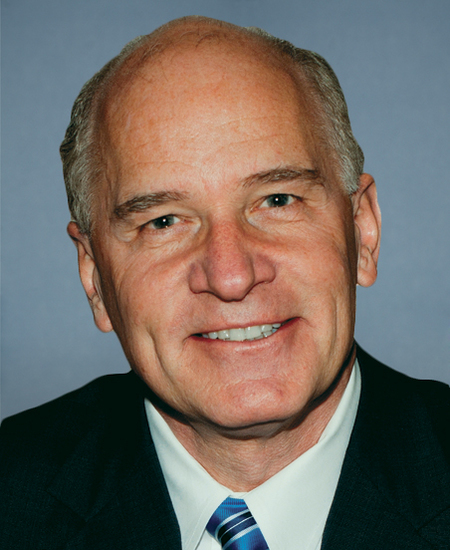
Rep. William R. Keating
Sponsored bills
Maddy summaryThis bill authorizes the U.S. Secretary of State to establish an annual strategic dialogue with Belarus's democratic movement. It seeks to support free elections, assist Belarusians abroad with essential services, address regional security impacts from Belarus and Russia, impose sanctions on President Lukashenka's regime for human rights abuses and support for Russia's Ukraine invasion, and facilitate the release of political prisoners. The dialogue directly affects Belarus's democratic opposition, citizens inside and outside Belarus, and civil society groups working toward democratic reforms. Key provisions include funding cultural programs, restoring democratic institutions, and coordinating regional responses to political instability.
Maddy summaryThis bill transitions individuals with disabilities from segregated employment under special certificates (which allow subminimum wages) to competitive integrated employment with fair wages. It creates grant programs for states and employers to facilitate this transition, requiring employers to pay at least minimum wage (increasing over time) and providing necessary supports. The bill phases out special certificates entirely within 4 years, while ensuring individuals with disabilities receive ongoing support during the transition. It also establishes evaluation requirements to track progress and ensure compliance with the new standards.
Maddy summaryThis bill updates the TRICARE Young Adult Program to make healthcare coverage more accessible for military dependents. It directly affects young adults (ages 21-26) who are children of active-duty service members, by eliminating a separate premium they previously paid for coverage. Key changes include removing an extra cost for young adults and adjusting eligibility rules to simplify enrollment. These amendments aim to reduce out-of-pocket expenses and streamline access to health insurance under the program.
Maddy summaryThis resolution symbolically designates August 25-29, 2025, as "National Community Health Worker Awareness Week" for the third consecutive year. It recognizes community health workers (CHWs) as trusted frontline staff who connect underserved communities to health services, provide cultural mediation, and support health education - without creating new laws or funding. The resolution encourages federal, state, and local collaboration to highlight CHWs' roles but does not alter existing programs or require government action. It directly affects CHWs and their communities by raising public awareness of their contributions.
Maddy summaryHR 4717 creates a refundable tax credit of up to 10% of a home's purchase price (capped at $15,000) for first-time homebuyers purchasing a principal residence in the United States. The credit is subject to limitations based on modified adjusted gross income (phased out if income exceeds 150% of the area median income) and home price relative to area median purchase prices in the buyer's location. Homebuyers must meet age requirements (at least 18 years old), not have owned a home in the past three years, and purchase with a federally backed mortgage. The credit is subject to a four-year recapture period if the home is sold within that timeframe, and taxpayers may transfer the credit to their mortgage lender as a down payment or closing cost assistance.
Maddy summaryThis bill requires a 3-business-day waiting period before someone can receive a handgun from another person who isn't a licensed gun seller. It applies to most private handgun transfers but includes exceptions for law enforcement, family loans (like between spouses or parents and children), temporary transfers to prevent imminent harm, and transfers for shooting or hunting under specific conditions. The waiting period begins when the recipient first offers to take possession of the gun. The law would take effect 90 days after enactment.
Maddy summaryHR 4704, the ROTOR Act, requires the Defense Health Agency to study cancer rates among military helicopter pilots and aviation support personnel. It directly affects service members who served as rotary-wing aircrew (pilots or support staff) since 1961 and receive VA healthcare. The bill mandates a two-phase study: first, comparing cancer prevalence/mortality for 12 specific cancers (like lung, prostate, and breast cancer) between these service members and the general population; second, if increased rates are found, investigating potential causes like aircraft toxins, radiation exposure, or other service-related hazards. The study will use existing VA and cancer registry data, with findings reported to Congress within two years.
Maddy summaryH.J. Res. 108 proposes a constitutional amendment to remove legal immunity for federal officials, including the President, from criminal prosecution for actions taken while performing official duties. It would prohibit the President from granting pardons to themselves and eliminate the defense that "official authority" excuses violations of federal or state law (with limited exceptions for certain congressional actions). If ratified, this amendment would require Congress to pass implementing laws to enforce these changes. The proposal is currently in the House Judiciary Committee and requires approval by three-fourths of state legislatures to become part of the Constitution.
Maddy summaryHR 4606, the Ally’s Act, requires private health insurance plans (including employer-sponsored plans and individual coverage) to cover hearing implants and related services. It directly affects people with hearing loss who need cochlear implants, bone conduction devices, or external sound processors, as determined by a physician or audiologist. The bill mandates coverage for devices, maintenance, repairs, upgrades every 5 years, hearing assessments, surgery, and rehabilitation - without separate cost-sharing or stricter limits than other medical services. Insurers cannot deny coverage if a provider deems the service medically necessary. The law applies to all applicable health plans and takes effect for plan years beginning January 1, 2026.