

Maddy summaryThis resolution expresses support for designating July 10th as Journeyman Lineworkers Recognition Day to honor the workers who maintain the nation's electrical grid. The bill specifically recognizes the dangerous conditions these employees face, such as working at heights near live power lines and responding to disasters like hurricanes and wildfires. It also commemorates Henry Miller, the first president of the International Brotherhood of Electrical Workers, who died on July 10, 1896, while performing his duties. Ultimately, the measure encourages the public to observe this day with reflection on the contributions of lineworkers.
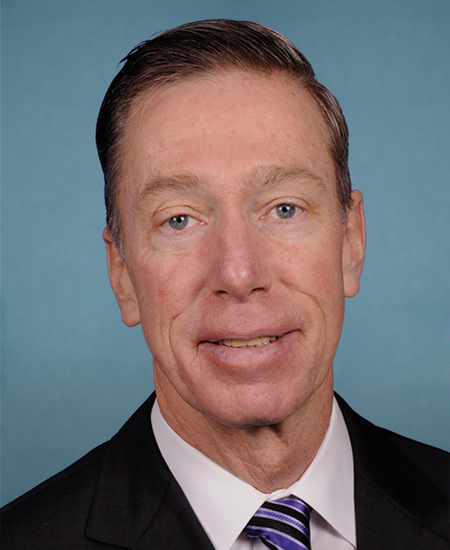
Rep. Stephen F. Lynch
Sponsored bills
Maddy summaryThe Find Our Families Act of 2026 requires the Department of Homeland Security to create a public online system that allows families to locate individuals detained by Customs and Border Protection or Immigration and Customs Enforcement. This system must provide search results within eight hours of detention, display information in multiple languages, and include specific details such as names, dates of birth, and facility locations, while excluding data for minors. The bill also mandates that families be notified within five hours if a detainee is transferred for medical care and establishes new reporting requirements for CBP arrests, including details on the circumstances of the arrest and the number of agents involved. Additionally, the legislation creates a process for families to report errors in detainee information and imposes penalties on employees or contractors who fail to comply with these data-sharing and reporting obligations.
Maddy summaryHRES 1405 is a non-binding resolution that encourages the U.S. House of Representatives to recognize June as LGBTQIA+ Pride Month. The document acknowledges the historical significance of events like the Stonewall Inn uprising and highlights the ongoing struggle for equality faced by lesbian, gay, bisexual, transgender, queer, intersex, and asexual individuals. It includes a detailed list of historical milestones and legislative achievements related to LGBTQIA+ rights to provide context for the celebration. Because this measure is a resolution of recognition rather than a law, it does not create new legal obligations or change federal policy.
Maddy summaryThe Home Internet Accessibility Act requires the Comptroller General to produce a detailed report within a year on which federally assisted housing units currently have or lack the infrastructure to support high-speed internet. This report will analyze specific challenges, costs, and timelines for upgrading these properties, broken down by location and demographic data, while also reviewing past retrofitting efforts and pilot programs. Following this analysis, the Department of Housing and Urban Development must create a formal plan to upgrade necessary housing to support broadband service and submit it to Congress within 18 months. The legislation directly affects residents of government-subsidized housing by aiming to ensure their living spaces can accommodate modern internet connectivity.
Maddy summaryThe Bank Failure Accountability Act requires large financial institutions to set aside a significant portion of senior employee compensation into a special fund to ensure accountability for future misconduct. Specifically, the law mandates that executives and high-earning staff defer at least half of their pay that exceeds seven times the median worker's salary, holding this money in reserve for a period ranging from two to eight years depending on the bank's size. If the institution faces fines for illegal actions or fails, these withheld funds must be used first to pay penalties or to return money to depositors, preventing the use of taxpayer resources. Any deferred compensation that cannot be repaid due to the fund running out of money will simply be cancelled, ensuring that employees do not receive full bonuses if their firm causes harm. This measure directly targets high-asset banks, credit unions, and other major financial entities to align executive incentives with long-term stability.
Maddy summaryThis resolution expresses support for designating June as Portuguese National Heritage Month to honor the contributions of Portuguese Americans to the United States. It highlights the community's historical impact in areas such as maritime industries, agriculture, education, and public service, while also noting their role in strengthening transatlantic relations. The measure urges Americans to observe the month with programs that celebrate Portuguese culture and heritage, particularly around the annual Dia de Portugal celebration on June 10.
Maddy summaryThe Federal Workforce Reproductive Rights Protection Act prevents federal agencies from relocating headquarters or major operations to states with laws restricting or banning abortion, while also barring the use of funds to build or lease facilities in those locations. To support federal employees who need to access reproductive health care, the bill allows workers to decline transfers to restrictive states, grants up to 21 days of paid leave for travel to obtain such services, and provides reimbursement for travel costs without requiring disclosure of the specific medical procedure. Additionally, the legislation prohibits government agencies from investigating an employee's use of abortion services when reviewing security clearances or making personnel decisions and protects workers from retaliation if they exercise these new rights.
Maddy summaryThis bill redesignates the existing National Parks and Public Land Legacy Restoration Fund as the America's Legacy Restoration Fund to address deferred maintenance on federal lands. It directs revenue from recreation fees and a portion of energy development income into the fund, which must be used primarily for repairing critical infrastructure like roads, trails, and buildings managed by agencies such as the National Park Service and the Forest Service. The legislation establishes strict rules requiring that most funds go toward non-transportation projects, mandates transparency through public dashboards tracking project status, and sets aside a small percentage for matching private donations. Additionally, the bill increases entrance fees for foreign visitors to ensure they contribute to the fund, while prohibiting the use of these specific funds for land acquisition or employee bonuses.
Maddy summaryThe Latonya Reeves Freedom Act of 2026 strengthens the Americans with Disabilities Act to ensure individuals with long-term service and support needs have a federally protected right to live in their communities rather than institutions. It requires states and insurance providers to offer community-based services that allow people to maintain independence, control their own care, and access affordable, integrated housing. The bill mandates that public entities and insurers create enforceable transition plans to move people out of institutions, conduct self-evaluations to identify barriers, and establish clear grievance procedures for resolving complaints. Enforcement is handled by the Department of Justice, which can investigate violations, while individuals may also file civil lawsuits to seek damages or court orders preventing institutionalization.
Maddy summaryThe Gun Safety Innovation Opportunity Act of 2026 creates a new grant program to fund research and development of advanced safe firearm storage devices by institutions of higher education and firearms manufacturers. These grants, totaling up to $10 million annually from 2027 to 2030, are intended to support technologies that use biometric data or other security measures to prevent unauthorized access to guns and to study how consumers might adopt such devices. To receive funding, applicants must submit detailed plans explaining how their technology will enhance community safety and increase affordability for users. Additionally, the bill requires the Attorney General to submit a report to Congress within a year of enactment, outlining potential ways to support this technology development and its use by law enforcement to prevent suicide.