

Maddy summaryThe FAST Repairs for Wheelchairs Act prohibits Medicare Advantage plans from requiring prior authorization, prescriptions, or medical documentation for repairs to complex rehabilitation wheelchairs and their accessories. This change directly affects individuals who use these devices, allowing them to get necessary maintenance without waiting for plan approval. However, the law still permits plans to review the initial medical necessity of the equipment or approve replacements when the device is lost, damaged, or has been used for five years. By removing these specific barriers for repairs, the bill aims to ensure faster access to essential maintenance services for wheelchair users.
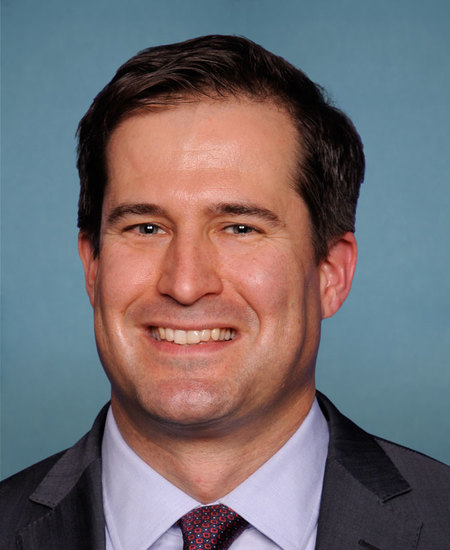
Rep. Seth Moulton
Sponsored bills
Maddy summaryThe Voting Systems Protection Act restricts the Federal Government from seizing election materials, such as voting machines and ballots, during a 240-day window surrounding Federal elections unless a court finds an immediate threat to election integrity. The law requires that any seizure be authorized by a warrant and mandates that a designated State official maintain continuous oversight of the handling and storage of these materials. Additionally, the bill establishes strict notification procedures, requiring Federal agencies to inform State officials and congressional leaders at least 48 hours before a seizure, with limited exceptions for emergencies. Violations of these rules, including tampering with seized items or obstructing State oversight, are subject to criminal penalties, civil lawsuits, and significant fines.
Maddy summaryThis resolution commemorates the 10th anniversary of the 2016 Pulse nightclub shooting in Orlando, Florida, which was an act of domestic terrorism. It formally honors the names of the victims and expresses condolences to their families while acknowledging the bravery of law enforcement and emergency responders who responded to the tragedy. The document also reaffirms support for the LGBTQ+ community and calls for continued efforts to improve gun safety and mental health legislation.
Maddy summaryThe Postsecondary Student Success Act of 2026 creates a competitive grant program to help colleges improve graduation rates for high-need students, including those from low-income backgrounds, first-generation families, and military-connected individuals. To receive funding between 2027 and 2032, eligible institutions must submit plans detailing how they will use evidence-based strategies, such as better advising, accelerated learning options, and improved transfer pathways, to support student retention and completion. The law requires that at least 20 percent of the available funds go to projects using the most rigorously tested methods and mandates that 2 percent be reserved specifically for Tribal Colleges and Universities. Additionally, the Department of Education must evaluate the effectiveness of these programs and report the results to Congress within 18 months of the bill's enactment.
Maddy summaryThe Keep Public Funds in Public Schools Act of 2026 eliminates a federal tax credit that allowed parents to deduct contributions to scholarship granting organizations from their income. By removing these specific tax breaks, the bill prevents the use of public tax dollars to support private school vouchers and scholarship programs. This change directly affects families who currently rely on these tax incentives to fund education outside the public school system. The provisions take effect for taxable years beginning after December 31, 2026.
Maddy summaryThis bill requires states and tribal organizations that run school lunch programs to also participate in the Summer EBT program, which provides food assistance to children during summer breaks. For the summers of 2024 through 2026, participation in the summer program remains voluntary for these entities. Starting in summer 2027, joining the summer program becomes mandatory for any state or tribal organization that already participates in the school lunch program. The legislation also updates administrative rules to ensure states submit management plans for these programs by specific deadlines each year.
Maddy summaryThis joint resolution seeks to reject a specific rule issued by the Department of Health and Human Services regarding the Child Care and Development Fund. By invoking a statutory process, the bill aims to prevent the rule from taking effect, which would stop the Department from implementing the proposed changes to child care funding flexibility. The measure directly impacts the administration of federal child care assistance programs and affects families and organizations relying on the CCDF. If passed, the original regulations published in May 2026 would be nullified and have no legal force.
Maddy summaryHR 5408, the Faster Labor Contracts Act, requires employers to begin negotiating a first contract with a newly certified union within 10 days of written request. If no agreement is reached within 90 days, the parties must seek mediation, and if unresolved after 30 days of mediation, the dispute moves to binding arbitration by a three-member panel. The arbitration decision, based on factors like employer finances, industry standards, and cost of living, becomes binding for two years. This bill directly affects newly certified unions and their employers during initial contract negotiations, aiming to reduce delays that currently average 465 days.
Maddy summaryThe American Electric Rail Mapping Act of 2026 directs the Federal Railroad Administration to conduct a study on the feasibility of electrifying passenger and freight rail lines across the United States. This study will identify existing and planned rail corridors, determine how current systems are powered, and assess which segments could adopt clean rail technologies. The Administrator must consult with railroad operators, state and local governments, and other relevant entities while using existing resources to minimize costs. The agency is required to submit an initial progress report to Congress within one year of enactment, followed by a final report on the study's results a year later.
Maddy summaryThis bill, known as the Alice Cogswell and Anne Sullivan Macy Act, amends the Individuals with Disabilities Education Act to improve special education services for children who are deaf, hard of hearing, deafdisabled, blind, visually impaired, or deafblind. It requires states to identify these students regardless of how they are currently classified, ensuring they receive specialized instruction in their primary language and access to qualified professionals. Key provisions mandate that state plans include specific strategies for language development, Braille instruction, and the use of assistive technologies, while also establishing a new national center to support research and training for educators of students with visual disabilities. Additionally, the legislation clarifies definitions for deafblindness and interveners, updates data reporting requirements to track these populations more accurately, and ensures early intervention services are delivered in natural environments to support language and communication milestones.